


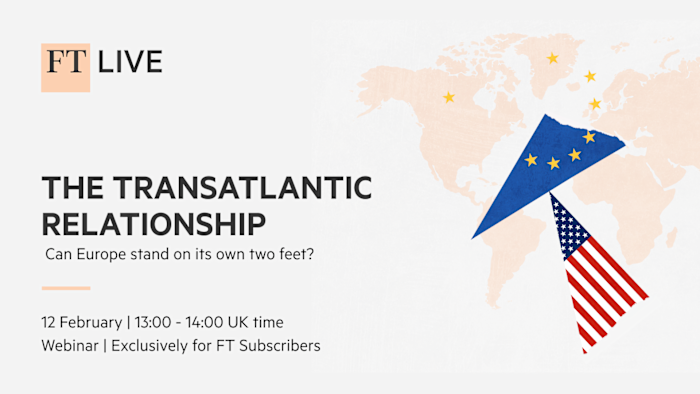
As the transatlantic alliance faces increasing challenges, Europe is feeling the pressure to independently safeguard its economic, military, and political interests. Recent discussions featuring Financial Times journalists and Kori Schake from the American Enterprise Institute focused on the implications of what Canada’s Prime Minister Mark Carney termed a “rupture” in the rules-based global order.
With changing dynamics, including Donald Trump’s renewed interest in Greenland and rising uncertainties about the United States’ long-term commitment to NATO, established assumptions are being reevaluated. The panel, moderated by Europe editor Ben Hall, also included insights from Laura Pitel, Berlin correspondent, and Henry Foy, Brussels bureau chief, as they explored how Europe and other longstanding U.S. allies might adapt to an evolving global landscape.
Participants discussed potential pathways for European nations to assert greater autonomy. This shift raises critical questions about the current and future state of international relations among liberal democracies, particularly in defining Europe’s role in a world where reliance on U.S. leadership may be diminishing.
The conversation emphasized the need for Europe to strengthen its own defense capabilities and economic strategies, as traditional alliances become redefined.
Why this story matters: The growing independence of Europe could reshape global power dynamics and international relations.
Key takeaway: European nations may need to adapt and fortify their own interests amidst uncertainties about U.S. commitments.
Opposing viewpoint: Some argue that close collaboration with the U.S. remains crucial for Europe’s security and economic stability, despite the challenges.