


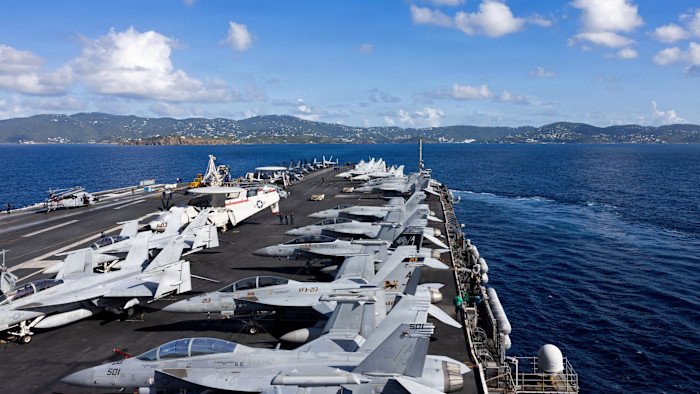
U.S. President Donald Trump has emphasized the potential for regime change in Iran, labeling it “the best thing that could happen” amid rising tensions between the two nations. Speaking at Fort Bragg military base in North Carolina, Trump indicated that the U.S. is prepared to escalate its military presence in the Middle East, announcing the deployment of a second aircraft carrier strike group, the USS Gerald R. Ford, from the Caribbean Sea.
Trump expressed pessimism regarding ongoing negotiations with Tehran, stating, “For 47 years, they’ve been talking and talking,” referencing the stalled dialogue between the U.S. and Iran. His remarks came alongside confirmation of the U.S. military’s growing presence, which already includes the USS Abraham Lincoln and a total of ten ships in the region.
The USS Gerald R. Ford, the largest and newest U.S. aircraft carrier, is accompanied by three destroyers and thousands of troops. This military buildup follows a previous strike in June against three of Iran’s nuclear facilities. In an effort to shield U.S. interests in the region, additional missile defenses and fighter jets have also been deployed.
Despite the increased military activity, the White House continues to engage in negotiations with Iranian officials concerning Tehran’s nuclear program and its support for various regional proxy groups. Trump’s recent military maneuvers coincide with discussions with Israeli Prime Minister Benjamin Netanyahu, who expressed skepticism about any potential agreements with Iran, advocating for comprehensive measures that include not just nuclear issues but also Iran’s ballistic missile program and its regional militias.
Key Points:
- Why this story matters: Highlights U.S. military strategy and its implications for international relations.
- Key takeaway: The U.S. is intensifying its military presence in the Middle East while simultaneously pursuing diplomatic negotiations with Iran.
- Opposing viewpoint: Critics question the efficacy of military escalation and express concerns over the humanitarian implications of regime change.