


Donald Trump has initiated a significant foreign policy action during his second term by capturing Venezuelan President Nicolás Maduro. This operation was aimed at reaffirming U.S. influence in the western hemisphere and involved U.S. special forces extracting Maduro from his Caracas residence to face criminal charges in the United States. The operation signifies a marked escalation in the U.S. confrontation with Venezuela, which has seen increased measures such as naval blockades and strikes against alleged drug traffickers.
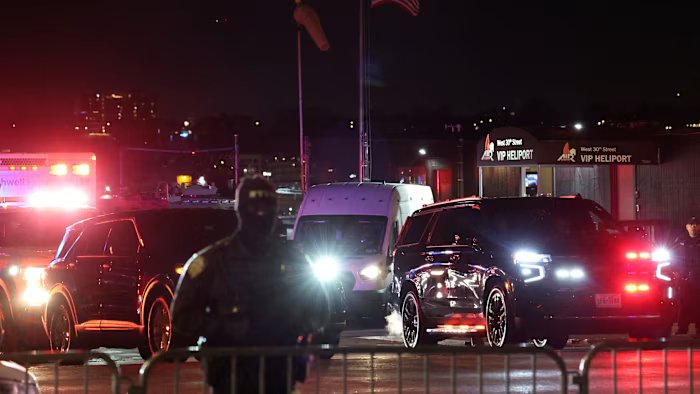
Following his capture, Maduro arrived by helicopter in New York City, where he was placed in a federal detention center. Trump declared that the U.S. would take control of Venezuela until a secure transition could be established, emphasizing the desire for investment in the country’s oil sector from American companies. His administration’s focus on revitalizing Venezuela’s oil infrastructure was presented as a means to benefit both the nation and its expatriates wishing to return.
While U.S. allies welcomed the end of Maduro’s regime, they voiced concerns about the legality of Trump’s actions, particularly since Congress did not approve the operation. British Prime Minister Sir Keir Starmer supported a lawful transition in Venezuela, highlighting the importance of international law.
In Venezuela, Supreme Court Vice President Delcy Rodríguez has been appointed to assume presidential duties, condemning the U.S. actions as barbaric and asserting that her government will continue to resist foreign intervention. Critics, including New York’s Mayor Zohran Mamdani, argued that the operation constitutes an act of war and violates both U.S. and international law.
Amid these developments, the future political landscape of Venezuela remains uncertain.
Why this story matters:
- It showcases a shift in U.S. policy with implications for international relations and regional stability.
Key takeaway:
- Trump’s actions reflect a bold use of military power to assert U.S. dominance, challenging established norms of sovereignty.
Opposing viewpoint:
- Critics highlight concerns over legality and the risk of exacerbating conflict, emphasizing the need for a lawful and democratic transition in Venezuela.