


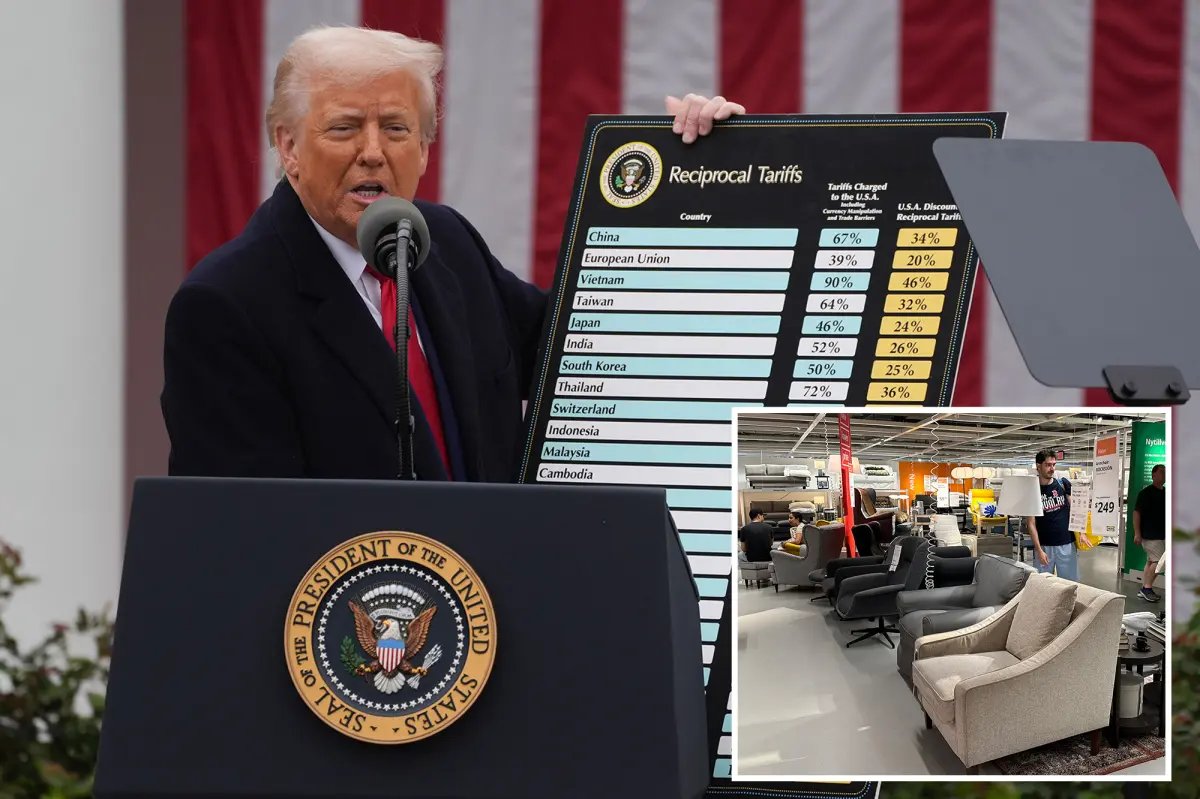
Shares of home furnishing retailers experienced significant gains on Friday following President Trump’s announcement of a one-year delay on proposed increases to tariffs affecting upholstered furniture, kitchen cabinets, and vanities. The luxury furniture retailer RH saw its stock rise by 9.5%, while online retailer Wayfair increased by 6.3%. Additionally, Williams-Sonoma, a company known for kitchenware and home decor, recorded a 5.3% uptick in its stock.
Originally, tariffs were slated to rise from 25% to 30% on upholstered furniture and from 25% to 50% on kitchen cabinets and vanities as of January 1. Concerns arose among economists that these hikes could lead to considerable price increases for consumers, given that furniture represents a substantial purchase for many households. Data from the Consumer Price Index showed a 3% year-over-year increase in furniture and bedding prices as of November.
In a fact sheet released Wednesday, the White House noted that current tariffs would remain at the initial 25% rate, attributing the delay to ongoing trade negotiations rather than a shift in policy. Ongoing discussions related to tariff implementation await a Supreme Court ruling, which could significantly impact the future of these tariffs, potentially resulting in refunds of up to $168 billion to businesses if found unconstitutional.
Trump asserted the importance of tariffs for national security and economic prosperity, stating on social media that maintaining tariff authority is crucial for the U.S. Amid these developments, concerns about affordability persist, especially with the upcoming 2026 midterm elections on the horizon.
Key points:
- Why this story matters: The delay in tariff increases may alleviate immediate financial pressures on consumers and retailers, impacting market dynamics.
- Key takeaway: The current tariffs on furniture remain at a 25% rate amid ongoing trade negotiations, showcasing the administration’s strategic approach.
- Opposing viewpoint: Critics express concern that tariffs are negatively influencing affordability for consumers, particularly as economic pressures mount.