



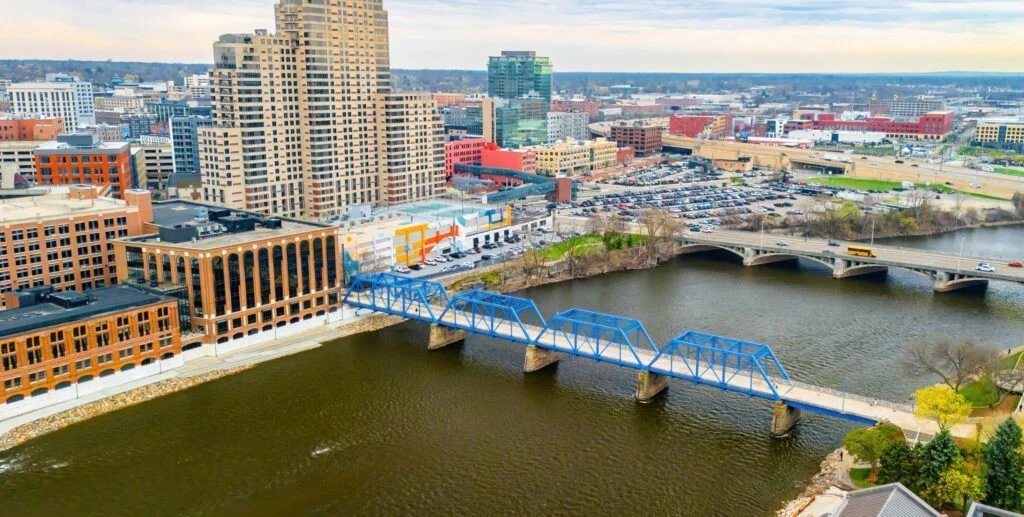
Grand Rapids, Michigan, is emerging as an attractive destination for investors, thanks to its ambitious development plans coupled with a stable economic environment. Highlighted by the Transformational Brownfield Plan, this billion-dollar initiative includes the construction of a new soccer stadium, amphitheater, and various residential units aimed at revitalizing the riverfront area.
The city’s Fulton & Market project, costing $795 million, is set to add approximately 630-735 new housing units and is backed by the Michigan Strategic Fund. Local officials see these developments as a vital investment in the community, enhancing the region’s livability and appeal. The Michigan Economic Development Corporation noted that the Transformational Brownfield Plan serves as a foundational project for the area, creating a mix of residential, commercial, and public spaces that will invigorate downtown.
In addition to new infrastructure, Grand Rapids boasts a cost of living that is about 8% lower than the national average, alongside a 6.1% population growth over the past decade. A recent housing trends analysis highlighted a moderate price appreciation, with the median sale price reaching approximately $282,000.
Rents are also reflecting the rising demand, with one-bedroom units averaging between $1,420 and $1,540, and two-bedroom units anticipating moderate gains due to new constructions. Despite these positive trends, the region grapples with a higher-than-average poverty rate of 16.9%, creating a mixed landscape for potential investors.
The combination of ongoing development and favorable living conditions positions Grand Rapids as a promising market for both potential homeowners and investors seeking opportunities in a growing city.
Why this story matters
- Highlights economic and developmental growth in a Midwestern city.
Key takeaway
- Grand Rapids offers affordable housing and investment opportunities amid rising demand.
Opposing viewpoint
- Despite growth, the area faces significant poverty challenges that could affect community stability.