



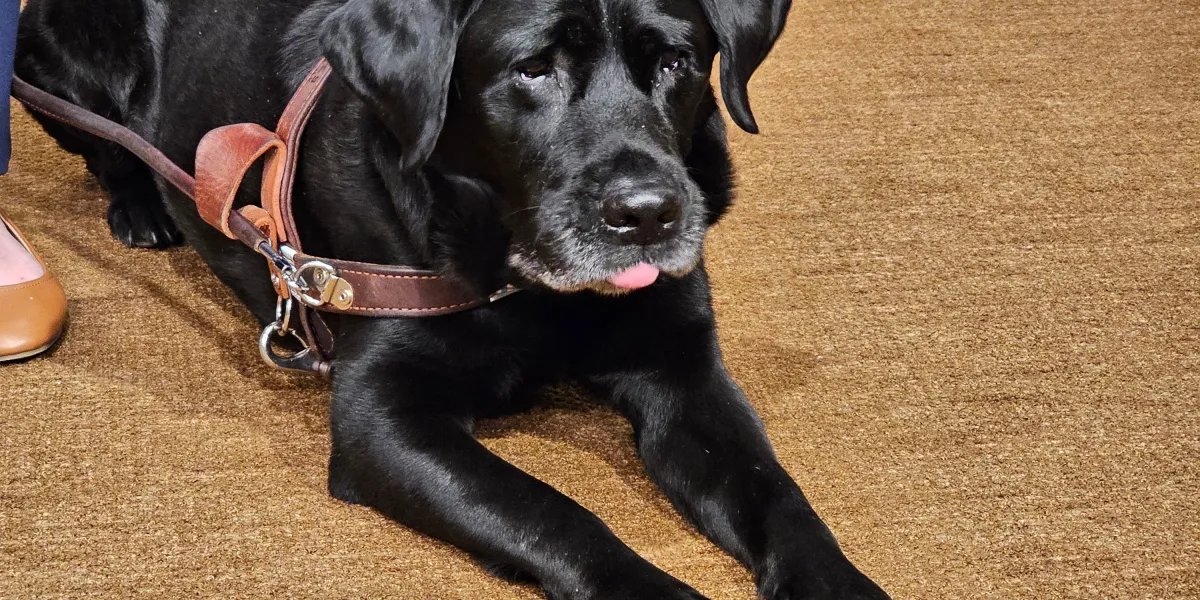
Lyft has committed to upholding the rights of blind and disabled passengers to travel with service animals nationwide following a settlement in Minnesota announced on Wednesday. The initiative was prompted by college student Tori Andres, who reported that several Lyft drivers refused to allow her service dog, Alfred, to accompany her. An investigation by the Minnesota Department of Human Rights found that Lyft was violating the state’s Human Rights Act.
Under the terms of the settlement, Lyft will implement changes that include enhanced driver training on the rights of passengers with disabilities and updates to its app to facilitate compliance nationwide. Human Rights Commissioner Rebecca Lucero emphasized that drivers must not cancel rides based on a passenger’s disability or service animal, warning of potential deactivation for violations. The department will monitor Lyft’s compliance for three years, and Andres will receive $63,000.
Lyft characterized the settlement as largely procedural, asserting that its existing policies on service animals were already in line with legal requirements. The company stated that independent drivers are responsible for any alleged violations. Lyft reiterated its long-standing service animal policy and the consequences for drivers who do not adhere to it.
Recent updates to the Lyft app allow passengers to inform drivers about accompanying service animals and to report any denial of service. Immediate in-app notifications will remind drivers of the legal obligations when service animals are disclosed.
While Lyft has resolved the issue without litigation, its primary competitor, Uber, was not part of this settlement. Lucero highlighted that all ride-sharing companies are bound by the Minnesota Human Rights Act, underscoring the importance of ensuring equal access to transportation services for individuals with disabilities.
Why this story matters
- Ensures the rights of disabled individuals are protected in ride-sharing services.
Key takeaway
- Lyft is taking steps to improve compliance and training regarding service animal policies.
Opposing viewpoint
- Lyft maintains that the settlement’s changes were unnecessary as their existing policies already complied with legal standards.