



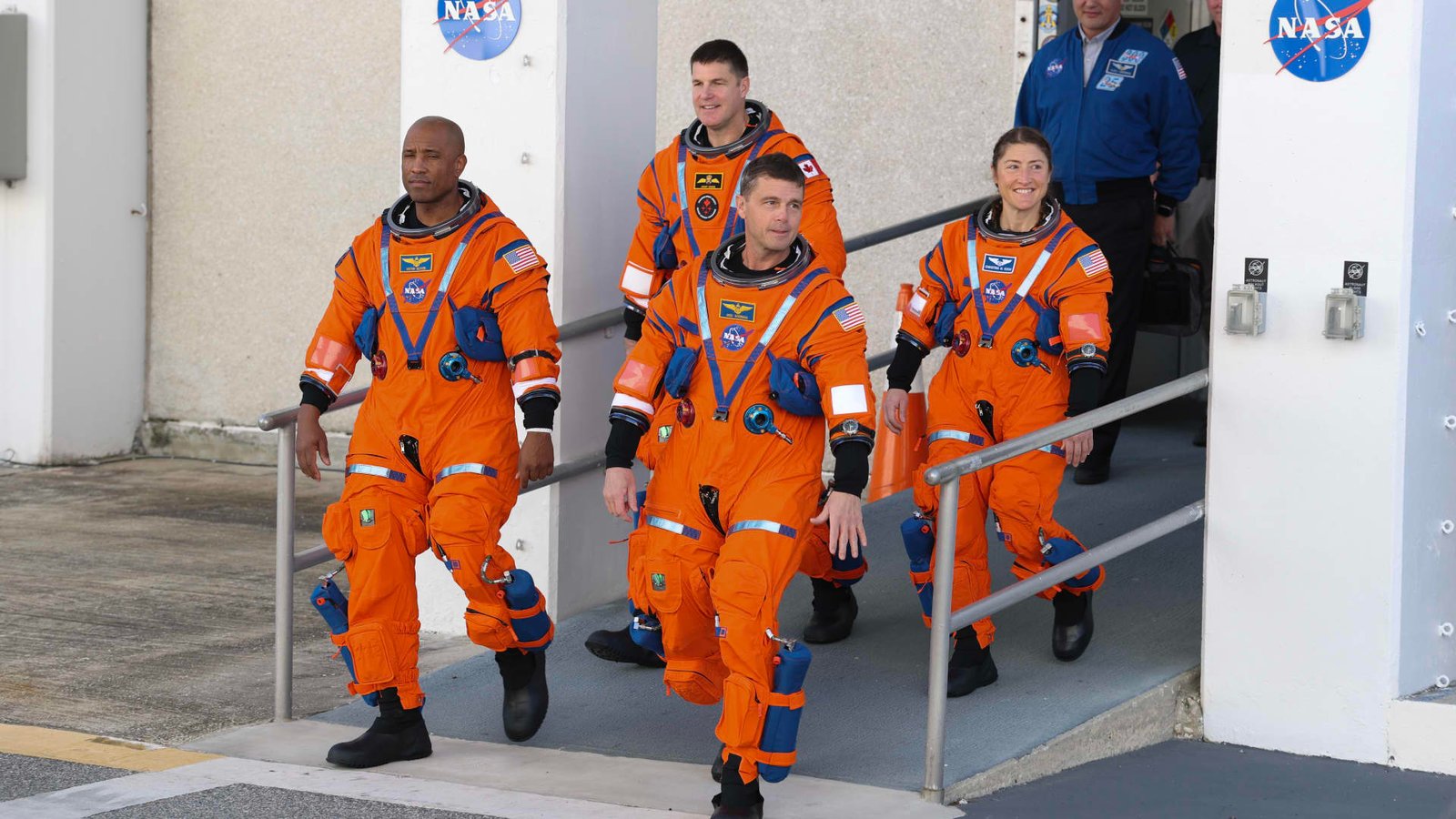
NASA is set to launch the Artemis II mission, marking the United States’ return to the moon after more than 50 years. This mission is historic as it will transport the first Black astronaut, Victor Glover, and the first female astronaut, Christina Koch, on a lunar flyby. Originally scheduled for early February but now delayed, the mission will feature four astronauts orbiting the moon without landing.
The Artemis II mission follows the successful uncrewed Artemis I launch in 2022 and represents a significant advancement in NASA’s plans for deep space exploration, ultimately aiming towards a future mission to Mars. Glover emphasized the dual impact of the Artemis program, stating its technological and cultural benefits. He noted the initiative’s potential to inspire future generations, while Koch expressed excitement about carrying the hopes and aspirations of young people on this journey.
Experts like Danielle Wood from the Massachusetts Institute of Technology highlight that the mission builds on two decades of planning, thanking NASA for emphasizing a diverse astronaut corps. Wood pointed out that while progress has been made, significant barriers remain for Black astronauts. Additionally, Artemis II will involve scientific research focused on astronaut health and lunar science, and will collaborate with international partners, including Saudi Arabia and Germany.
However, some analysts, such as space historian Amy Shira Teitel, express reservations about the mission’s long-term viability, citing budget constraints, launch delays, and political complexities. Teitel describes the mission as a significant undertaking but remains cautiously optimistic, acknowledging the hurdles that must be overcome for sustained lunar exploration.
Why this story matters: Highlights an important milestone in space exploration and diversity in NASA’s astronaut program.
Key takeaway: Artemis II aims to inspire future generations while advancing NASA’s deep space exploration goals.
Opposing viewpoint: Concerns persist about budget constraints and the viability of continued lunar missions.