



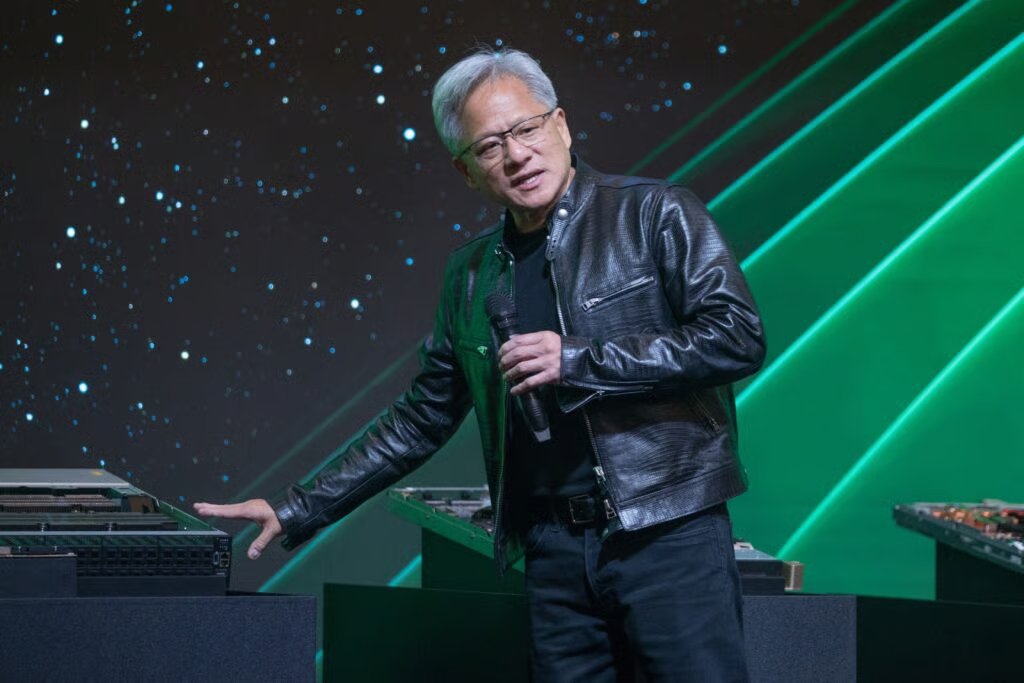
Nvidia’s CEO Jensen Huang recently announced an ambitious projection for the company’s growth, anticipating revenues may reach $1 trillion by 2027. During a keynote address at an event, Huang indicated that this figure stems from expected demand for Nvidia’s Blackwell and Vera Rubin chips, which play a critical role in data centers and artificial intelligence applications. This new forecast significantly exceeds the company’s previous guidance of $500 billion, raising optimism about the company’s trajectory amid increasing competition in the AI chip market.
As the tech sector grapples with questions regarding sustained spending on AI and data center technologies, Huang’s projection could invigorate Nvidia’s stock, which has experienced declines in 2026. Despite this, Nvidia has consistently surpassed revenue estimates over the past 14 quarters. The company’s current forecast for first-quarter revenue is between $76.44 billion and $79.56 billion, exceeding earlier market expectations of $71.96 billion. Significant growth is reflected in fiscal 2025, where the company reported a revenue of $215.9 billion, marking a 65% increase from the previous year.
In addition to the ambitious revenue projections, Nvidia announced an expanded partnership with Hyundai and Kia focused on autonomous driving technologies, utilizing its DRIVE Hyperion Platform. The ongoing GTC 2026 conference, which extends through March 19, is expected to offer further insights into emerging products and partnerships, contributing to stock volatility in the near term. Nvidia’s shares closed up 1.63% at $183.19 on Monday, following Huang’s comments, with fluctuations expected as the market digests the implications of the company’s ambitious growth forecast.
Why this story matters:
- Nvidia’s projections signal confidence in the tech sector’s future, especially in AI.
Key takeaway:
- Nvidia aims for $1 trillion in revenue by 2027, highlighting strong growth potential in AI chips.
Opposing viewpoint:
- Concerns exist regarding the sustainability of AI spending and rising competition in the chip market.