



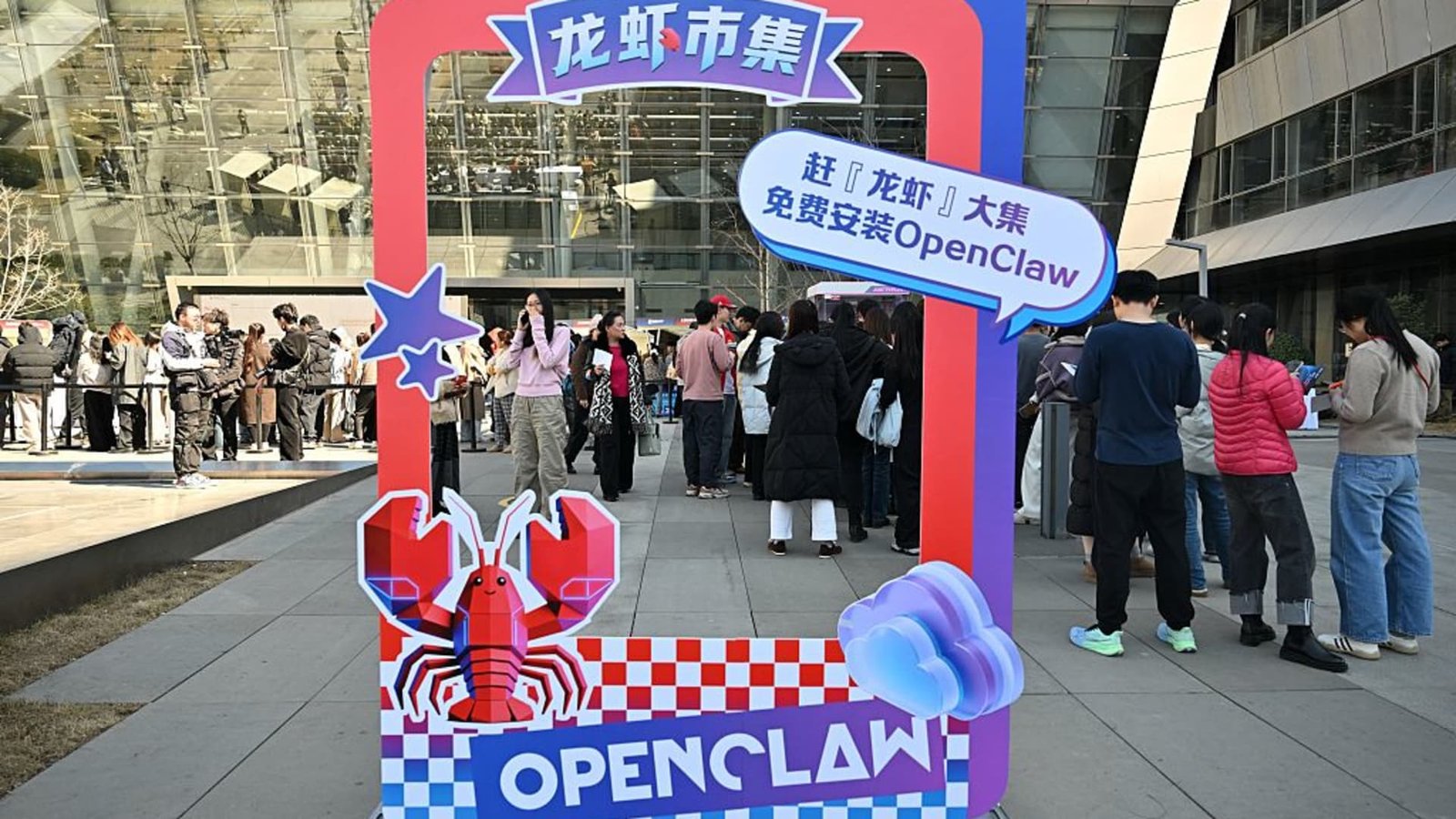
China’s growing enthusiasm for the AI tool OpenClaw is encouraging price-sensitive consumers to invest in artificial intelligence solutions, presenting new opportunities for companies in the sector. Recent developments have positively impacted the stock performance of Tencent, which saw its shares rise after announcing the integration of its AI agent into various applications, recovering from a nine-month low. This resurgence comes amid concern regarding Tencent’s AI competitiveness, especially in comparison to rivals like ByteDance.
BNP Paribas analyst William Packer noted that Tencent’s chatbot downloads have been significantly outpaced by those of its competitors, raising concerns about its AI strategy and overall market position. Despite these challenges, BNP maintains an “outperform” rating for Tencent, with a price target of 825 Hong Kong dollars (approximately $105.38), suggesting a potential increase of over 50% from its recent closing price.
Meanwhile, Alibaba is also making strides in the AI space, having recently launched new AI models and integrated features into its Qwen chatbot. Tencent, with its promotions like free OpenClaw setup sessions, is seeking to enhance user engagement, particularly through its widely used platforms such as WeChat and QQ.
However, as OpenClaw gains traction, Chinese regulators have heightened scrutiny over its security implications, prompting some local governments to offer subsidies for entrepreneurial ventures utilizing the AI agent. Tencent’s own version, WorkBuddy, is designed with enterprise-level security, a focus that analysts believe could serve as a crucial aspect of integrating AI into its ecosystem.
– Why this story matters: The rise of OpenClaw reflects a significant shift in consumer behavior towards AI in China, potentially reshaping the competitive landscape.
– Key takeaway: Tencent’s proactive measures in integrating AI technology may enhance its market position despite existing challenges.
– Opposing viewpoint: Concerns over security risks and competitive lag behind ByteDance could hinder long-term growth for Tencent in the AI sector.