


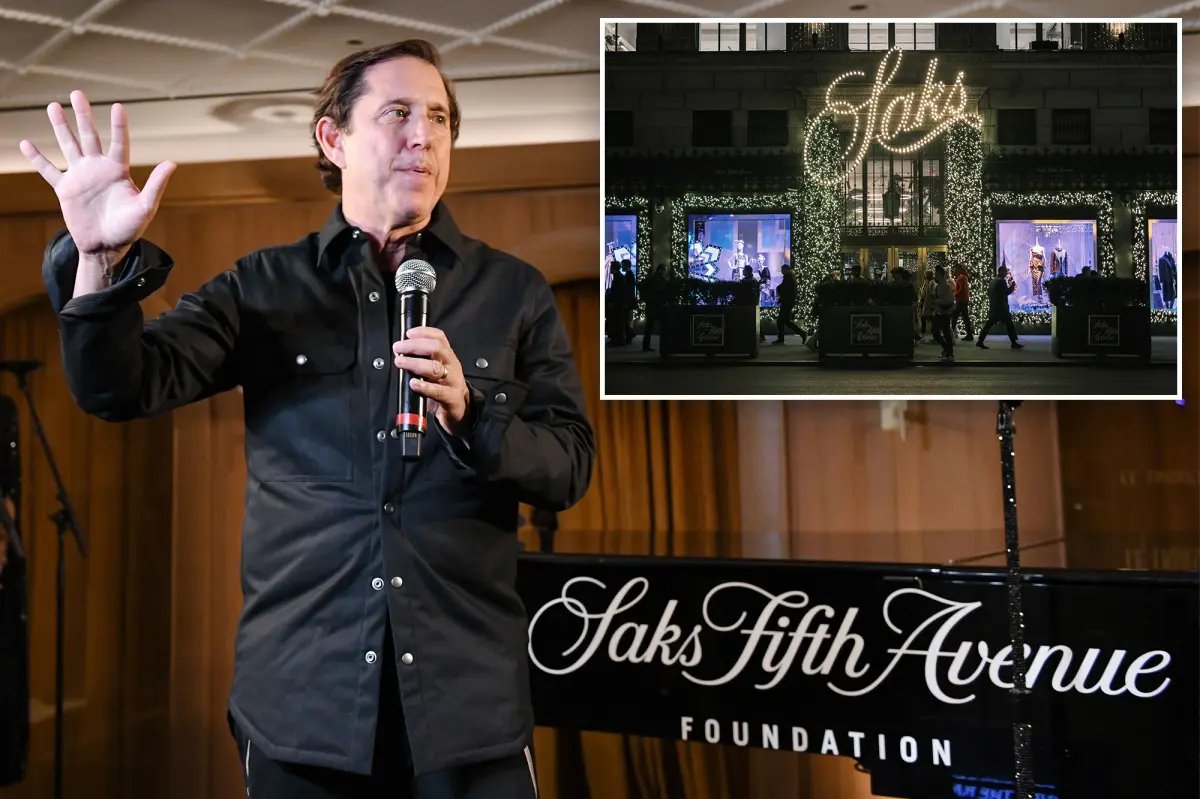
Saks Global is reportedly nearing bankruptcy after failing to make a $100 million payment to bondholders as part of its debt obligations stemming from its $2.7 billion acquisition of Neiman Marcus. The luxury retail giant, which operates well-known brands including Saks Fifth Avenue, Bergdorf Goodman, and Saks off 5th, is presently in discussions with creditors regarding potential financing solutions in anticipation of bankruptcy proceedings.
The company has encountered significant financial challenges since the acquisition last year, struggling with late payments to vendors and resulting shortages of sought-after high-fashion brands in its stores. As a consequence, sales have suffered, with revenues dropping by 13% for the quarter ending August 2.
In a bid to alleviate its financial pressures, Saks Global raised $600 million in capital in June. Additionally, the company has considered selling a minority stake in Bergdorf Goodman to generate more funds. Richard Baker, executive chairman of Saks Global and a real estate mogul, had ambitious plans for the Neiman Marcus merger, especially after Neiman Marcus itself filed for bankruptcy protection in 2020. However, this merger has coincided with a notable downturn in luxury goods demand, leading to multiple rounds of layoffs within the company this year.
– Why this story matters: Saks Global’s potential bankruptcy could signal broader challenges within the luxury retail sector, especially post-acquisition.
– Key takeaway: The company’s financial woes stem from a combination of high debt, lagging sales, and market demand fluctuations.
– Opposing viewpoint: Some stakeholders may argue that strong brand names like Saks and Neiman Marcus could rebound with strategic restructuring and a resurgence of luxury demand.