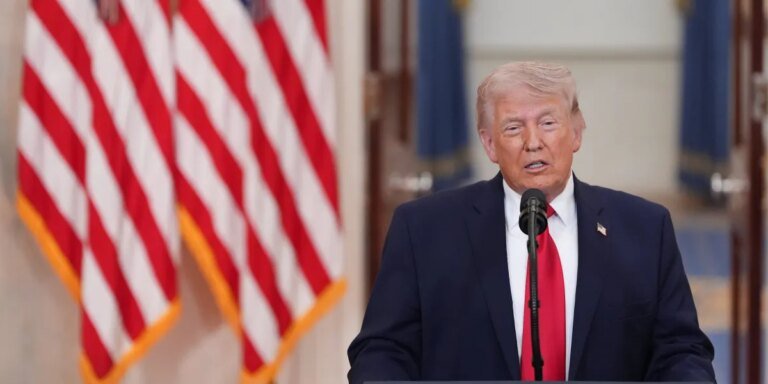


The United States has markedly increased its military presence in the Middle East, deploying additional fighter aircraft to bases in Jordan and Saudi Arabia as a preparation for a potential extended military campaign against Iran. President Donald Trump has issued warnings to Iran, demanding a swift agreement regarding its nuclear program, threatening action if the regime does not comply within a set timeframe of 15 days.
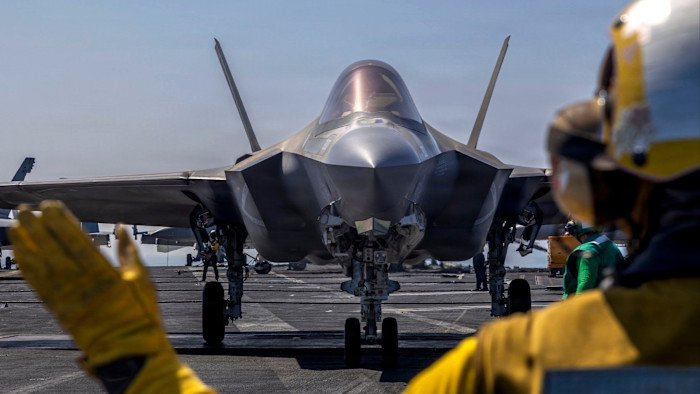
Recent satellite imagery reveals a significant uptick in aircraft stationed at the Muwaffaq Salti Air Base in Jordan. Analysts estimate that at least 66 fighter jets are now located there, including 18 advanced F-35 jets. Additionally, various support aircraft have been identified at the base. Simultaneously, aircraft numbers have risen at the Prince Sultan Air Base in Saudi Arabia, where an array of early warning and transport planes is stationed.
The current military deployments reflect one of the largest buildups in the region since the 2003 invasion of Iraq. The U.S. has positioned approximately five air wings across multiple bases, along with two carrier air wings that service the USS Abraham Lincoln and USS Gerald R. Ford, contributing to a naval presence not seen in the region since the early days of the Iraq invasion.
While military action remains a possibility, experts highlight the importance of strategic deliberation, indicating that escalating tensions without careful consideration could provoke further Iranian aggression. Following Trump’s comments, Iranian Foreign Minister Abbas Araghchi has emphasized Iran’s focus on diplomatic solutions, warning against military escalation while stating that discussions aimed at reaching a mutually accommodating agreement are underway.
Why this story matters
- Increase in military presence could escalate tensions in an already volatile region.
- Indicates a shift in U.S.-Iran relations and potential for renewed conflict.
Key takeaway
- The U.S. has ramped up military resources in the Middle East while seeking a diplomatic solution to Iran’s nuclear ambitions.
Opposing viewpoint
- Iran rejects the necessity of U.S. military buildup, advocating instead for diplomatic engagement and warning against military strikes as a path to resolution.