


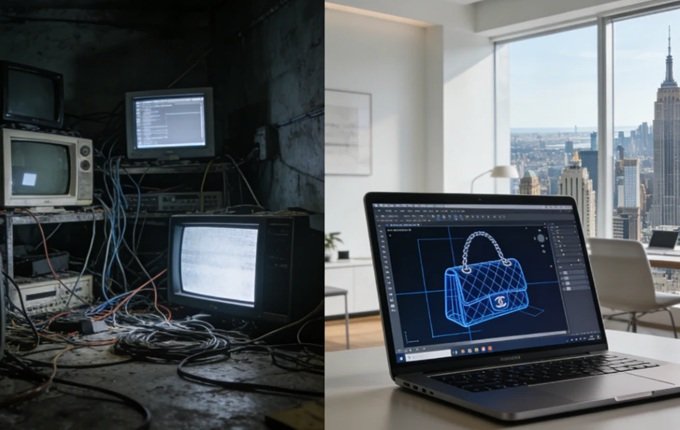
Small businesses have historically faced significant challenges in entering high-end digital markets, primarily due to the expensive resources required for creating sophisticated visual assets. However, the landscape is shifting. As of 2026, affordable 3D reconstruction technologies are enabling smaller companies to generate industrial-grade content without the need for extensive creative teams and budgets.
Traditionally, creating 3D assets involved high costs, including both software licensing and specialized labor. A single high-quality model could take professional artists days to complete, presenting scalability issues for startups with numerous products. The emergence of automation technologies, such as Neural4D, is transforming 3D production from an art form into a more efficient utility. By utilizing neural rendering technology, this platform can quickly convert 2D images into textured 3D models within approximately 90 seconds, allowing business owners to redirect funds towards growth and marketing.
One of the pitfalls for small businesses is the temptation to rely on low-quality AI-generated outputs, which often require extensive manual corrections. Strategic entrepreneurs are now seeking tools that combine affordability with high-quality outputs. Neural4D stands out by producing clean, structured meshes that are compatible with standard design and augmented reality software, thus maintaining a professional appearance at a lower cost.
Furthermore, the integration of batch processing capabilities via API enables businesses with large inventories to automate their visual catalogs efficiently. This allows even small teams to handle thousands of items simultaneously, creating digital storefronts that can compete with larger retailers.
As accessibility to advanced 3D technologies increases, the competitive edge will belong to those who adapt rapidly. By embracing automated high-standard tools like Neural4D, small business owners can enhance their visual capabilities and thrive in an increasingly 3D-focused marketplace.
Why this story matters
Key takeaway
Opposing viewpoint