


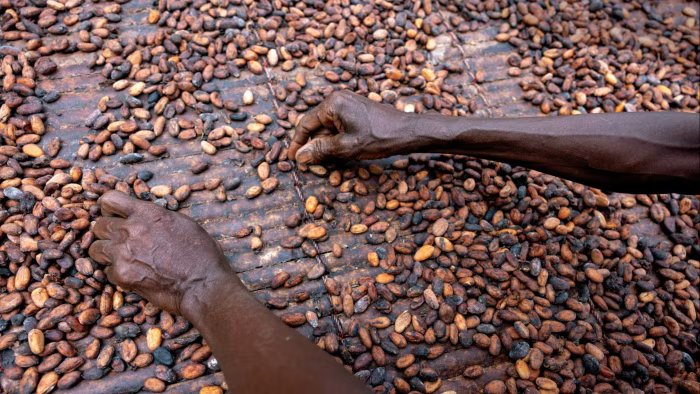
In a bid to promote ethical and sustainable chocolate production, Tony’s Chocolonely, a Dutch company dedicated to eradicating slavery and child labor in the cocoa industry, has introduced an innovative “Open Chain” model. This initiative openly shares the company’s sourcing strategies to encourage competitors to adopt similar practices.
Unlike typical corporate sustainability efforts that focus on consumer-facing narratives, Tony’s approach prioritizes transparency in their supply chain. Founded in 2005 by journalist Teun van de Keuken, the company measures success through metrics such as child labor rates and living income benchmarks, rather than traditional sales figures.
The Open Chain model challenges conventional business strategies by placing community impact over proprietary advantages. By offering tools like contract templates and data-sharing protocols, Tony’s aims to create an industry-wide framework for ethical sourcing based on five key principles: traceable cocoa beans, fair pricing, strong farmer cooperatives, long-term relationships, and improved quality and productivity.
This initiative has already attracted a coalition of “Mission Allies” in the food sector, contributing to a significant increase in ethical cocoa sourcing. For instance, in the 2023/24 season, 20 companies sourced over 17,000 tonnes of cocoa through this platform, marking a 20% year-over-year growth. Moreover, among Tony’s longest-standing cooperative partners, the child labor rate is significantly lower than the industry average.
Despite the advances made, the company acknowledges its limitations and the challenges of the global cocoa market, affected by rising costs and climate volatility. As Tony’s continues to grow, its leaders emphasize the importance of balancing expansion with meaningful impact, challenging the traditional notion of competitive advantage in favor of collaborative accountability.
Why this story matters:
- It highlights a transformative approach to corporate sustainability that emphasizes collaboration over competition.
Key takeaway:
- Tony’s Open Chain model aims to shift industry norms favoring transparency and systemic change in the cocoa supply chain.
Opposing viewpoint:
- Critics may question the feasibility of large corporations adopting such open-source practices, given potential financial risks and competitive pressures.