


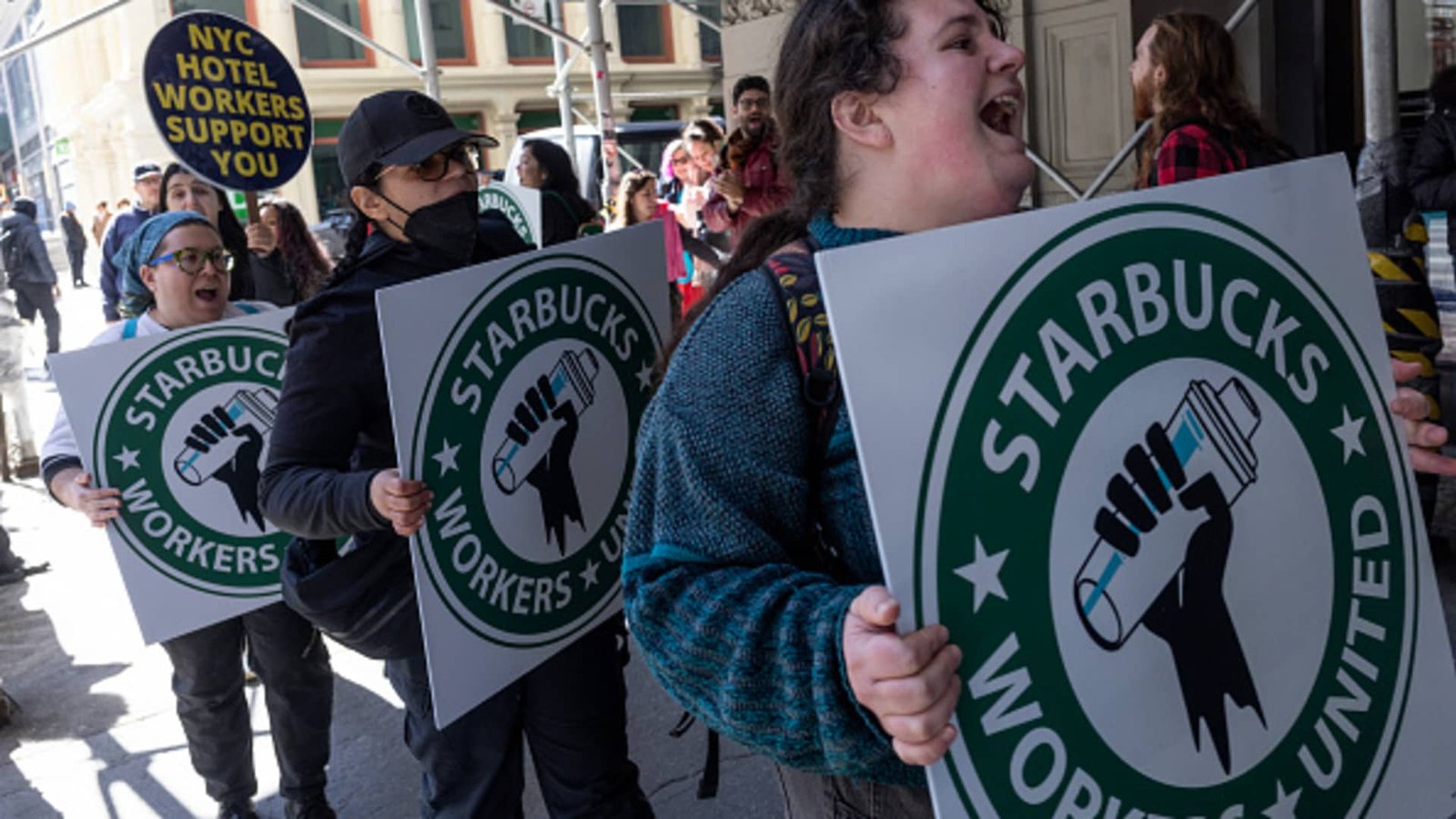
Starbucks Workers United presented a comprehensive proposal for a labor contract aimed at improving conditions for baristas, recently announced during a call with investors. This follows ongoing attempts by union members to reach their first labor agreement with Starbucks.
Key elements of the proposal include:
- Protections against discrimination, unjust termination, and store closures.
- A starting wage of $17 per hour, lower than the previously requested $20 but still above the current range of $15.25 to $16.
- Annual salary increases of 4%.
- A grievance resolution process involving baristas, management, and union representatives.
- An endorsed dress code.
- Requirements for adequate staffing, with at least three workers present at all times.
- Priority for current employees concerning open hours before hiring new staff.
- Resolution of numerous outstanding unfair labor practice charges.
Starbucks has not yet commented on the specific contents of the proposal but expressed a desire to resume negotiations with Workers United in late March. The last formal discussion took place in December 2024, with mediation attempts failing to lead to an agreement.
The continued tensions were highlighted by a recent work stoppage over the holiday season, which resulted in temporary closures across more than 40 cities. Although Starbucks claimed these strikes did not significantly impact overall business performance, shareholder sentiments are turning, with some investors opposing the reelection of key directors linked to recent labor relations challenges.
The situation will be further scrutinized during Starbucks’ upcoming annual shareholder meeting on March 25, amid broader concerns about the potential effects of labor disputes on the company’s recovery efforts in the U.S. market.
Key Points:
- Why this story matters: It highlights the ongoing labor negotiations affecting a major corporation and its employees.
- Key takeaway: Starbucks is facing sustained pressure from unionized baristas seeking better working conditions and compensation.
- Opposing viewpoint: Some shareholders believe the company’s management has not effectively addressed labor relations, raising concerns about future operations.