


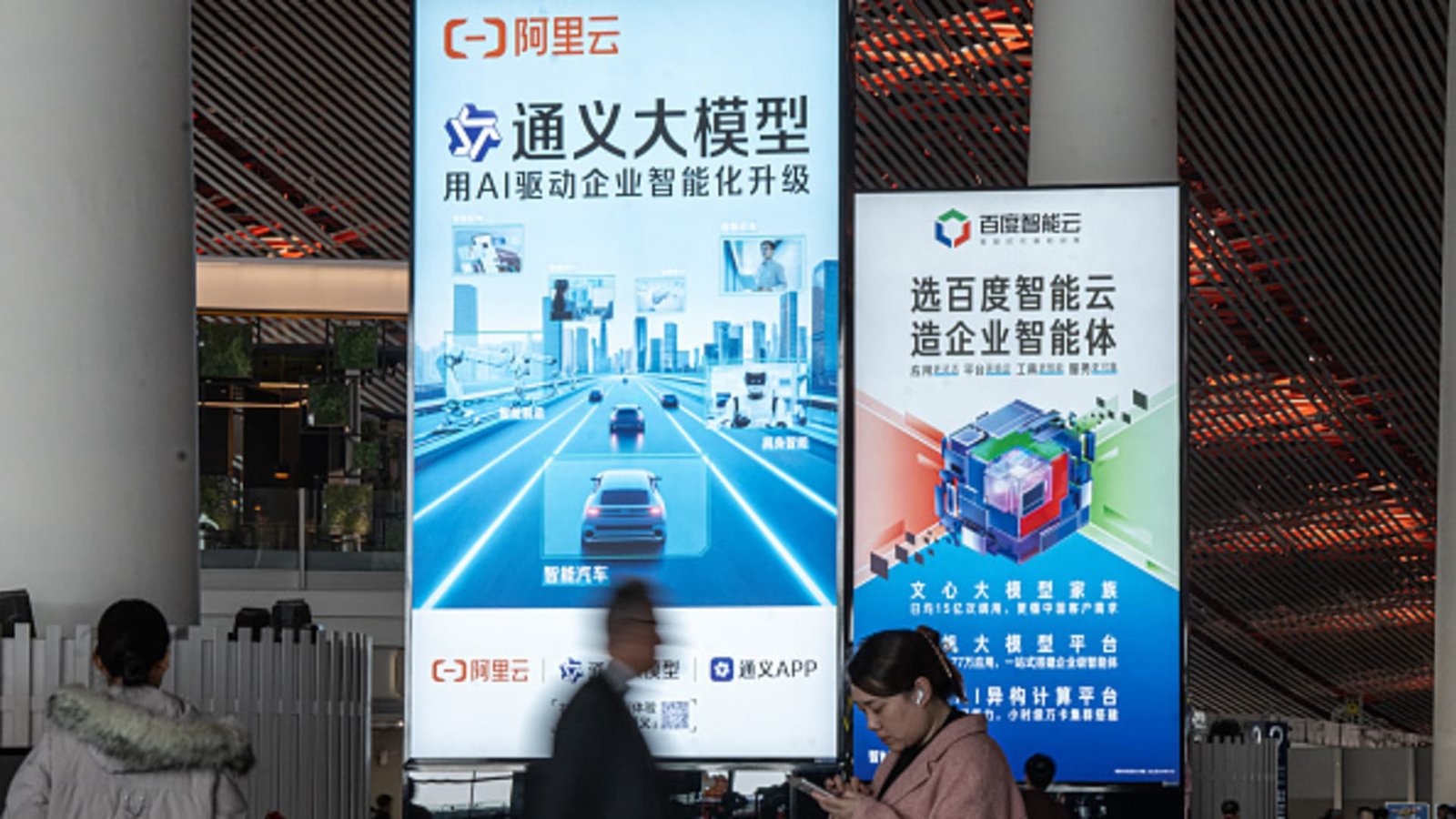
The recent sell-off in technology stocks highlights key differences in investment dynamics between China and the United States. Analysts indicate that while the U.S. decline was largely due to disappointing earnings from major tech firms, the downturn in China was influenced more by negative sentiment and shifts in investor portfolios. According to Ding Wenjie, an investment strategist at China Asset Management Co., the underlying demand in China for semiconductors and artificial intelligence continues to be robust, driven by both domestic consumption and global demand.
In the wake of the U.S. tech downturn, China’s technology giants faced significant losses, with notable companies like Hua Hong Semiconductor and SMIC experiencing declines of nearly 15% and 10%, respectively. Tencent and Alibaba also saw considerable drops, yet interest from mainland Chinese investors persisted, signaling a divergence in investor confidence.
Brian Tycangco of Stansberry Research noted that the current volatility in China’s tech sector is largely a reaction to external pressures rather than fundamental weakness. He believes that China’s technology market has just embarked on a bullish trend, with favorable valuations despite recent turbulence.
Despite macroeconomic challenges, the Chinese digital economy and AI sector remain growth-oriented, with earnings expectations steady. Raffles Family Office indicated in its 2026 investment outlook that although there is significant pessimism reflected in current valuations, there are also pockets of strength due to policy alignment and innovation trends.
As legislations and local technical advancements evolve, companies like Pony.AI are advancing partnerships to enhance their autonomous driving technologies, further illustrating China’s focus on local tech development.
Why this story matters
- Highlights differences between U.S. and Chinese tech markets and their investor sentiments.
Key takeaway
- China’s tech sector may be poised for growth despite recent volatility, as it exhibits strong fundamentals and attractive valuations.
Opposing viewpoint
- There is concern regarding excessive valuations within the U.S. AI market, contrasting with China’s embrace of technological innovation at more competitive prices.