



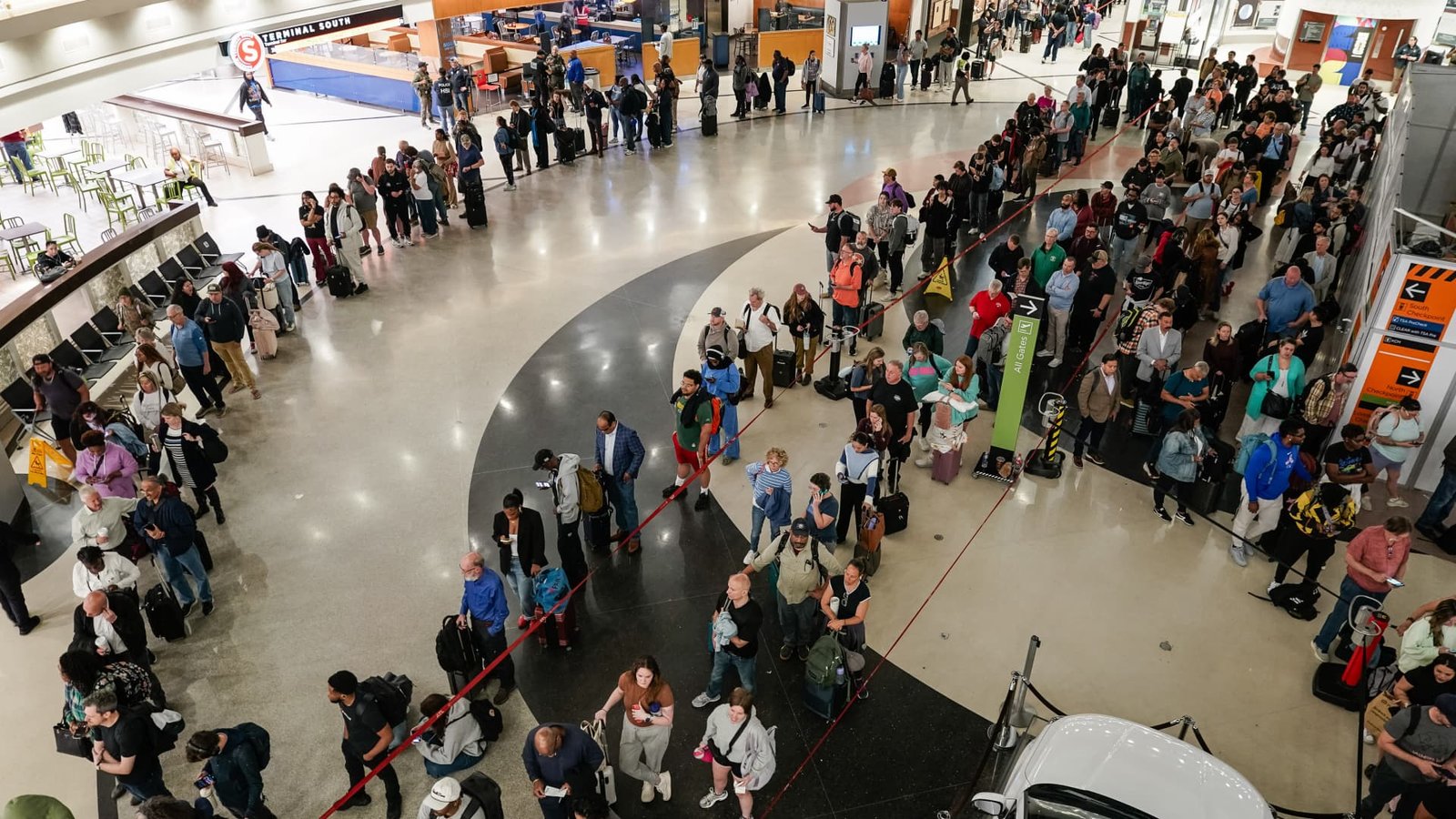
President Donald Trump revealed he is contemplating the deployment of the National Guard to U.S. airports amid ongoing issues stemming from the partial government shutdown. This announcement follows the deployment of Immigration and Customs Enforcement (ICE) agents to major airports, where travelers have faced significant delays. Trump attributed the shutdown, which began on February 14, to Democratic opposition, commending ICE agents for their efforts in alleviating airport pressures.
On Wednesday, reports indicated that over 11% of Transportation Security Administration (TSA) officers were absent due to the shutdown, with more than 450 resignations since its onset. Many TSA employees are required to work without pay, which has exacerbated the long lines observed at airports including Atlanta, Houston, and New York.
The Department of Homeland Security (DHS) has stated that ICE agents will assist airports experiencing the highest levels of congestion, although specific details about their roles remain undisclosed. Unlike TSA personnel, ICE agents continue to receive compensation amid the shutdown.
Airlines have been alerting customers to the potential for extended wait times at security checkpoints, expressing frustration at the legislative stalemate. Delta Air Lines recently suspended special services for members of Congress due to the ongoing shutdown. The situation has been complicated by calls from Democrats for reforms in federal immigration enforcement following incidents involving ICE officers.
Why this story matters
- The airport delays impact millions of travelers and highlight broader issues of government funding and services.
Key takeaway
- The deployment of ICE agents and potential National Guard involvement aims to address significant staffing shortages causing long lines at airports.
Opposing viewpoint
- Critics argue that the immigration enforcement policies and the management of the shutdown have detrimental effects on public safety and worker conditions.