

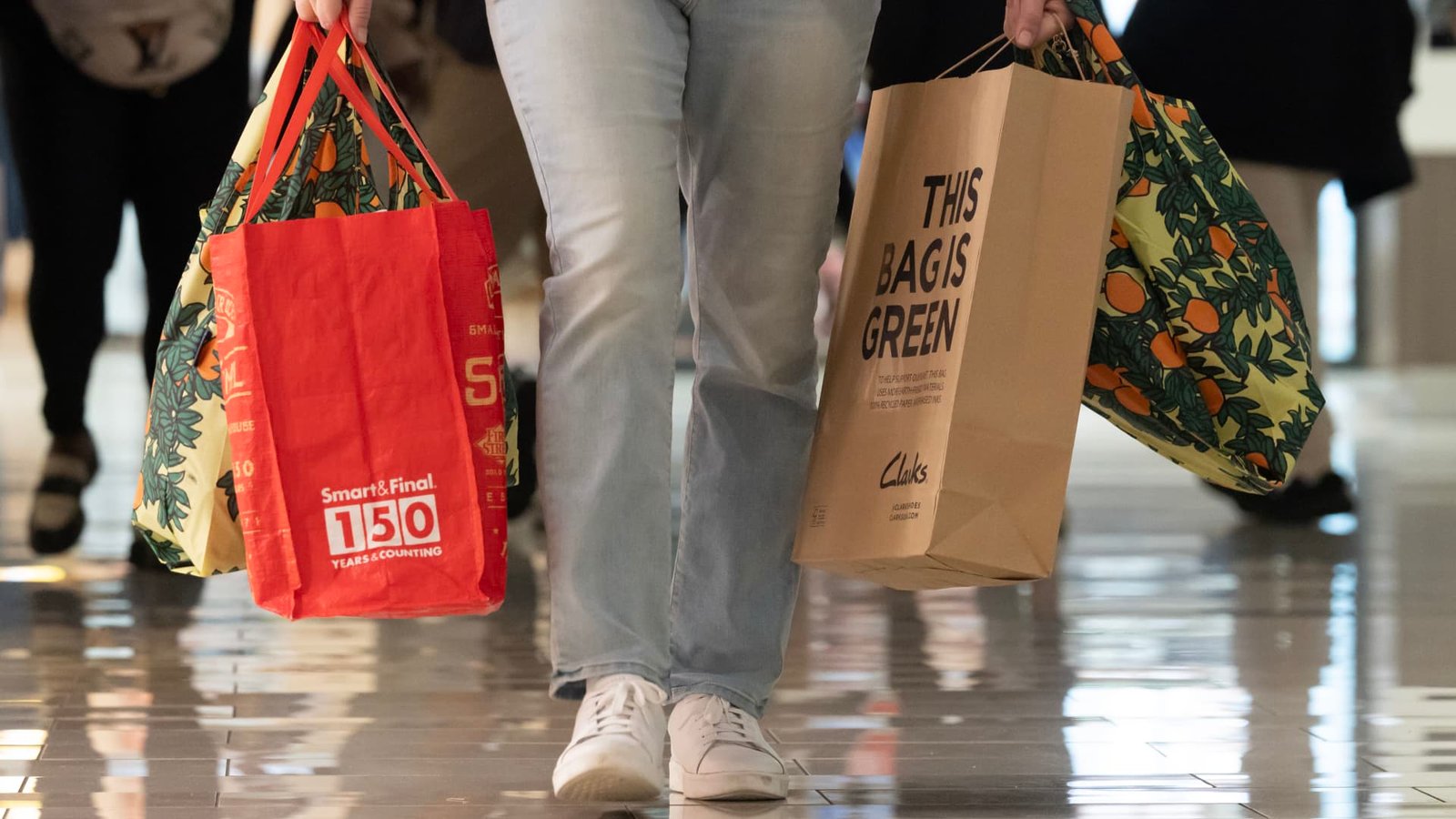
U.S. consumers exhibited notable resilience during the holiday season, with retail spending increasing by 4.2% year-over-year, according to preliminary data from Visa Consulting and Analytics. This data draws from a seven-week period starting November 1 and focuses on core retail categories, excluding automotive, gasoline, and restaurant expenditures while not adjusting for inflation.
In-store shopping dominated the spending landscape, accounting for 73% of total retail payment volume, while online sales comprised 27%. Notably, e-commerce emerged as a key growth driver, witnessing a 7.8% increase in sales compared to the previous year, attributed to ongoing consumer demand for convenience and early-season promotions.
Michael Brown, principal U.S. economist at Visa, highlighted that consumer spending remained robust despite lower confidence levels and various economic challenges, including inflation concerns. He noted a significant shift in consumer behavior driven by artificial intelligence, with many shoppers utilizing AI tools for product discovery and price comparisons. Approximately half of surveyed consumers reported intending to use AI for these tasks during their holiday shopping.
Spending trends indicated a move toward personal goods and convenience, with electronics leading as the top-performing category, seeing a 5.8% increase. Apparel and accessories also performed well, rising by 5.3%. However, the home improvement sector faced challenges, with expenditures on building materials and garden equipment declining by 1%. This suggested a consumer preference for gifting over home renovations as the year concluded.
Despite the positive headline figures, the lack of inflation adjustment indicates potential for more modest “real” growth, currently estimated at 2.2% when adjusted for inflation. This aligns with consumer sentiment data indicating that many Americans planned to cut back on holiday spending due to rising costs.
Why this story matters: Highlights consumer behavior trends amid economic challenges.
Key takeaway: Strong retail spending suggests resilience despite inflation concerns.
Opposing viewpoint: Many consumers report intentions to spend less due to high costs.