


As China and the United States vie for leadership in artificial intelligence (AI), analysts at Bernstein emphasize that compute power will be a crucial determinant of success. The firm highlights that China must invest significantly in semiconductor technology and power infrastructure to keep pace with the U.S. While the U.S. has imposed restrictions on China’s acquisition of advanced chips for training AI models, Chinese companies have responded by utilizing less advanced chips and offering cost-effective AI solutions.
Crucially, the race for AI supremacy hinges not only on chip technology but also on energy supply. Bernstein analysts noted that as of March 2023, the projected compute power for the U.S. by 2035 is expected to reach 511 zetta floating point operations per second (ZFLOPS), a significant increase from its current 35 ZFLOPS. In contrast, China currently operates at just 5 ZFLOPS, although it increased its power capacity by over 500 gigawatts last year. If this growth continues, China could potentially reach 1,936 ZFLOPS by 2035, surpassing U.S. capacity by more than three times.
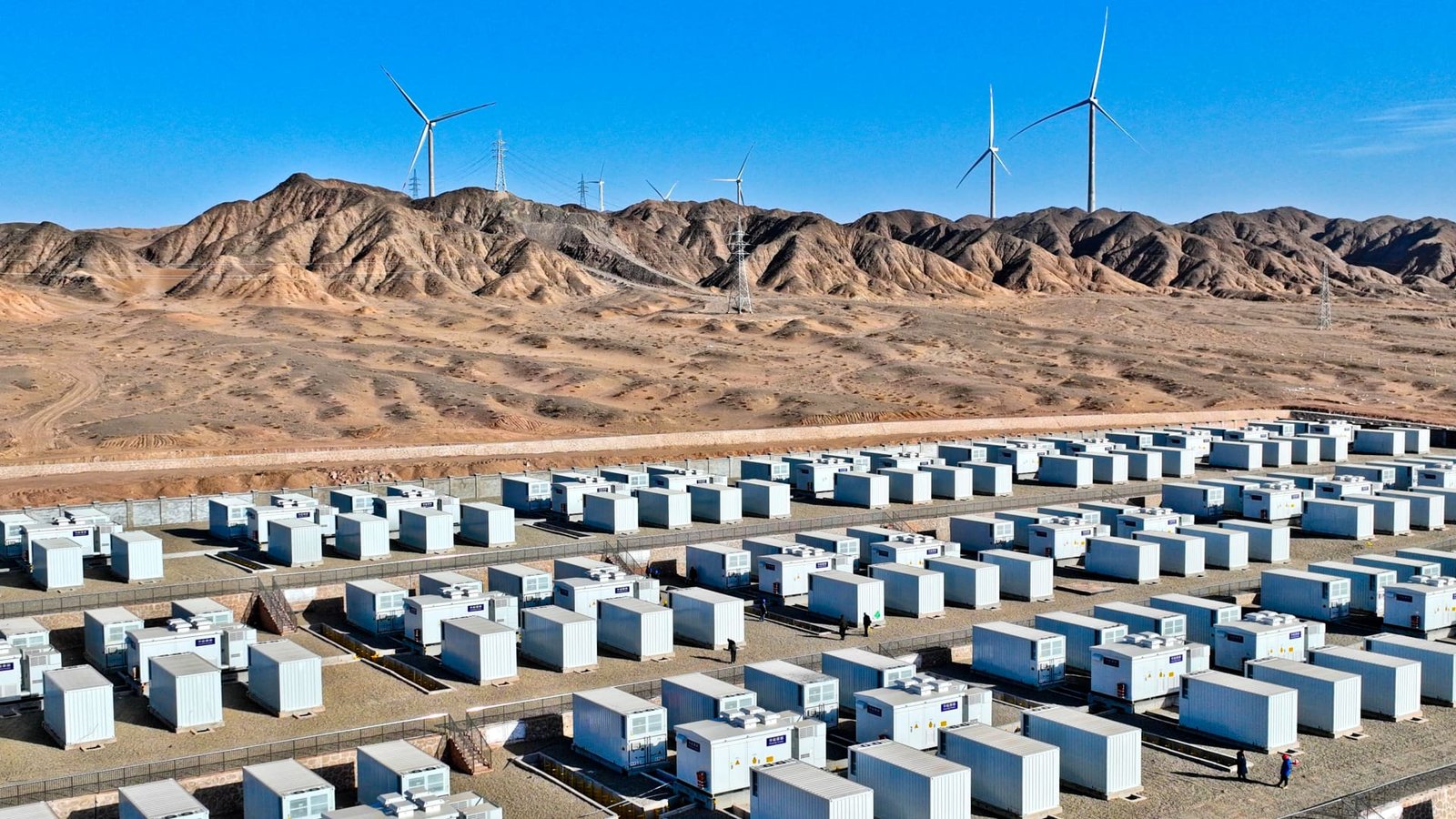
Beijing’s commitment to energy security supports this growth, with diversified investments in crude oil and renewables. The push towards electric vehicles has further decreased oil dependency, simultaneously fostering battery development. Bernstein analysts recommend stocks such as CATL and Sungrow, highlighting them as key players in battery and solar technology.
Additionally, the report suggests that domestic Chinese AI chips are expected to improve significantly in efficiency by 2035. Bernstein identifies Cambricon and Hygon as significant semiconductor investments, both listed on the STAR board in Shanghai. Overall, China is estimated to increase spending on AI-related infrastructure, particularly in data centers, at a rate of 32% per year through 2035, compared to a projected 8% growth in the U.S.
Why this story matters
Key takeaway
Opposing viewpoint