



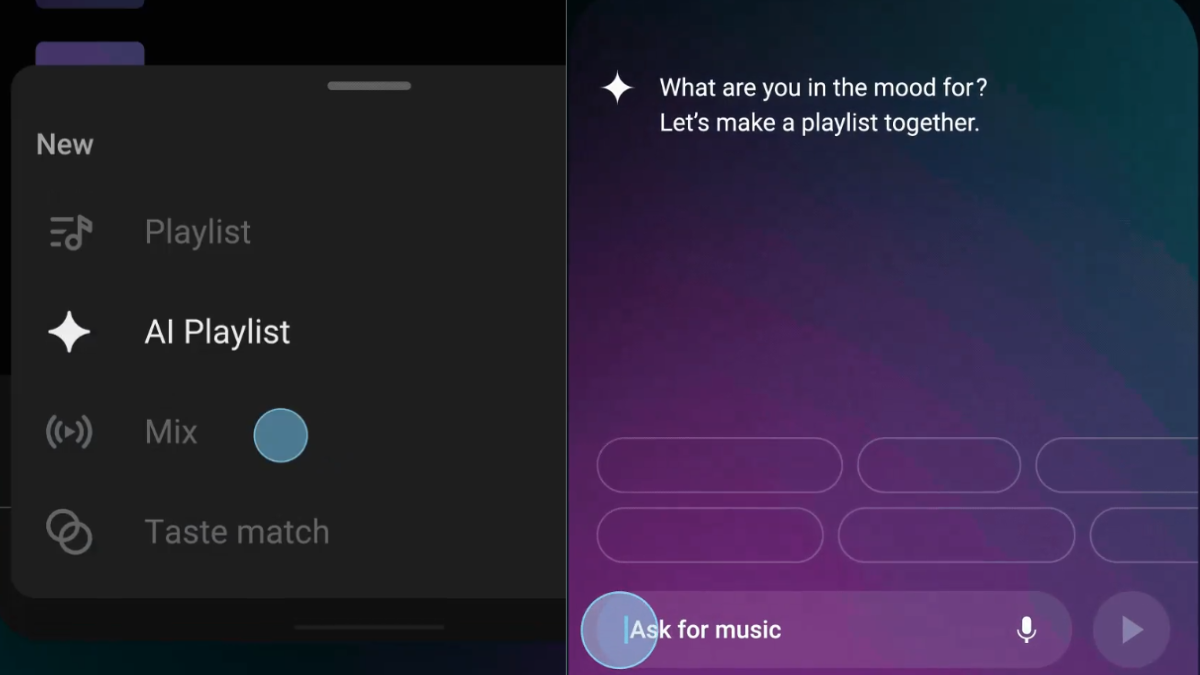
YouTube Music has launched a new AI Playlist feature exclusively for Premium subscribers, allowing users to create personalized playlists by simply describing their listening preferences. The announcement was made via the platform’s account on X (formerly Twitter), indicating that the feature is now available for both Android and iOS devices.
The AI Playlist tool enables subscribers to generate playlists by entering text prompts or using voice commands to articulate a mood, idea, or genre. This innovative approach eliminates the need for manual song selection, streamlining the playlist creation process. The feature is marked with a distinctive Gemini-style logo, highlighting its unique functionality.
This rollout follows similar advancements by competitors, notably Spotify, which has introduced a feature named Prompted Playlist. This allows users to curate playlists based on their own musical tastes and listening history.
While YouTube Music previously rolled out an “Ask Music” feature in 2024, focused on individual song requests, the new AI Playlist tool aims to construct full playlists, enhancing the overall music discovery experience. However, details regarding user editing capabilities post-playlist generation remain unspecified.
To utilize the AI Playlist feature, users can follow these steps:
- Open the YouTube Music app on their device.
- Navigate to the Library tab and select the “New” button.
- Choose “AI Playlist.”
- Describe the desired music using text or voice commands.
This feature represents a significant step in personalizing music consumption, catering to the evolving preferences of listeners in a competitive streaming landscape.
Why this story matters
- This feature enhances user experience for YouTube Music Premium subscribers, providing an intuitive way to create playlists.
Key takeaway
- The AI Playlist tool simplifies the playlist creation process through prompts based on user preferences.
Opposing viewpoint
- Some users may prefer traditional methods of playlist curation, feeling less control over content generated automatically.