



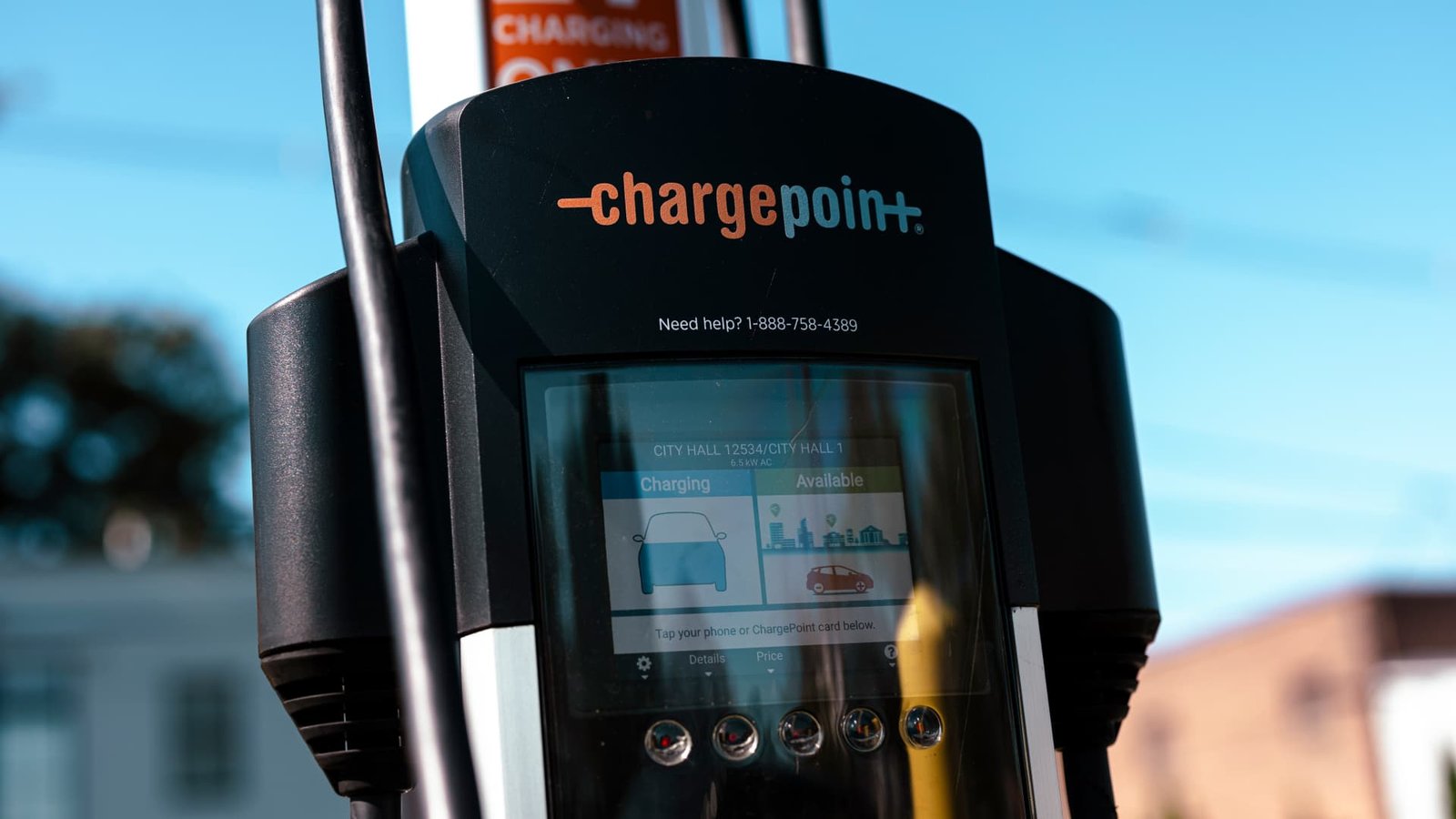
ChargePoint Holdings recently experienced a significant surge in its stock value, climbing over 70% after releasing its second-quarter financial results, which exceeded Wall Street expectations. CEO Rick Wilmer expressed confidence that this spike marks the onset of a longer-term upward trend for the company, driven by new products and technological advancements. ChargePoint reported revenues of $116.1 million for the quarter, surpassing analyst projections of $105.2 million. The reported loss per share was 35 cents, significantly better than the expected loss of 85 cents.
The company attributed part of its success to a one-time tariff refund of approximately $4.2 million, but indicated that its normalized gross margin would have still set a record even without this refund. ChargePoint’s growth has been consistent, achieving year-over-year revenue increases for four consecutive quarters.
Unlike many competitors, ChargePoint does not own its charging stations; instead, it supplies the necessary hardware, software, and services to various businesses allowing them to provide charging solutions. The company is focusing on developing faster high-performance chargers, particularly in Europe, and is leveraging artificial intelligence to enhance user experience and operational efficiency.
Despite challenges in all-electric vehicle sales linked to the reduction of federal incentives in the United States, Wilmer remains optimistic. He believes that while some may view the current market as stagnant, there is potential for positive growth driven by innovation. ChargePoint’s third-quarter guidance predicts revenues between $105 million and $115 million, representing a modest year-over-year increase.
Why this story matters
- ChargePoint’s financial performance reflects broader trends in the EV charging sector.
Key takeaway
- The company is innovating and improving efficiency to enhance future prospects, despite current market challenges.
Opposing viewpoint
- Some analysts remain skeptical about long-term demand for electric vehicles, particularly in light of reduced federal support.