



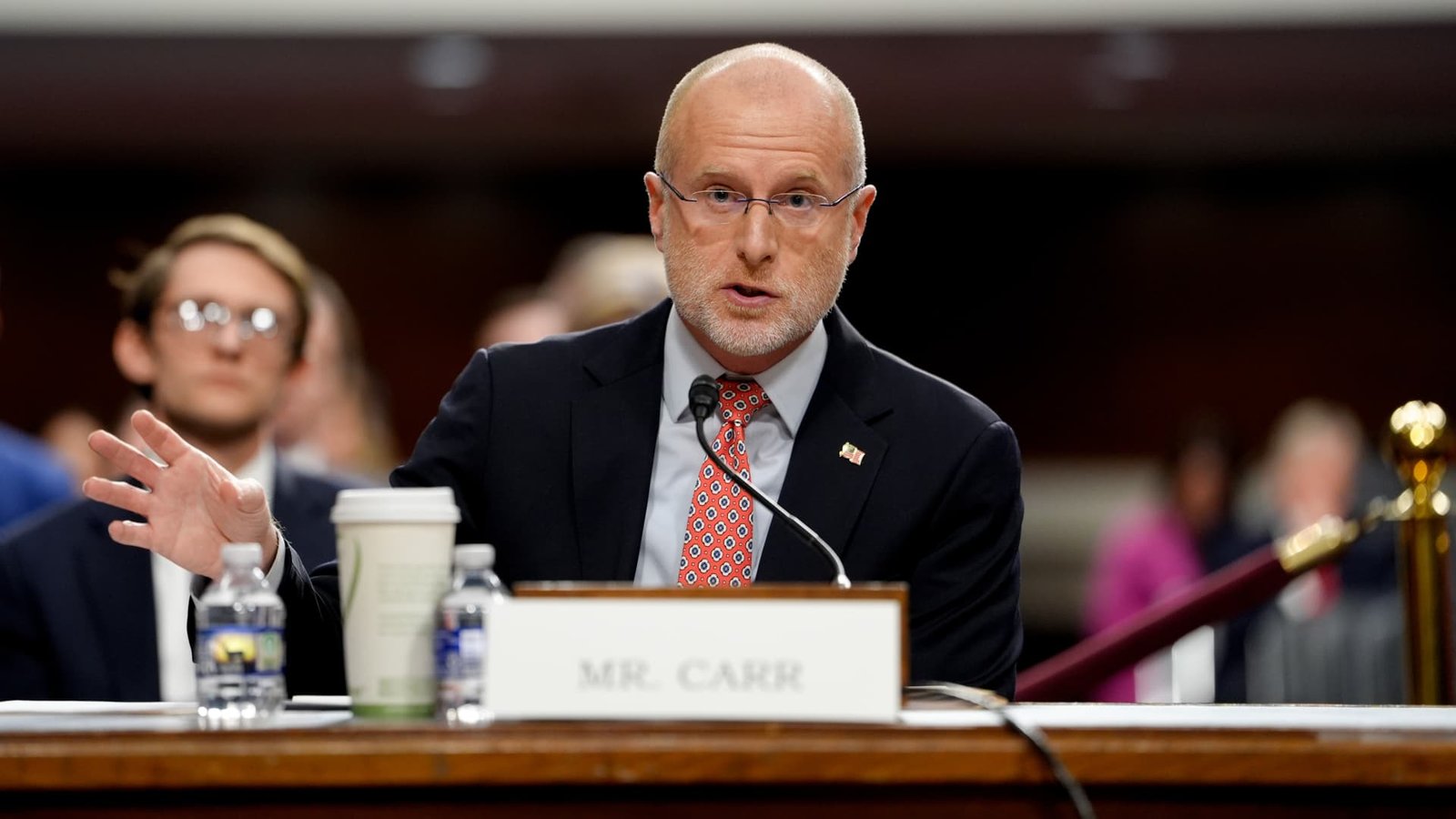
Brendan Carr, the commissioner of the Federal Communications Commission (FCC), faced pushback from Disney during the early renewal process for broadcast licenses of eight Disney-owned ABC stations. In a recent filing, Disney submitted its applications "under protest," labeling the FCC’s actions as "unlawful, arbitrary, and unconstitutional." This early review was initiated by the FCC in April, years ahead of the stations’ scheduled renewal between 2028 and 2031, due to concerns over Disney’s diversity, equity, and inclusion (DEI) initiatives.
The FCC’s investigation into Disney began last March, focusing on potential violations of the Communications Act of 1934 regarding unlawful discrimination. Disney was compelled to file its renewal applications by Thursday, following the FCC’s announcement that further scrutiny was necessary.
Critics have highlighted the timing of the FCC’s review, coinciding with renewed political scrutiny from former President Donald Trump regarding ABC after comments made by comedian Jimmy Kimmel. This has led to allegations of political motivation behind the FCC’s actions, raising concerns among observers, including a sitting commissioner.
In its filing, Disney expressed that this request for early renewal marked the first such action in over fifty years and contended that it lacked legitimate grounds. They argued that any necessary information could be obtained through other means, asserting that the order was inconsistent with the First Amendment.
FCC Chairman Brendan Carr responded by affirming the agency’s course, indicating that the scrutiny arose from their investigation into Disney’s DEI practices, claiming that Disney’s previous responses were unsatisfactory. He reiterated that the FCC would adhere to the facts and law in its investigation.
Why this story matters
- Highlights the tension between regulatory oversight and corporate practices around diversity and political influence.
Key takeaway
- The FCC’s early review of Disney’s broadcast licenses has raised questions about political motivations and regulatory authority.
Opposing viewpoint
- Critics argue that the FCC’s investigation could represent an overreach and stifle freedom of speech in the media sector.