



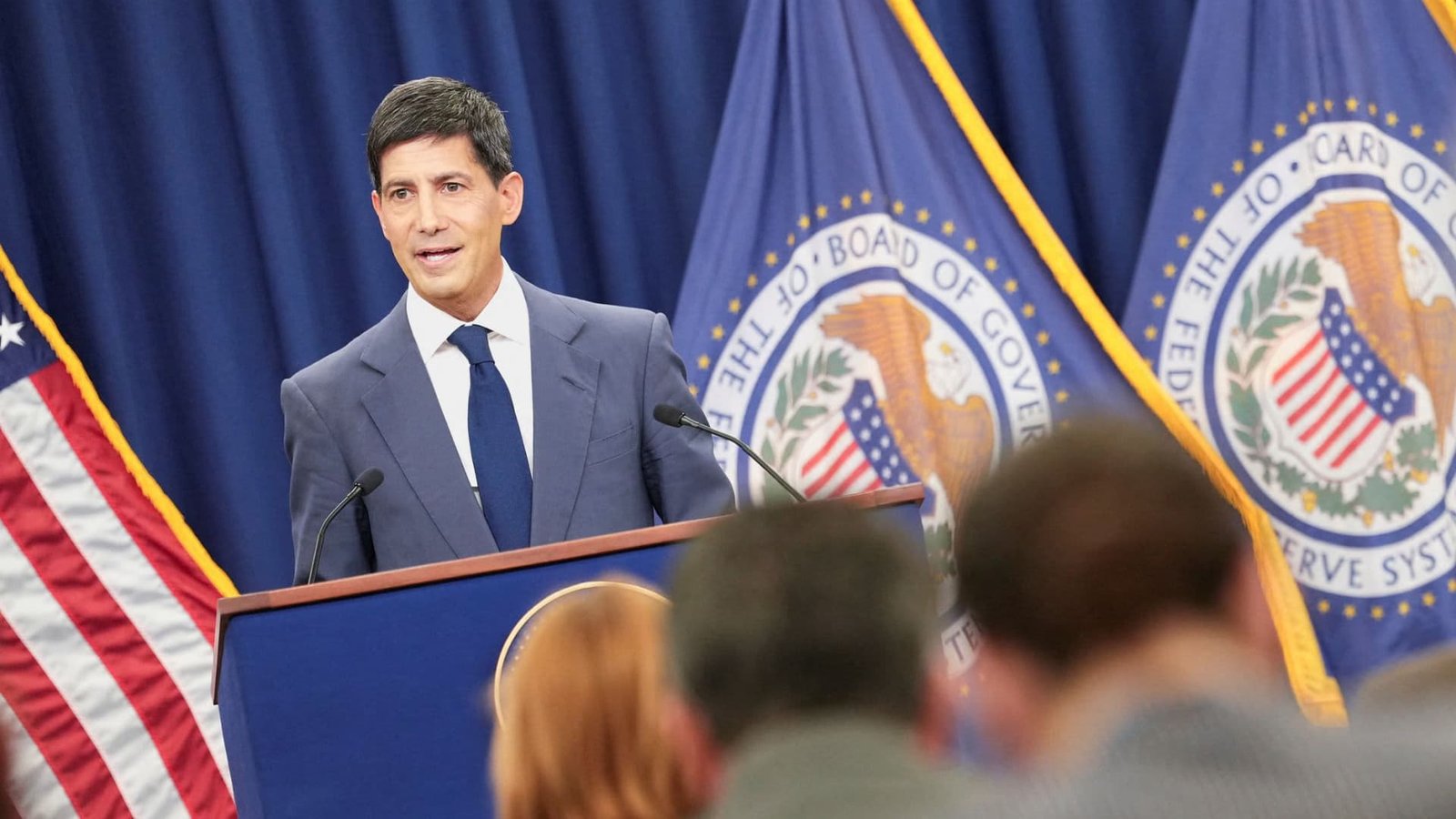
U.S. Federal Reserve Chairman Kevin Warsh recently unveiled a new communication style following a two-day Federal Open Market Committee (FOMC) meeting. The statement released was notably concise, comprising approximately 130 words, a considerable reduction from the previous average of over 300 words.
In his inaugural press conference, Warsh acknowledged the shift, emphasizing the absence of forward guidance, which he deemed unsuitable for the current economic context. "It’s a bit shorter, a bit simpler and it dispenses with some older language," he explained. The new statement was designed to provide just the essential facts regarding the Fed’s policy decisions.
This latest release differs from previous ones by omitting individual voting details, which were a notable aspect of prior communications under former Chairman Jerome Powell. Instead, the statement simply noted a unanimous vote. The language surrounding inflation trends has also been streamlined, affirming only the Fed’s commitment to maintaining stable prices.
Experts are interpreting these changes as indicative of a "regime change" under Warsh. He has openly criticized the Fed’s previous communication practices, suggesting they may lead to policy errors by creating unnecessary ties to market expectations. According to Ian Lyngen, head of U.S. rates strategy at BMO, Warsh’s initial FOMC statement signals a clear transition in leadership style, focusing on essential economic indicators.
Why this story matters:
- It reflects a significant shift in the U.S. Federal Reserve’s approach to communication and policy guidance under Kevin Warsh.
Key takeaway:
- The new concise format eliminates forward guidance and extraneous details, marking a departure from past practices.
Opposing viewpoint:
- Critics may argue that reduced transparency could hinder market understanding and lead to increased uncertainty about the Fed’s future policy directions.