


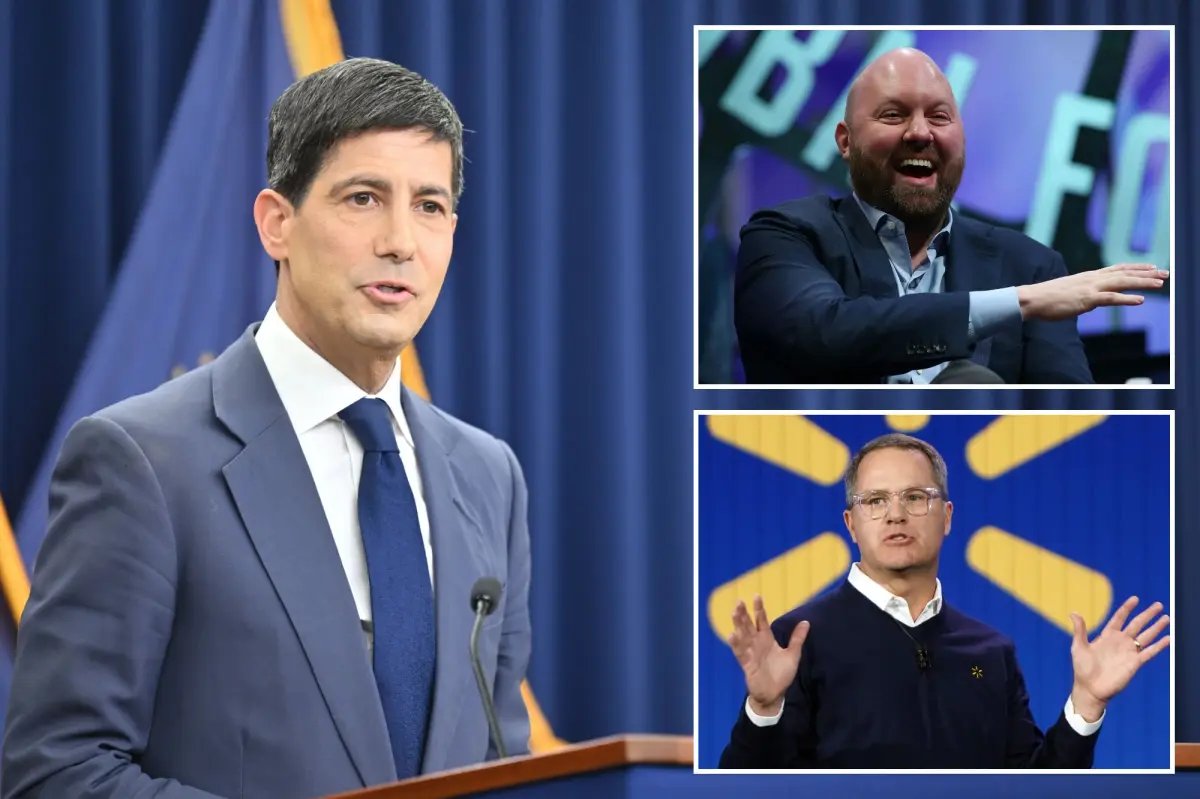
Venture capitalist Marc Andreessen, economist Raj Chetty, and former Bank of England governor Mervyn King are set to play pivotal roles in five newly formed task forces aimed at enhancing the operations of the Federal Reserve. The announcement was made by Fed Chair Kevin Warsh, who previously advocated for a significant transformation within the bank.
Warsh’s call for a "regime change" at the Fed last year, during his consideration for chairmanship under the Trump administration, underscores his intention to shift how the central bank communicates its strategies regarding interest rates. He has also expressed a desire to reduce the Fed’s extensive $6.7 trillion portfolio of government bonds.
While the task forces include noted leaders from various sectors—including public officials and business executives—it remains uncertain how profoundly their recommendations will impact the Fed’s practices. Analysts suggest that Warsh is attempting to persuade Fed officials toward change rather than impose new measures.
Warsh emphasized the need for updated approaches, stating, "The US economy has changed significantly over the last generation, and never more so than right now." Each task force will explore improvements to the Fed’s methodologies and analytical tools.
Among the task forces, one will focus on the implications of artificial intelligence on productivity and employment, co-led by Andreessen and Microsoft executive Asha Sharma. Chetty will spearhead another task force dedicated to assessing the data sources leveraged by the Fed, collaborating with Doug McMillon, former CEO of Walmart.
Additional task forces will address the Fed’s balance sheet and inflation frameworks, co-led by economists such as Raghuram Rajan and Thomas Sargent, respectively.
Why this story matters
- The Federal Reserve’s operations have significant implications for the U.S. economy and monetary policy.
Key takeaway
- New task forces are being established to reform and modernize the Federal Reserve’s strategies, signaling a potential shift in economic governance.
Opposing viewpoint
- Critics may argue that the involvement of business leaders could lead to conflicts of interest or a focus on corporate over public priorities.