


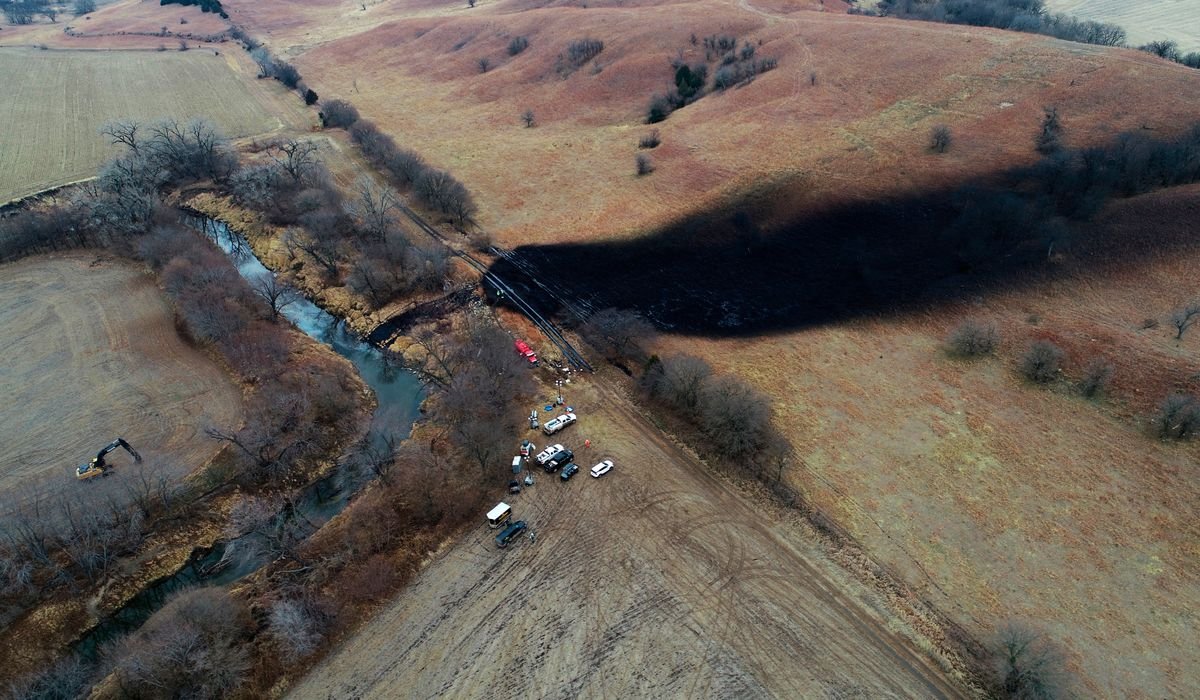
A proposed legal settlement with the U.S. government could lead to a total financial compensation of approximately $66 million from South Bow, the operator of the Keystone Pipeline system, following a significant oil spill in Kansas in December 2022. This incident, involving a rupture that released nearly 13,000 barrels of crude oil into a creek in Washington County, marks the largest domestic onshore pipeline spill recorded in the past nine years.
The U.S. Environmental Protection Agency (EPA) and Kansas authorities allege that South Bow violated both federal and state clean water laws. The proposed agreement will require the company to pay a $26.9 million civil penalty, along with an estimated $40 million earmarked for future accident prevention measures. Additionally, South Bow is expected to contribute over $3 million for environmental restoration efforts in the region. The settlement is subject to approval by a U.S. District Court judge following a 30-day public comment period.
Despite the proposed settlement, South Bow contests the allegations and maintains that it does not accept legal liability. The company asserts that it initiated cleanup efforts proactively and completed them early in 2024, although a report indicates that more than 2,700 animals were impacted by the spill, including an endangered bat species.
Engineering assessments have pointed to structural concerns in the pipeline, with indications that it had been "overstressed" since its installation in 2010. The Keystone system, stretching 2,689 miles, transports heavy crude oil from Canada to various refineries in the U.S.
Why this story matters
Key takeaway
Opposing viewpoint