


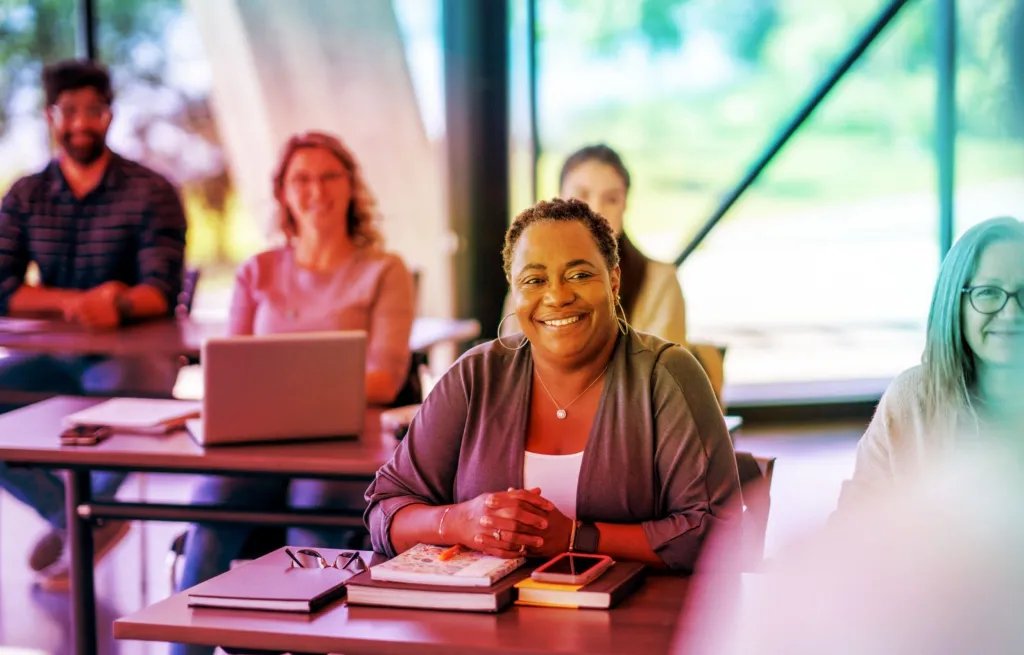
The landscape of higher education is evolving, shaped increasingly by adult learners, including working professionals, career changers, and parents returning to school. The traditional model, where students transition directly from high school to college, is giving way to a more inclusive framework that accommodates diverse commitments and life experiences.
According to recent data, over 14 million non-traditional students are enrolled in higher education across the United States for the 2022-2023 academic year. This demographic shift is prompting institutions to rethink their approaches to program design and student support.
Adult learners are primarily motivated by the pursuit of upward mobility and financial improvement, with reports indicating that those who return to education experience a 140% salary increase on average. However, it is not solely about financial gain; these learners often prioritize flexibility and relevance in their educational pursuits, seeking programs that accommodate their busy lives and directly enhance their careers.
To address these needs, colleges and universities are adopting modular programs, competency-based education, and personalized advising. Educational offerings are becoming increasingly online and hybrid, allowing adult learners to progress at their own pace. This approach not only improves access but also academic outcomes, as studies suggest that older and non-traditional students may demonstrate higher retention rates and better grades.
Furthermore, with employers focusing on practical skills over traditional qualifications, educational institutions are reassessing their curricular designs to align more closely with workforce demands.
In essence, higher education is transitioning from a linear model to a more adaptable, lifelong learning system where learners can build their educational pathways incrementally.
Bold Points:
- Why this story matters: The shift towards adult learners is redefining higher education and workforce readiness.
- Key takeaway: Institutions are increasingly tailoring education to meet the needs of non-traditional students through flexible, competency-based programs.
- Opposing viewpoint: Critics may argue that this shift risks undermining the traditional college experience and the value of a comprehensive education.