

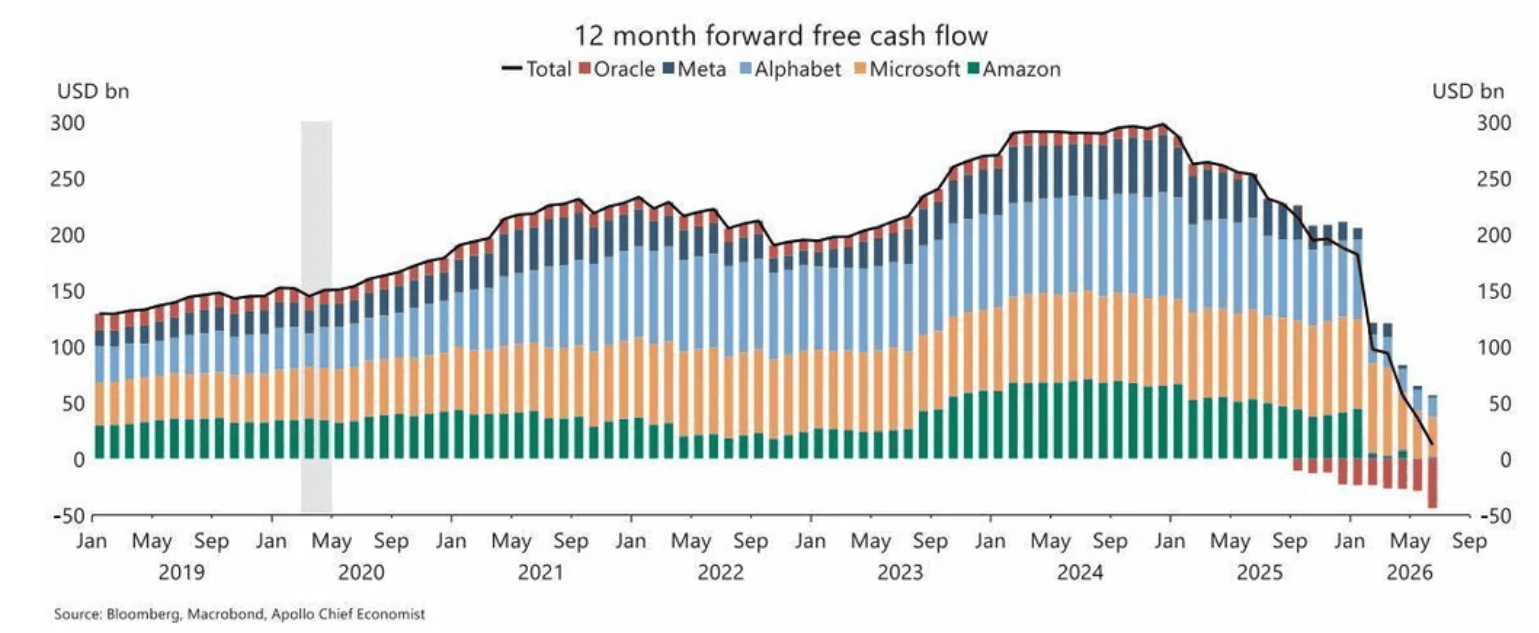
Investments in hardware manufacturing are currently advantageous for companies that can deliver immediate results. In contrast, large tech corporations, often referred to as hyperscalers, are making financial commitments that extend years into the future. This influx of capital may lead to short-term challenges in the industry, although there is optimism for substantial returns by 2027.
However, financial calculations suggest that the projected expenditure of $7.6 trillion will necessitate a doubling in revenue generation to yield profitable outcomes. There are potential solutions to absorb excess GPU inventory, notably through the establishment of space data centers or intervention from Chinese markets. Meanwhile, companies specializing in air conditioning are experiencing notable profits as they respond to the thermal demands of data centers.
Some observers attribute current market conditions to either state control, described by some as fascism, or to unrestrained investments in large language models (LLMs), which may not yield immediate benefits. The prevailing trend shows significant cash outflows, raising concerns about sustainability and the return on investment.
Why this story matters: The tech industry’s current investment trends could heavily influence future profitability and innovation.
Key takeaway: Immediate hardware delivery is prioritized by some manufacturers, while long-term financial commitments from larger firms may complicate revenue generation.
Opposing viewpoint: Some analysts criticize excessive spending on speculative technologies, warning of potential financial instability in the tech sector.