


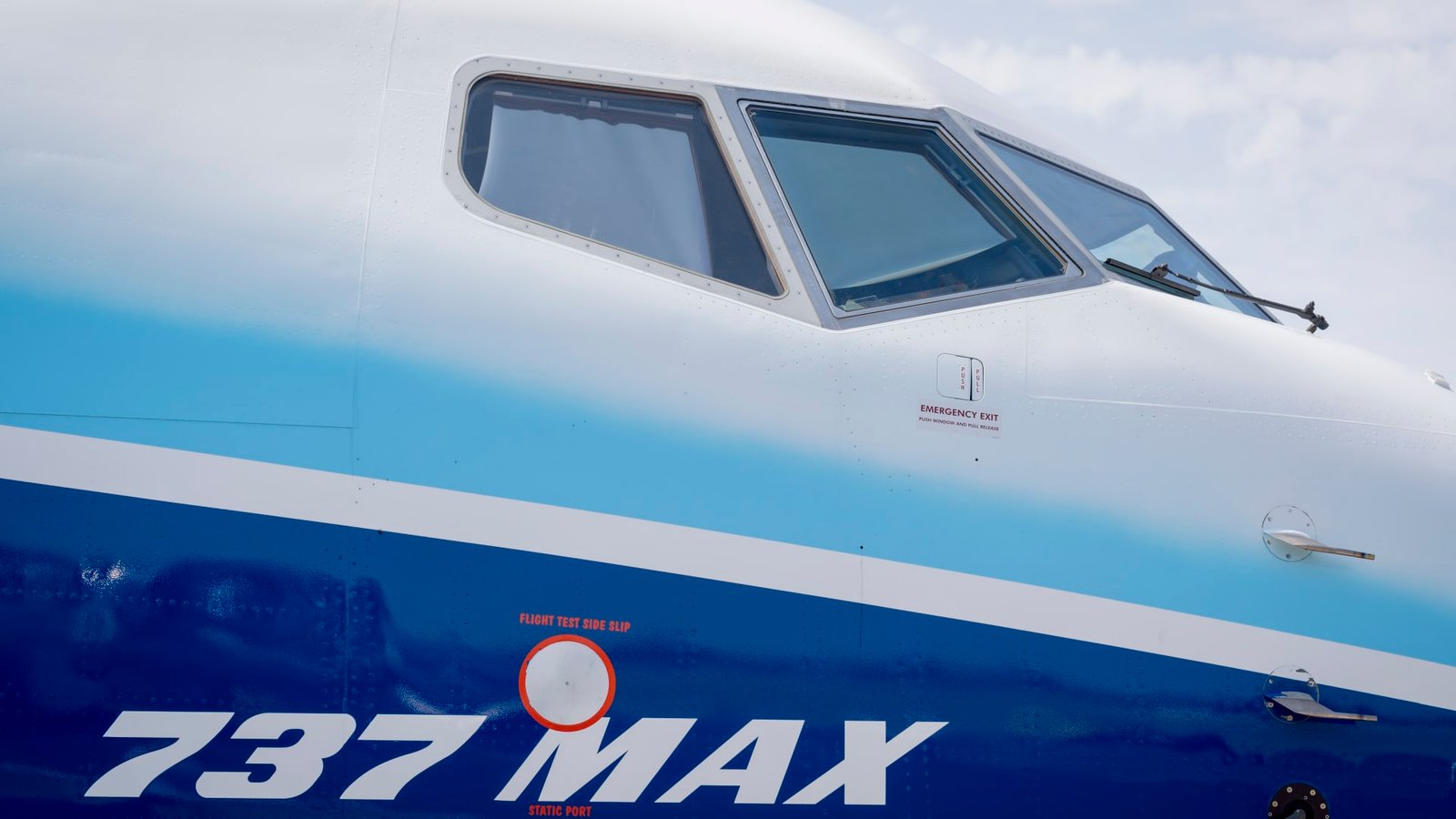
The head of the Federal Aviation Administration (FAA) announced a delay in the certification of the Boeing 737 Max 10 due to a software issue under investigation for potential safety implications. This decision represents a setback for Boeing, which had anticipated receiving regulatory approval for its best-selling aircraft family soon.
Boeing CEO Kelly Ortberg informed investors earlier this month that the company expected a swift resolution; however, last week Boeing identified a software glitch affecting certain landing procedures on the 737 Max aircraft. FAA Administrator Bryan Bedford clarified at a press conference that a thorough evaluation is required to determine if this glitch poses a safety risk. The FAA emphasized that safety is paramount in its certification timeline, stating they will act accordingly if necessary.
The software issue may arise in situations requiring a go-around landing approach, particularly when an obstruction is present on a runway. However, both Bedford and Boeing affirmed that pilots are trained for such scenarios and maintain operational control of the aircraft. The FAA has recently certified the Max 7 variant, which features the updated software currently under review, and it remains uncertain how this delay will affect deliveries to major customers like Southwest Airlines.
Boeing’s shares fell nearly 7% following Bedford’s announcement, illustrating investor concern over yet another certification delay for the 737 Max series. The 737 Max 10 was initially slated for delivery in 2020, but a series of safety issues and regulatory hurdles have postponed its release.
Why this story matters:
- Delays in certification affect Boeing’s reputation and financial performance.
Key takeaway: - Safety concerns continue to impact the rollout of the 737 Max family despite previous fixes.
Opposing viewpoint: - The FAA’s thorough review is crucial to ensuring the safety and reliability of commercial aviation.