



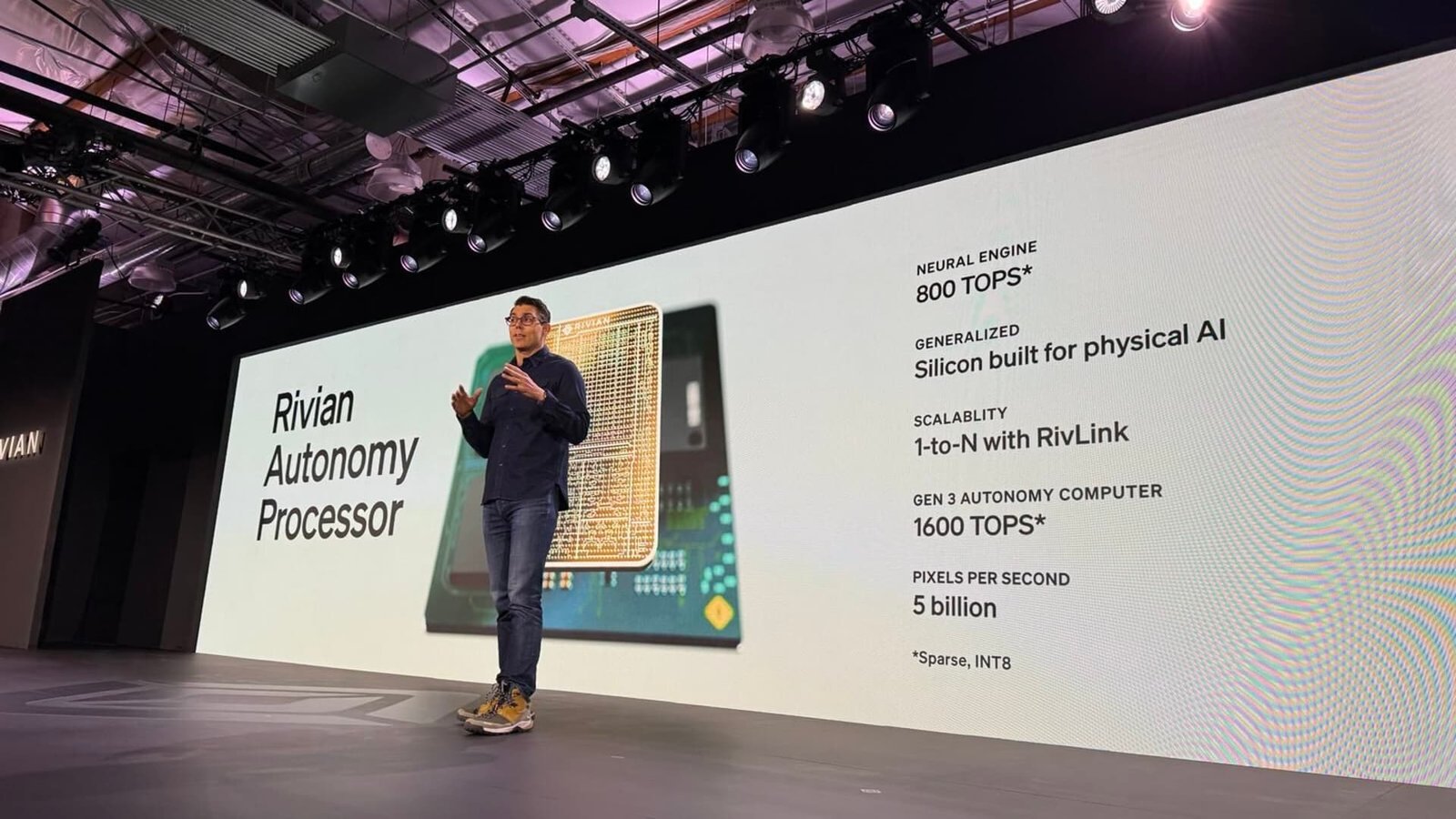
Rivian Automotive’s recent “Autonomy and AI Day” has sparked interest in the company’s advancements in artificial intelligence and automation, though challenges surrounding demand and financial stability persist. Following the event, Rivian’s stock fell by 6.1% on Thursday but rebounded significantly on Friday, closing up 12.1% at $18.42 per share. Despite a positive outlook from some analysts, such as Needham’s 64% increase in the price target to $23, overall sentiment remains cautious.
Management showcased innovative technologies, including a proprietary chip designed for autonomous driving and a restructured software architecture aimed at achieving full self-driving capabilities for personal vehicles. However, analysts noted that these developments might have already been anticipated and were unlikely to shift stock ratings significantly. Many market observers emphasized the importance of Rivian securing major partnerships and addressing demand concerns before considering long-term confidence in the company’s strategy.
The electric vehicle sector is seeing fluctuating demand, exacerbated by the expiration of substantial tax incentives, and Rivian faces stiff competition from more established players. Current models, such as the R1 series, remain priced above $70,000, while the forthcoming R2 midsize SUV, expected to start at $45,000, aims to penetrate a more competitive segment of the market.
Rivian’s future profitability remains uncertain as it seeks to balance technological innovation with market realities. With a market capitalization of $22.5 billion, the company’s long-term success will depend on its ability to expand its customer base and demonstrate financial viability.
– Why this story matters: Rivian’s advancements in AI and automation could redefine its market position but face significant hurdles.
– Key takeaway: Technological strides must align with market demand and financial sustainability for Rivian.
– Opposing viewpoint: Some analysts remain skeptical, citing ongoing liquidity issues and questionable market penetration despite new offerings.