
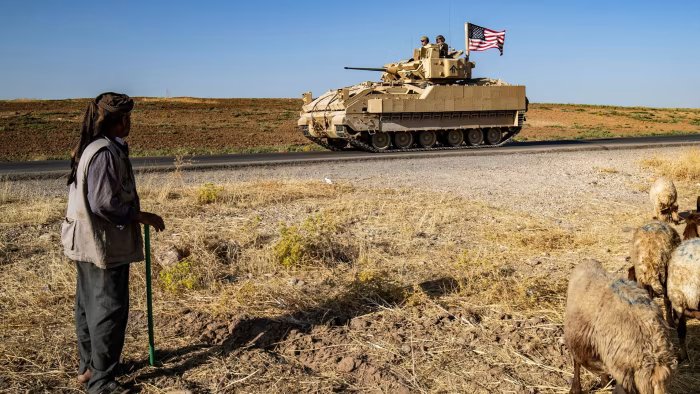
Two U.S. soldiers and a civilian American interpreter lost their lives in Syria on Saturday following an attack that also injured three additional U.S. troops. According to the Pentagon, the assault occurred during a counterterrorism operation, marking the first U.S. military casualties in Syria since the ousting of former President Bashar al-Assad over a year ago.
Pentagon spokesperson Sean Parnell noted that the soldiers were engaged in a “key leader engagement” meeting with local officials as part of ongoing efforts against ISIS. President Donald Trump characterized the incident as an “ISIS attack” occurring in a volatile region that remains under partial control of the Syrian government, vowing “very serious retaliation.” The attack took place near Palmyra, a city in central Syria, where U.S. forces have been stationed at the Al-Tanf military base, approximately 200 kilometers away.
Syria’s interior ministry reported that two members of its security forces were also injured. They indicated that the attack was carried out by a lone gunman from the Syrian security forces, who allegedly held extremist views and was subsequently killed. The Pentagon highlighted that U.S. troops remain in Syria primarily to combat ISIS, and while troop levels were recently reduced, cooperation with Damascus has increased against the backdrop of ongoing security threats.
U.S. Defense Secretary Pete Hegseth issued a strong warning, stating that any targeting of Americans would result in severe repercussions.
Why this story matters:
- Highlights ongoing risks faced by U.S. military personnel in Syria amid anti-ISIS operations.
Key takeaway:
- This incident underscores the complexities involved in U.S. military engagements in regions with fragmented control and ongoing extremist threats.
Opposing viewpoint:
- Critics argue that U.S. involvement has contributed to instability in Syria and question the effectiveness of military strategies against ISIS.