



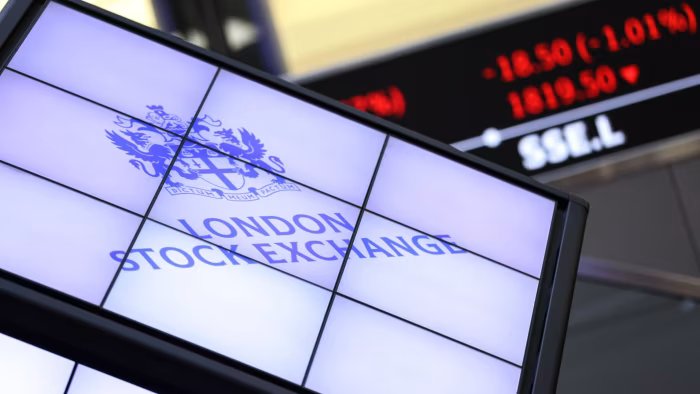
The FTSE 100 reached a milestone by surpassing 10,000 points for the first time on Friday, marking a positive start to 2026. This increase follows a substantial rally in 2025, where the index saw a 21.5% rise, its highest annual gain since 2009. At its peak, the FTSE 100 climbed 1.1%, before settling 0.3% higher.
Chancellor Rachel Reeves commented on the index’s achievement, labeling it a vote of confidence in the UK economy. However, analysts noted that while the FTSE 100 thrived in 2025, it did so amid sluggish domestic economic growth and apprehensions regarding Reeves’ tax-raising budget. Investors withdrew significant funds from the UK stock market, seeking alternatives to US equities that faced instability due to economic policies.
Global shifts in investment strategies also contributed to this trend, as many turned to UK stocks perceived as undervalued due to previous underperformance. The FTSE 100’s composition, primarily featuring banking, mining, and defense sectors, further supported its advancement, contrasting sharply with the tech-heavy focus of US indices.
Sustained global market gains, including a 1.3% increase in the tech-heavy Nasdaq Composite and a 0.7% rise in the S&P 500, reflected a general risk-on sentiment among investors. European indices also performed well, benefitting from heightened concerns regarding the high valuations of US technology companies.
Despite domestic economic challenges, the FTSE 100’s reliance on international revenue sources has enabled it to thrive. In contrast, the FTSE 250, which is composed of smaller, UK-centric firms, lagged behind, rising only 9% in 2025.
Why this story matters
Key takeaway
Opposing viewpoint