



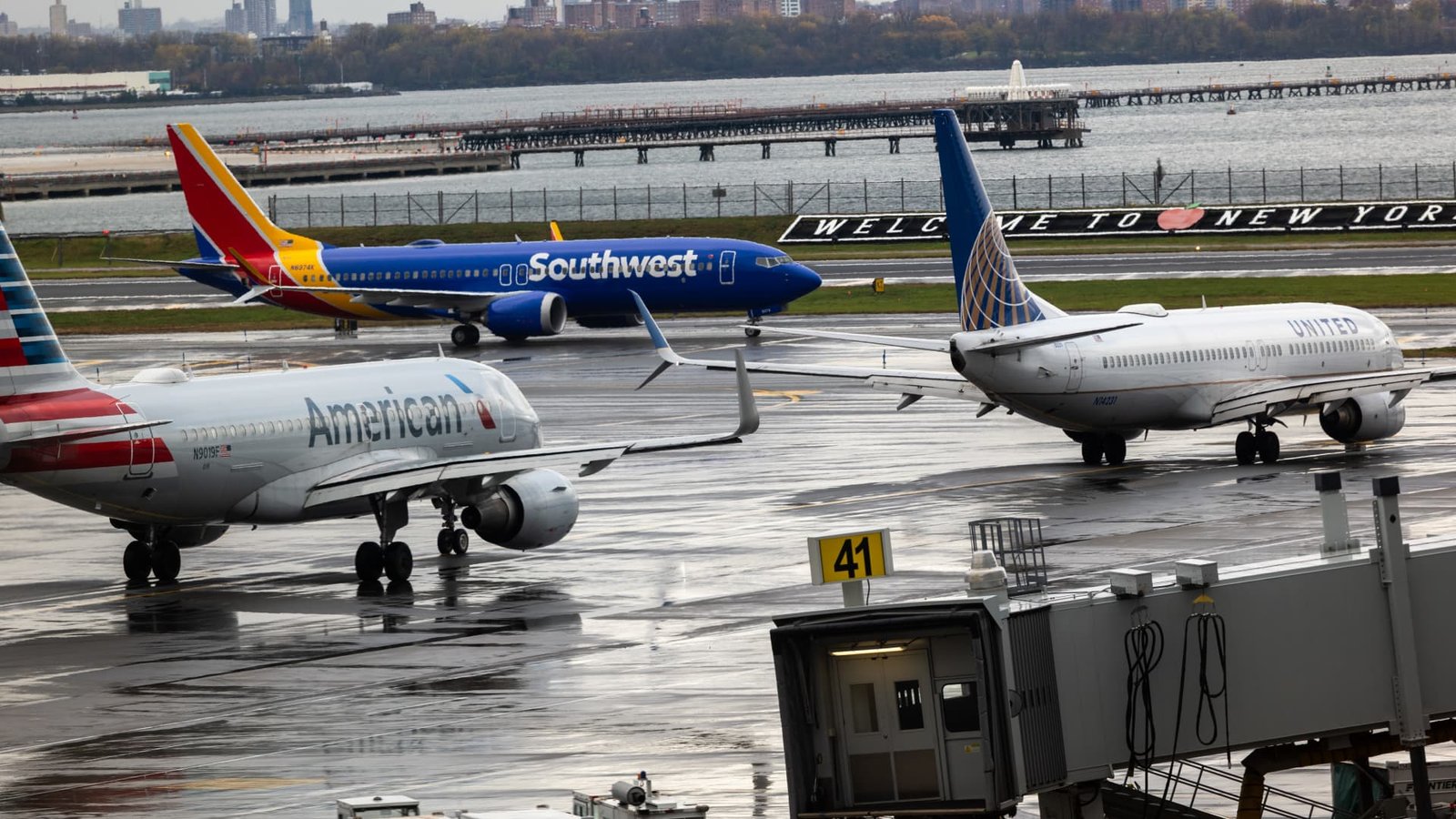
LaGuardia Airport in New York City is seeing significant changes as the airline industry navigates through a challenging year. In 2025, airlines like Delta and United have enjoyed substantial profits, while budget carrier Spirit Airlines faces severe challenges, including a bankruptcy filing and potential merger talks with Frontier Airlines. The divide in profits reflects increasing consumer preferences for premium services, while budget airlines struggle to compete.
In response to evolving customer demands, major airlines are focusing on enhancing their offerings for travelers willing to pay more. This includes improved seating options, added legroom, and upgraded lounges. American Airlines plans to enhance its services with new Airbus A321XLR planes in 2026, free inflight Wi-Fi for loyalty members, and upgraded amenities.
However, challenges such as a shortage of air traffic controllers and aging infrastructure persist. Currently, U.S. carriers maintain a 77% on-time rate, raising concerns about reliability. Additionally, budget airlines are re-evaluating their strategies amidst rising operational costs and competitive pressures.
Southwest Airlines is in the process of implementing assigned seating beginning January 2026, marking a significant shift from its traditional approach. This move follows the introduction of extra legroom seating and bag fees that have financially bolstered its competitors.
As the industry approaches 2026, the impact of an economic downturn could disproportionately affect price-sensitive travelers and carriers focused on coach-class service.
Why this story matters:
- The ongoing shifts in the airline industry reflect broader economic trends and consumer preferences, impacting both budget and premium services.
Key takeaway:
- Airlines are increasingly prioritizing premium services to capitalize on higher-paying customers, leaving budget carriers in a precarious position.
Opposing viewpoint:
- Critics argue that the focus on premium offerings may alienate budget-conscious travelers, which could ultimately harm the industry’s overall profitability.