

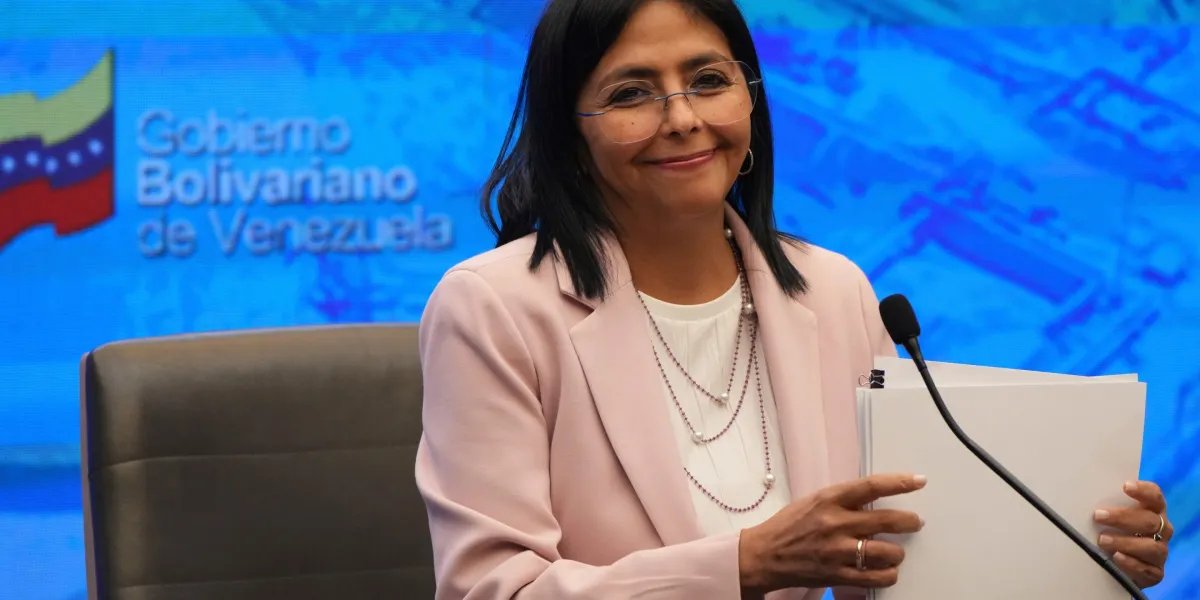
Delcy Rodríguez, the interim president of Venezuela and former foreign minister, has navigated a complex political landscape since her early outreach to the Trump administration in 2017. As Venezuela struggled under President Nicolás Maduro, Rodríguez attempted to foster relations with the U.S. by directing Citgo—Venezuela’s state oil company—to make a significant donation to Trump’s inauguration and hiring lobbyists to open dialogue with American politicians. Despite these efforts not yielding immediate results, they positioned her as a prominent figure within U.S. political and business circles.
Rodríguez’s political ascent is shaped by her leftist ideology and a personal background marked by family tragedy. Her father, a socialist leader, died in custody during a 1976 kidnapping incident, which influenced her political outlook. Rodríguez initially faced challenges in her career, including a dismissal by Maduro’s predecessor, Hugo Chávez. However, her fortunes changed when Maduro assumed power in 2013 and appointed her as vice president.
Under Maduro’s regime, she has become a crucial player in managing Venezuela’s oil economy, leveraging her international experience to navigate global economic challenges. Rodríguez has pursued pragmatic policies, distancing herself from traditional Chavismo factions and aiming to stabilize Venezuela’s economy amidst severe U.S. sanctions. Recently, after Maduro’s capture, Trump has acknowledged her as a partner, underscoring the need for a stable governing force in Venezuela.
However, questions about the future of democracy in Venezuela linger, as Trump has signaled an unwillingness to prioritize elections in his dealings with Rodríguez, which could have long-term implications for the country’s political landscape.
Key Points:
- Why this story matters: Rodríguez’s rise reflects the interplay between U.S. foreign policy and Venezuela’s internal dynamics, highlighting the challenges to democracy in the region.
- Key takeaway: Rodríguez’s pragmatic approach to governance aims to stabilize Venezuela’s economy while navigating complex power structures.
- Opposing viewpoint: Critics argue that reliance on Rodríguez could perpetuate the existing power structure, delaying necessary democratic reforms.