

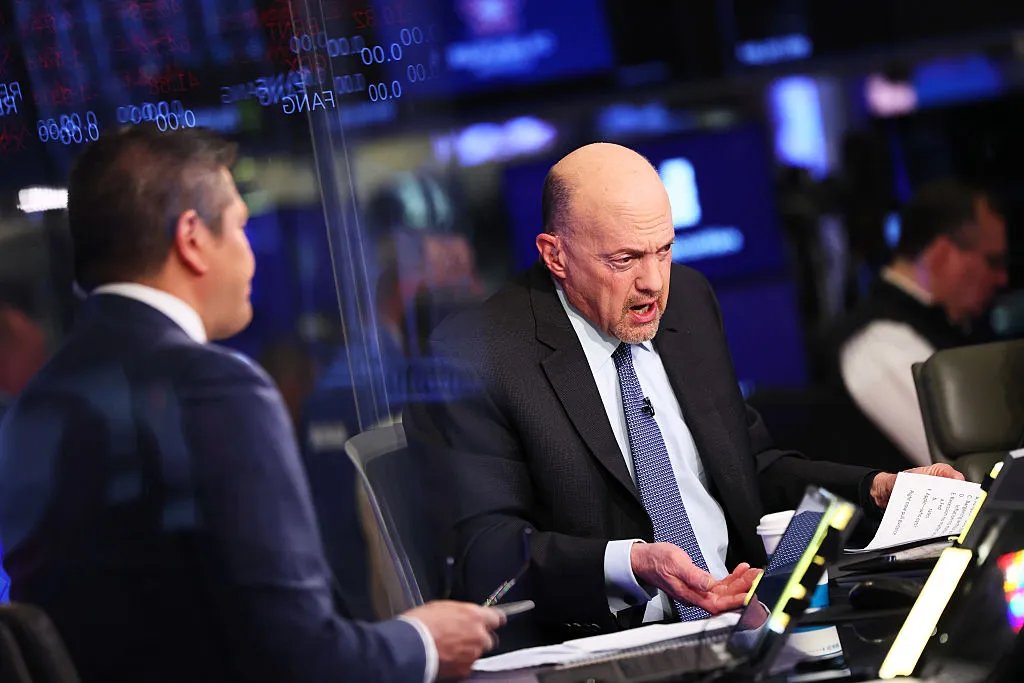
Jim Cramer, the host of CNBC’s “Mad Money,” has gained recognition for providing buy and sell recommendations to investors. While he has successfully identified several winning stocks, his approach—characterized by active trading—may not be suitable for average investors. Data from S&P Global indicates that only about 12% of large-cap active funds have outperformed the S&P 500 over the past 15 years, underscoring the challenge even professional stock pickers face in consistently beating the market.
Key lessons can be derived from Cramer’s occasional missteps:
-
Beware of Hype: Cramer frequently advises buying stocks based on retail investor enthusiasm. However, this can lead to purchasing at inflated prices and selling prematurely. For instance, after advising investors to sell the AI infrastructure stock IREN, which had lost significant value, it surprisingly rebounded by around 70% shortly thereafter. Experts suggest focusing on company fundamentals and employing a dollar-cost averaging strategy, which allows investors to gradually build positions regardless of market fluctuations.
-
Diversification is Crucial: Cramer’s investment choices highlight the dangers of heavily investing in individual stocks. While stock picking can yield high returns, it also presents a greater risk. Diversifying investments across various asset classes and sectors can reduce reliance on any single stock’s performance. Index funds offer an accessible means of achieving diversification.
-
Align Strategy with Time Horizon: Cramer often emphasizes short-term performance. However, investors should consider their risk tolerance and long-term financial goals. Young investors may be inclined to invest in higher-risk growth stocks, while retirees might prefer more stable assets. Understanding one’s investment timeline can help in creating a balanced portfolio.
Why this story matters
- It highlights the importance of a disciplined investment strategy in the face of market volatility.
Key takeaway
- A long-term, diversified investment approach is generally more effective for average investors than active stock trading.
Opposing viewpoint
- Some investors believe in the potential for high returns through active trading and stock picking, despite the associated risks.