


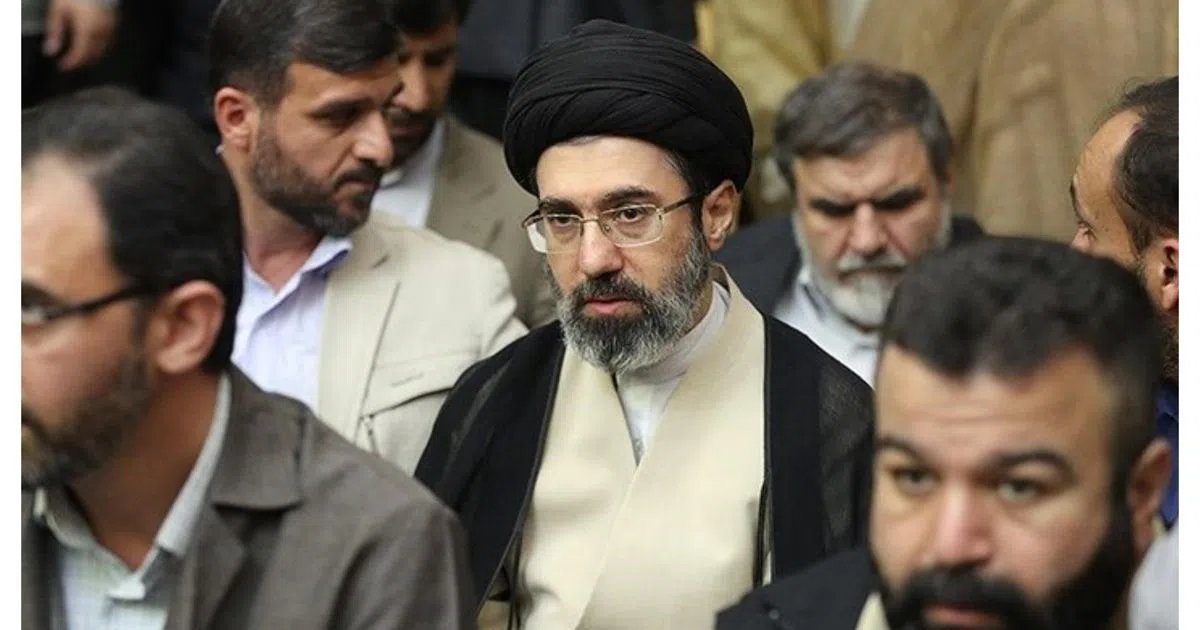
Mojtaba Khamenei, son of the late Supreme Leader Ayatollah Ali Khamenei, has been named as his father’s successor following an Israeli airstrike that killed his father and wife. This appointment marks a significant moment in Iran’s political landscape, particularly as it comes amid an ongoing war with Israel.
Mojtaba Khamenei, previously a lower-profile figure, is now positioned to play a crucial role in shaping Iran’s military strategy, with the influential Islamic Revolutionary Guard Corps (IRGC) answering to him. His selection follows a period of uncertainty among Iranian officials and is underpinned by a complex interplay of internal power dynamics.
The succession has been controversial; critics argue that Mojtaba’s ascension could reinforce a hereditary approach to leadership reminiscent of Iran’s past monarchy. Nevertheless, the recent tragic events have elevated his standing among hard-liners, who view the Khamenei family as martyrs in the conflict against perceived external adversaries.
Mojtaba Khamenei’s past is intertwined with Iran’s political tumult, including his family’s opposition to the Shah prior to the 1979 Islamic Revolution. Throughout the years, he has built a reputation as a capable and influential figure, labeled by some U.S. diplomatic sources as “the power behind the robes.” He has been closely associated with the IRGC, which has previously been sanctioned by the U.S. for its actions both domestically and abroad.
As the new Supreme Leader, Mojtaba inherits significant responsibilities at a time when Iran faces international pressures, particularly regarding its nuclear ambitions and military capabilities. The ongoing U.S.-Israeli efforts to curb these threats represent a critical backdrop for his leadership.
Why this story matters:
- Signals a potential shift in Iran’s political climate.
- Highlights the complexities of leadership succession in a theocratic system.
Key takeaway:
- The ascension of Mojtaba Khamenei emphasizes ongoing friction within Iran and its strategic military positioning.
Opposing viewpoint:
- Critics argue that Mojtaba’s rise represents a return to a dynastic power structure reminiscent of Iran’s past.