



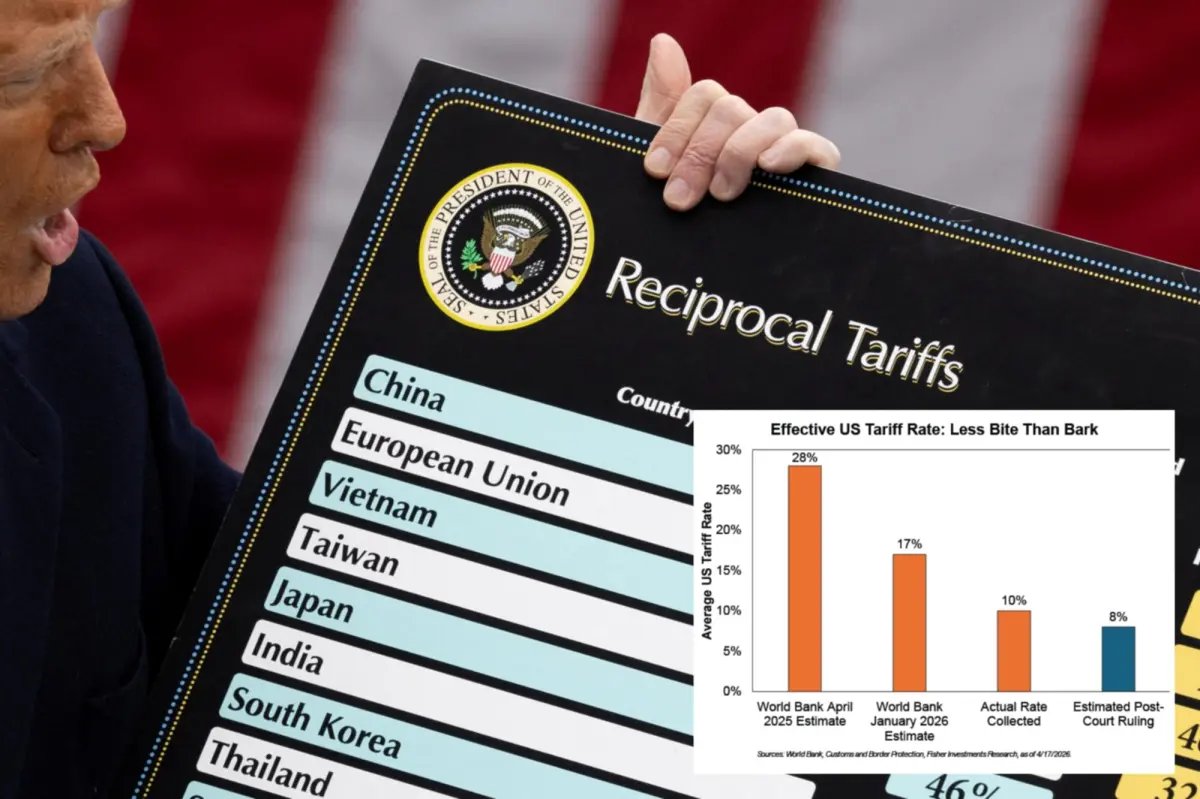
Investors remain unsettled by the ongoing implications of tariffs, yet they have not shaped predictions for stock performance in 2026. This outlook is underpinned by the “four e’s” — expectations, exemptions, evasion, and enforceability — which suggest that the economic impact of current and proposed tariffs may be less severe than initially anticipated.
Historically, tariffs have adverse effects, particularly on the imposing country. The U.S. stock market’s underperformance compared to global markets in 2025 was partially attributable to these trade barriers. The recent introduction of a blanket 10% global tariff by the Trump administration, alongside threats to increase rates or undermine trade agreements, adds to the uncertainty.
However, as markets adjust, many tariff implications have been factored into stock prices. Market reactions have evolved, with an observed rebound that correlates with exemptions—over half of U.S. imports were duty-free prior to recent rulings. Essential goods, including technology and pharmaceuticals, were often excluded from tariffs, mitigating potential damage.
Additionally, companies have employed creative evasion tactics, such as transshipping goods through countries with lower tariffs. This maneuvering has significantly increased imports from Southeast Asian nations, revealing the adaptive strategies businesses use to circumvent tariffs. Enforcement challenges further complicate matters; the Customs and Border Protection agency has inadequately monitored shipments due to limited resources.
Overall, the actual U.S. tariff rates now average below 10% for 2025, a reduction from previous estimates, suggesting less economic damage than initially feared. Tariff obstacles have been addressed through international trade agreements, further cushioning their impact.
Why this story matters
- The economic implications of tariffs can significantly affect global markets and investor confidence.
Key takeaway
- The “four e’s” reveal that the reality of tariffs may be less damaging than perceived.
Opposing viewpoint
- Critics argue that tariffs can lead to increased costs for consumers and hinder long-term economic growth.