


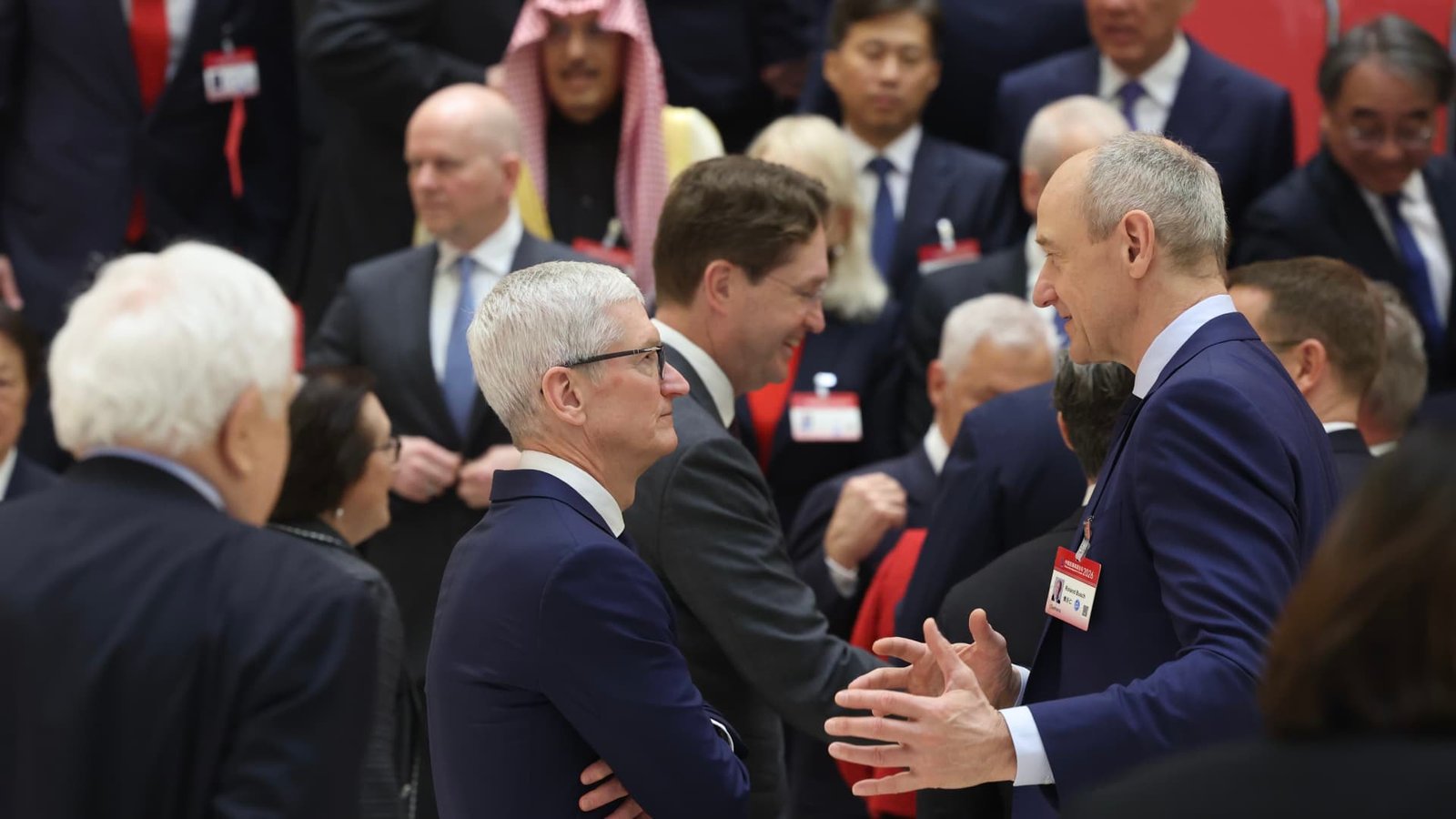
Apple CEO Tim Cook, alongside Siemens CEO Roland Busch, participated in the China Development Forum 2026 in Beijing, which hosted over 80 global executives, aimed at rekindling interest in the Chinese consumer market amidst ongoing U.S.-China tensions. After a period marked by the COVID-19 pandemic and trade uncertainties, executives expressed optimism about opportunities in China, particularly in light of a recent recovery in iPhone sales.
During the forum, Tim Cook praised China’s rapid technological advancements, emphasizing that over 90% of Apple’s production there utilizes clean energy. He noted that China accounted for nearly 18% of Apple’s revenue in the last quarter, driven by a 23% year-on-year increase in iPhone sales following the release of the iPhone 17, despite an overall decline in China’s smartphone market.
The forum coincided with a temporary trade truce between the U.S. and China, resulting in reduced tariff rates for a year. However, the future of this truce and China’s willingness to export critical rare earth materials remains uncertain. Meanwhile, U.S. companies like Eli Lilly have publicized plans for significant investments in China, with promises to enhance access to healthcare and technology.
China’s Premier Li Qiang highlighted government intentions to improve foreign business conditions and expand purchases of foreign products. Nevertheless, dissenting opinions persist, such as that of economist Stephen Roach, who criticized the lack of diverse perspectives at the forum, particularly regarding consumer-led economic rebalancing.
Volkswagen, facing challenges in the Chinese market, underscored the importance of stable conditions for foreign investors, signaling a cautious approach to fostering business partnerships and local manufacturing growth.
Why this story matters:
- Demonstrates the ongoing interest of global corporations in the Chinese market despite geopolitical challenges.
Key takeaway:
- Major companies are hopeful about future opportunities in China, particularly in technology and healthcare sectors.
Opposing viewpoint:
- Critics argue that the forum does not represent diverse economic strategies and is limited in its discussion on consumer-led growth.