

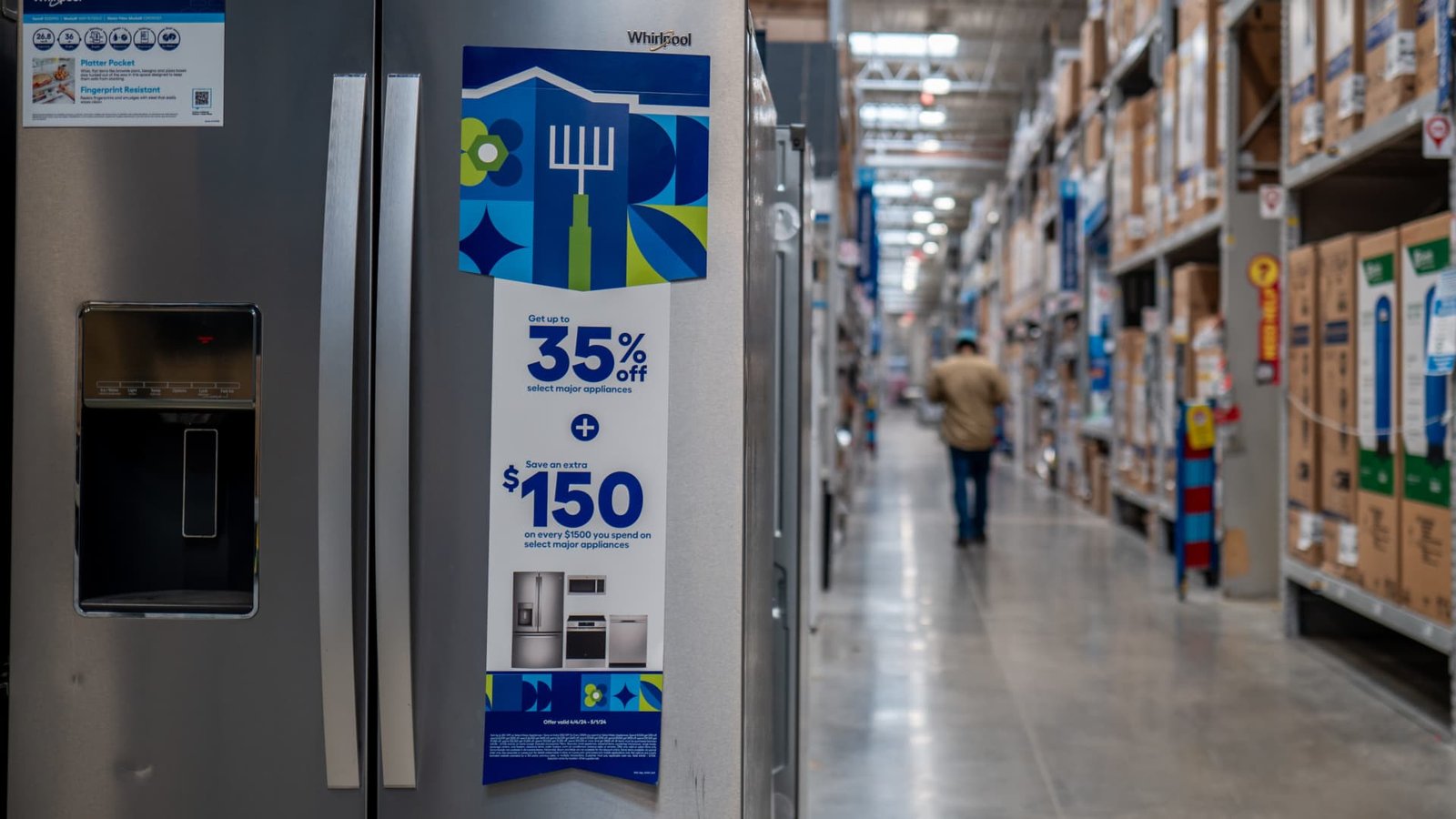
Whirlpool experienced a significant drop in its stock value on Thursday after the appliance manufacturer indicated that the ongoing conflict in Iran has precipitated a notable decline in the industry. This downturn has resulted from soaring fuel prices and eroding consumer confidence, which have significantly impacted big-ticket purchases. According to Whirlpool’s earnings filing, the war has brought about a recession-level decline in the U.S. market, particularly affecting consumer spending in February and March.
The warning from Whirlpool is among the most pronounced from corporations regarding the economic implications of the Iran conflict, contrasting sharply with more stable spending trends reported by sectors related to travel and services. As a result, Whirlpool’s shares plummeted by 12%. CEO Marc Bitzer acknowledged the need for swift action, stating that the company has initiated cost-cutting measures and adjusted pricing strategies to adapt to the rapidly declining macroeconomic conditions. Furthermore, Whirlpool revised its full-year earnings forecast, reducing it significantly from about $6 per share to a range of $3 to $3.50. The company also announced the suspension of its dividend to focus on debt reduction.
Analysts from JPMorgan attributed Whirlpool’s lower earnings guidance to factors such as rising raw material costs, increased tariff impacts, and a less favorable product mix. While companies like Uber and Disney have not reported significant decreases in consumer spending in their sectors, Whirlpool’s outlook suggests emerging difficulties in the market for larger appliances. A University of Michigan survey indicated that consumer confidence reached an all-time low in April, coinciding with rising gasoline prices linked to the conflict. Despite a rebound in the stock market on hopes for a peace agreement, U.S. oil prices remain elevated, complicating the economic landscape.
Why this story matters:
- The economic impact of geopolitical conflicts can significantly affect consumer sentiment and spending patterns.
Key takeaway:
- Whirlpool’s earnings forecast cut highlights the potential vulnerability of the appliance sector amid rising fuel costs and changing consumer behavior.
Opposing viewpoint:
- Some sectors, like travel and entertainment, remain resilient despite the economic turmoil affecting larger purchases, indicating possible divergence in consumer spending trends.