


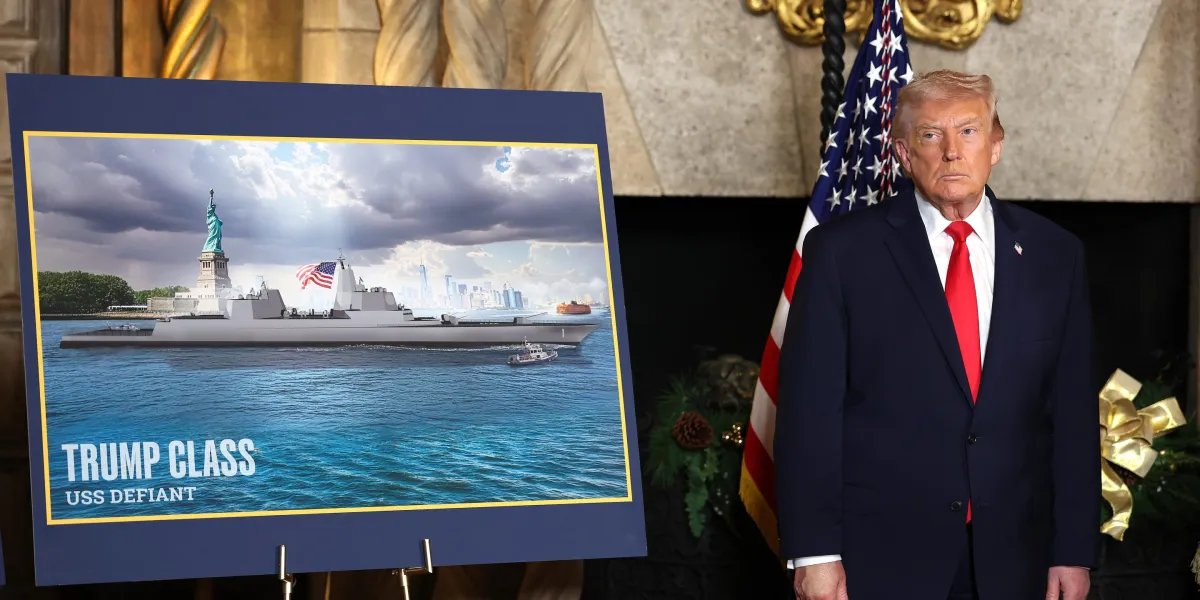
The U.S. Navy has outlined plans to acquire at least 15 new battleships, designated as Trump-class, over the next 30 years, according to a long-range shipbuilding plan released recently. This initiative, which has received endorsement from former President Donald Trump, signifies a deeper commitment to the construction of what could be the most expensive warships ever produced.
Previously, the Navy indicated intentions to purchase three of these battleships, with the first expected delivery in 2036. However, the updated projection suggests an ambitious goal of acquiring more than a dozen vessels by 2055. The projected cost for each battleship is estimated to be at least $14.5 billion, potentially exceeding the $13 billion price tag of the USS Gerald Ford, currently the most expensive U.S. warship.
Despite this significant investment plan, the ship acquisitions remain uncertain. Historically, Navy long-range plans are viewed as aspirational, lacking precise cost figures for the envisioned fleet. Current budget discussions, including a proposed 44% increase to the Pentagon’s budget, may face difficulties in Congress, complicating funding for the battleships.
Moreover, the Trump-class program is closely tied to the former president, making it vulnerable to cancellation should Republican control shift in upcoming elections. The new Secretary of the Navy, Hung Cao, stated the importance of addressing U.S. maritime dominance in light of strategic challenges.
The Navy’s new plan anticipates a fleet of 299 battle ships by 2031, still falling short of the required total of 355. The Navy acknowledged that the ongoing shortfall is not solely an industrial issue but also stems from structural challenges in procurement and risk management.
– Why this story matters: The Navy’s plan highlights significant investment in military capabilities amidst evolving strategic challenges.
– Key takeaway: The ambition to construct Trump-class battleships raises concerns about budget and political feasibility.
– Opposing viewpoint: Critics suggest that the costly battleship program may be cut or restructured depending on upcoming elections and budget negotiations.