


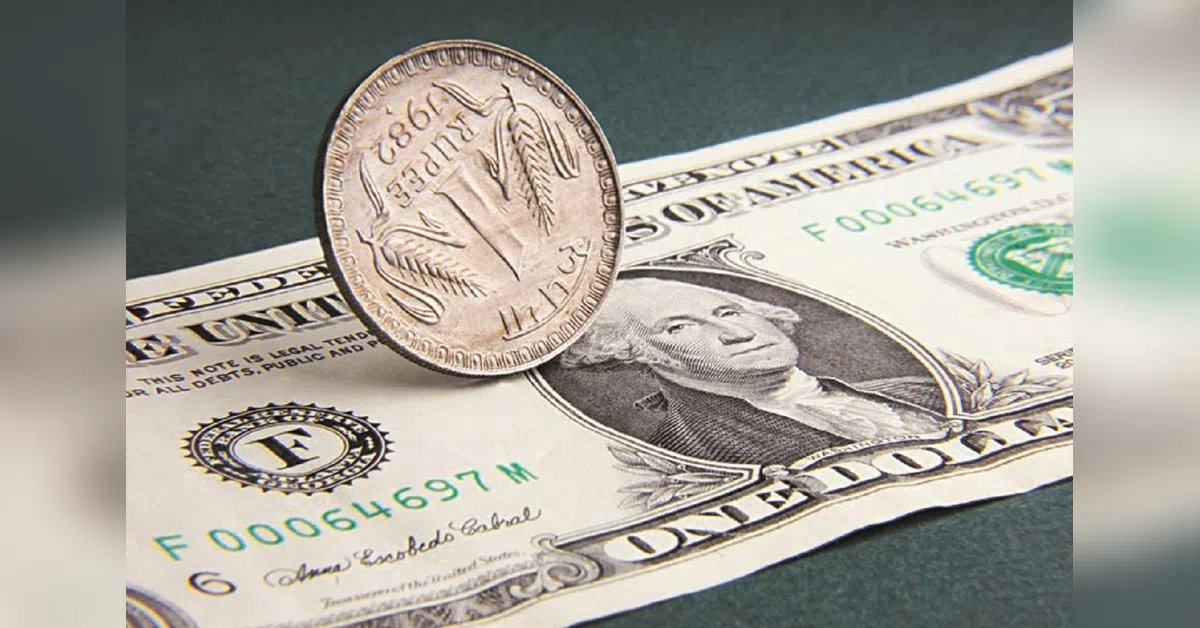
The Indian rupee recently fell below the 96 per dollar mark for the first time, reaching an intra-day low of 96.14 on May 15. Factors contributing to this decline include rising crude oil prices, a strengthening U.S. dollar, and concerns regarding India’s increasing trade deficit. The rupee ultimately closed at a record low of 95.97 against the dollar, down from the previous close of 95.77.
Most market analysts do not foresee the rupee hitting the 100 per dollar benchmark imminently, although they acknowledge the rapid pace of its depreciation in recent months. Mitul Kotecha, head of FX & EM Macro Strategy Asia at Barclays, noted that while a forecast of 100 per dollar has not been made, the rate of decline has surpassed previous bearish predictions. Barclays had set a target of 95 per dollar for June and 96.8 per dollar for the end of the year.
Continued dollar demand from oil importers and persistent foreign fund outflows have created a bearish sentiment in the currency market. The Reserve Bank of India (RBI) is reportedly intervening through state-run banks to mitigate excessive volatility. Analysts suggest that the rupee could reach the 100 per dollar threshold within six months to a year if crude prices remain volatile, particularly if they exceed $125 per barrel.
India’s merchandise trade deficit has widened significantly, further intensifying concerns over the country’s external financial position. If the rupee continues to trend downward, market experts believe there may be policy responses from the government and the RBI akin to measures taken during the 2013 currency crisis.
Bold Points:
- Why this story matters: Rapid depreciation of the rupee raises concerns about India’s economic stability and trade balance, impacting overall market confidence.
- Key takeaway: Experts do not uniformly predict the rupee will hit 100 per dollar soon, but rapid depreciation could prompt government intervention.
- Opposing viewpoint: Some analysts remain optimistic that market conditions could stabilize without drastic measures, depending on global oil prices and foreign capital inflows.