



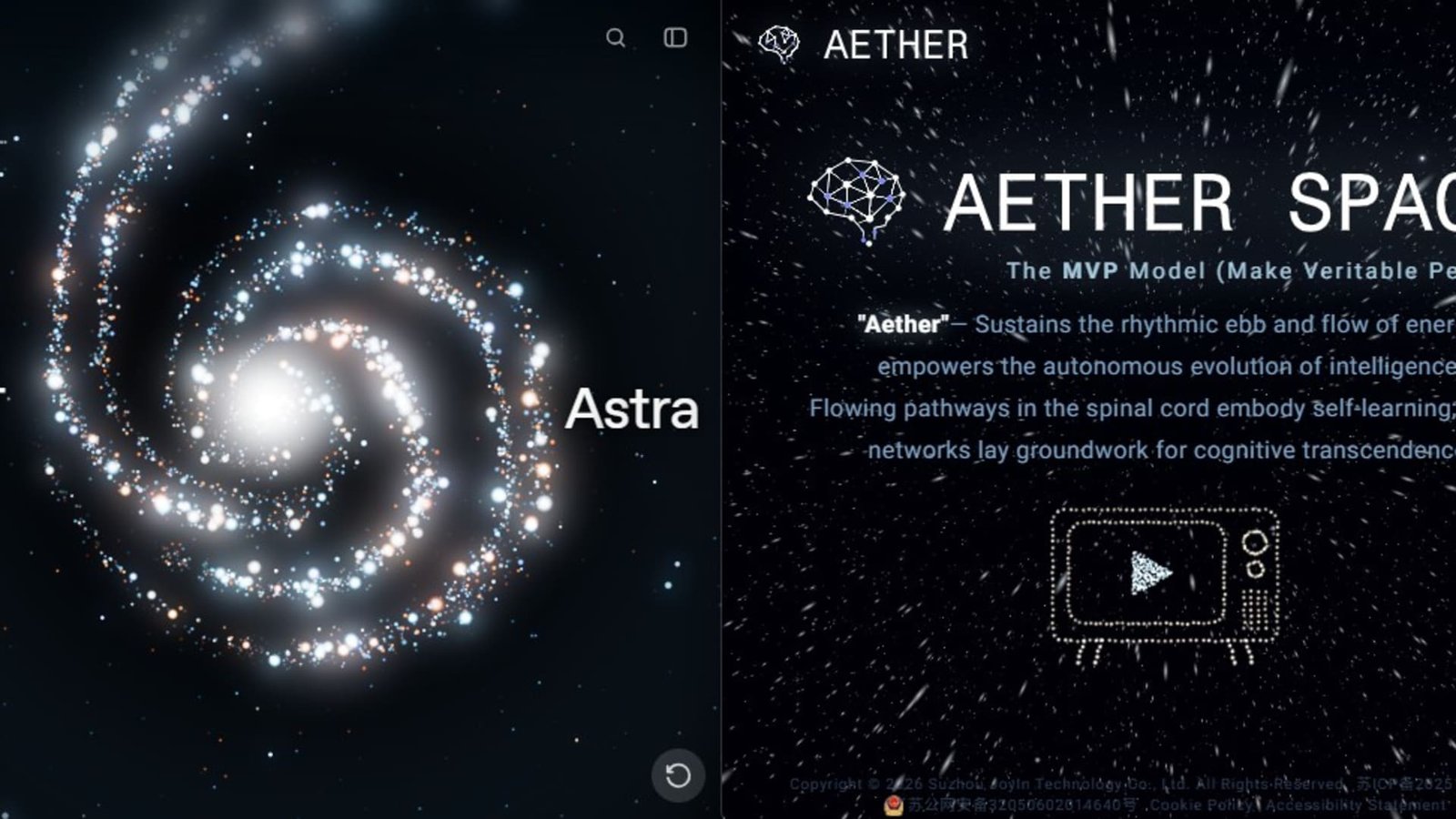
The CEO of JoyIn, a humanoid robotics startup backed by Ant Group, has expressed concerns over potential similarities between his company’s AI model and those developed by OpenAI. Guo Renjie, in a public letter published in Chinese, alleged that OpenAI’s recent release bears striking resemblances to JoyIn’s "extraterrestrial visitor" model framework, which was unveiled in Silicon Valley weeks prior to OpenAI’s announcement of "An Alien Mind" on September 6.
Guo highlighted comparable methodologies, including concepts like "recursive self-improvement" and AI-driven optimization of computing power. He also noted parallels in the design aesthetics of OpenAI’s GPT-6 Astra webpage and JoyIn’s own Aether model website, which he claims launched two months earlier. The company has initiated the process of filing a lawsuit, although CNBC was unable to verify Guo’s allegations.
While some concepts of AI development are common across the industry, the implementation can vary significantly between companies. OpenAI did not respond to requests for comment regarding these claims. Furthermore, a U.S. cybersecurity agency recently indicated that several Chinese firms, including DeepSeek and Alibaba, have engaged in the unauthorized "distillation" of AI models developed by companies like Anthropic, Google, and OpenAI.
JoyIn asserts that its Aether model adopts a perceptive approach to robotic control, which facilitates a 90% success rate on initial task attempts. Zhu Mingxuan, the model’s lead developer, indicated that they managed to reduce training time significantly and plan to open-source certain components of the model, while retaining proprietary aspects related to energy consumption.
The tech competition between U.S. and Chinese firms continues to intensify, with the performance of humanoid robots and AI capabilities remaining a key area of focus.
Why this story matters
- Raises important questions about intellectual property and innovation in AI technology.
Key takeaway
- A potential legal battle could emerge as JoyIn challenges OpenAI over alleged similarities between their AI models.
Opposing viewpoint
- Some industry experts argue that many AI concepts are widely recognized and can be implemented variably, limiting claims of direct copying.