


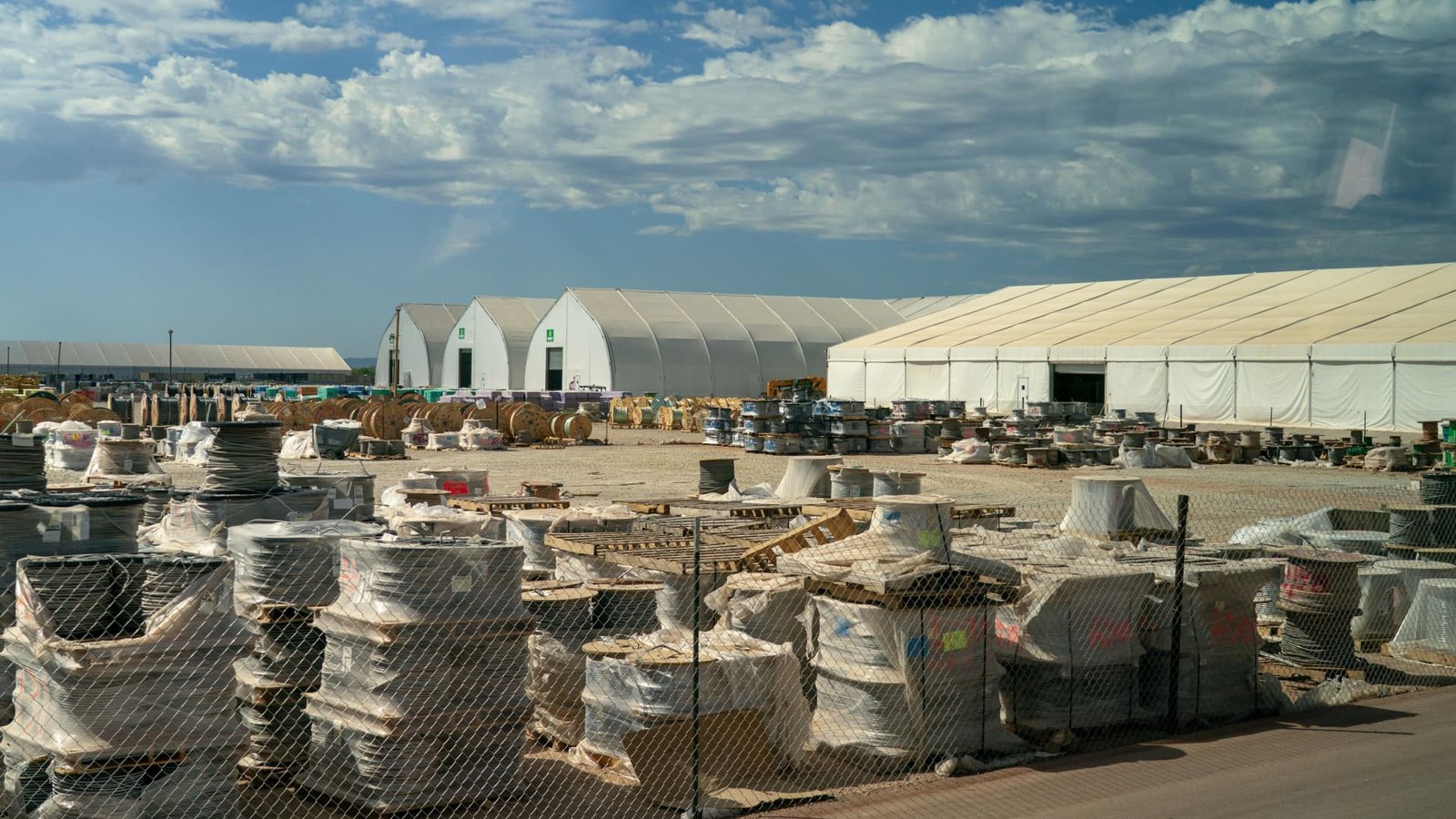
Construction is underway at the Stargate AI data center in Abilene, Texas, a partnership involving OpenAI, Oracle, and SoftBank, supported by former President Donald Trump. This venture is part of a larger trend toward significant investments in artificial intelligence infrastructure across the United States.
With Treasury yields rising to their highest levels since 2007, companies dependent on debt may face increased borrowing costs. JPMorgan Chase estimates that $4.1 trillion in AI-specific debt will be issued through 2030, driven by immense demand for AI services. The current 10-year Treasury yield has surged to approximately 5.17%, prompting companies seeking financing to offer more attractive returns to investors.
Despite concerns, the market has not succumbed to panic yet. Companies like CoreWeave have seen stock increases, while others, like Oracle, have struggled. Recently, SoftBank raised $11.1 billion in a junk bond sale reflecting high yields, indicating a willingness among investors to provide capital despite increasing costs.
Challenges arise for companies less equipped to absorb rising rates. The interest of lenders is waning for lesser-known cloud firms, with fewer projects receiving funding. CoreWeave has noted that every 1 percentage point increase in rates could add $30 million to its interest expenses, highlighting their vulnerability.
Amid these financial strains, anxiety over accelerated AI development persists. Industry leaders have advocated for a slowdown in advancement amid fears of potential risks, coinciding with public opposition to new AI data centers. A recent poll indicated 69% disapproval for local AI facility construction, prompting Texas Governor Greg Abbott to pause environmental permits for such projects.
Despite these issues, demand for AI services continues to surge, illustrated by Meta’s Muse personal assistant achieving rapid popularity shortly after its release.
Why this story matters: The future of AI infrastructure financing is under scrutiny, impacting economic and technological growth.
Key takeaway: Rising interest rates could complicate financing for AI projects, but demand remains strong.
Opposing viewpoint: Some industry leaders call for a slowdown in AI advancements due to safety concerns, amid public backlash against new infrastructure.