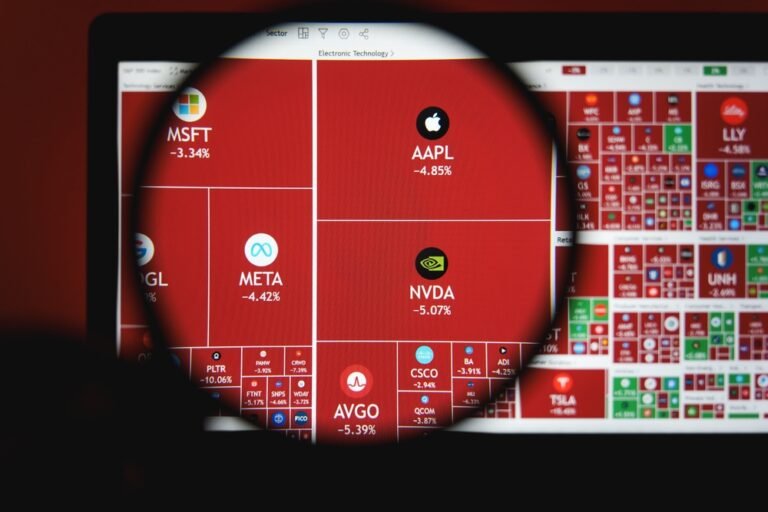




The increasing integration of artificial intelligence (AI) in investment strategies has raised questions about its impact on decision-making and market dynamics. A survey conducted in March 2026 among 938 U.S. investors found that 51% regularly or occasionally use AI tools, with 34% employing them for generating trading ideas.
While AI can automate various analytical methods, it lacks the nuanced understanding that experienced investors possess. For instance, in discounted cash flow analysis, an expert evaluates assumptions about growth and capital spending, while AI simply processes data without contextual understanding. Similarly, a chatbot can compare price-to-earnings ratios of different companies, but it cannot account for individual circumstances that justify diverse valuations.
Research indicates that AI-driven decisions often lead to correlated outcomes, as evidenced by a 2026 study where different investor personas using GPT-4 acquired a consensus portfolio that mirrored selections made from a neutral prompt. Despite this, the consensus portfolio remarkably outperformed the S&P 500, highlighting how shared insights can skew investment strategies and amplify market movements.
Further studies have begun to explore these dynamics, including a 2026 paper that observed the effects of unexpected ChatGPT outages during trading hours. The research indicated that retail trading became more correlated when AI was accessible, causing price movements to intensify. Interestingly, during outages, retail trading decisions appeared less correlated, suggesting that AI tools may suppress individual judgment and lead to homogenous trading behaviors.
While evidence mainly pertains to short-term trading patterns, implications for longer investment horizons remain speculative, underscoring the need for further exploration in this evolving landscape.
Why this story matters
Key takeaway
Opposing viewpoint