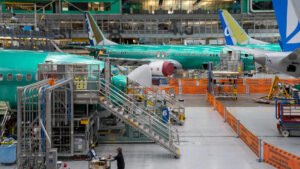

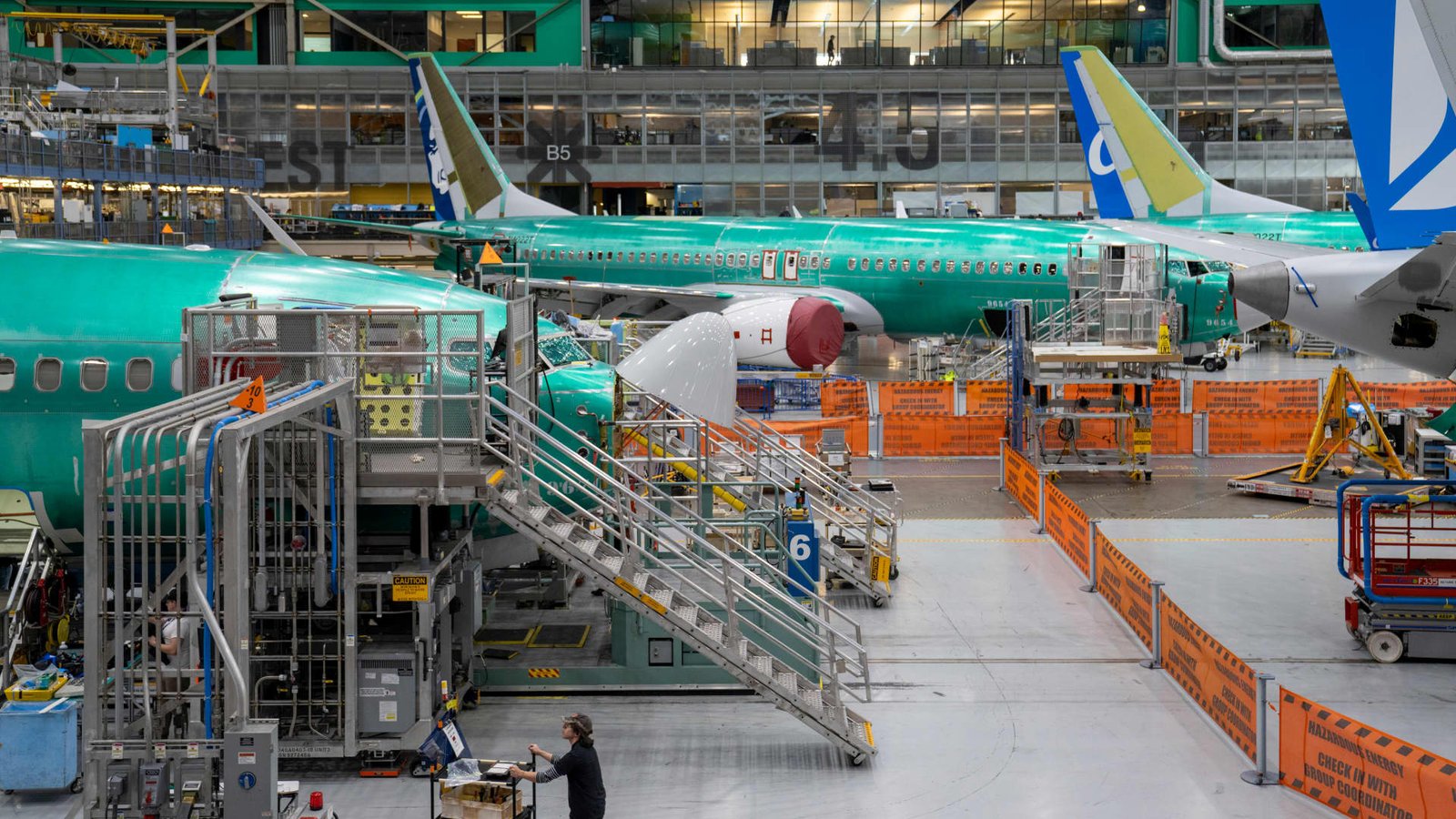
Boeing has announced that it does not anticipate a significant increase in production of its popular 737 Max aircraft until the latter half of 2027, citing slower-than-expected progress in wing manufacturing. CEO Kelly Ortberg shared this update during the company’s quarterly earnings call, indicating a target production rate of 52 planes per month by that time, up from the current rate of approximately 47. Ortberg acknowledged last month that stabilizing production is taking longer than planned due to issues with wing production.
Boeing’s stock experienced a 10% decline following the announcement. Ortberg emphasized the importance of doing things correctly, stating, “I know everybody wants us to go faster, but we’re going to do it right.” He reiterated the focus on enhancing production efficiency while maintaining safety and quality standards.
During the third quarter, Boeing reported a reduced net loss of $116 million, compared to a substantial loss of $5.34 billion in the same period last year. Revenue rose by 4% year-over-year to $24.19 billion, and free cash flow increased to $464 million from $238 million. Despite delivering 161 commercial airplanes during the quarter—slightly above the previous year—revenue from the commercial aircraft sector fell by 3%, affected by operating margin challenges.
Additionally, Boeing’s defense unit saw a 15% revenue increase and has secured contracts, including the development of the U.S. Navy’s next-generation fighter jet. The Federal Aviation Administration has also recently approved certifications for the largest variants in the 737 Max line.
Why this story matters:
- Boeing’s production timeline impacts the aviation industry and supply chain economics.
Key takeaway:
- Boeing is prioritizing stabilized production and efficiency over rapid output increases.
Opposing viewpoint:
- Some stakeholders may criticize Boeing’s slow pace, emphasizing the need for quicker recovery in production rates to meet market demands.