



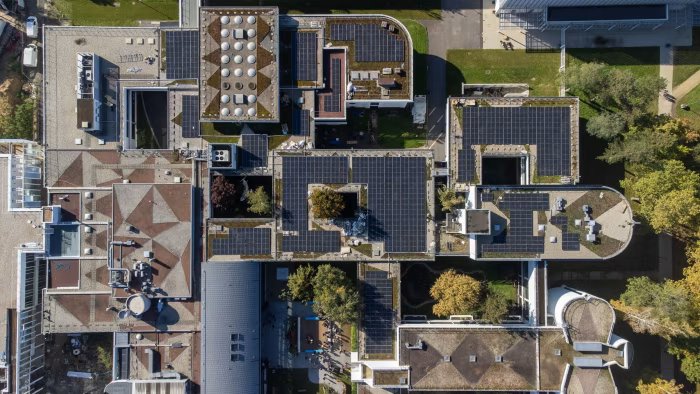
David Veredas, the chief sustainability officer at Vlerick Business School in Belgium, is leading an initiative aimed at enhancing the sustainability efforts of business schools across Europe. Since assuming his role last year, Veredas has emphasized the need for educational institutions to not only educate about climate change but also to actively reduce their own carbon emissions. This philosophy has led to the formation of the Alliance for Environmental Response in Business Schools (Aero), which now comprises eight European institutions including SDA Bocconi in Italy and Esade in Spain.
These standalone business schools, as opposed to being part of larger universities, allow for more nimble and targeted sustainability actions. Veredas has articulated a goal for Aero to become a global reference point for decarbonization, highlighting two main objectives: sharing best practices among institutions and advocating for greater sustainability initiatives.
Recent evaluations of 83 business schools worldwide revealed significant discrepancies in reporting Scope 3 emissions, which encompass indirect emissions related to travel and purchasing. While 70 institutions reported some Scope 3 emissions, only 47 percent did so specifically at the business school level. Notably, transparency and uniformity in emissions reporting appeared lacking, with various frameworks employed and some schools not specifying the standards used.
Several business schools, including Vlerick, are investing in initiatives like geothermal energy and improved insulation to reduce their carbon footprints. Additionally, they are exploring changes such as vegetarian meal options and responsible travel practices. However, challenges remain, particularly regarding carbon offsetting practices and the criteria used to evaluate such measures.
Vlerick’s approach indicates that the anticipated costs for offsets are relatively low, potentially manageable within existing tuition frameworks, emphasizing the significance of proactive sustainability measures.
Why this story matters:
- It highlights the growing commitment of business schools to sustainability and climate action.
Key takeaway:
- Educational institutions are aligning their operations with their teachings on sustainability, addressing their own emissions transparently.
Opposing viewpoint:
- Some institutions may prioritize educational experiences that require air travel, complicating the pursuit of strict sustainability objectives.