


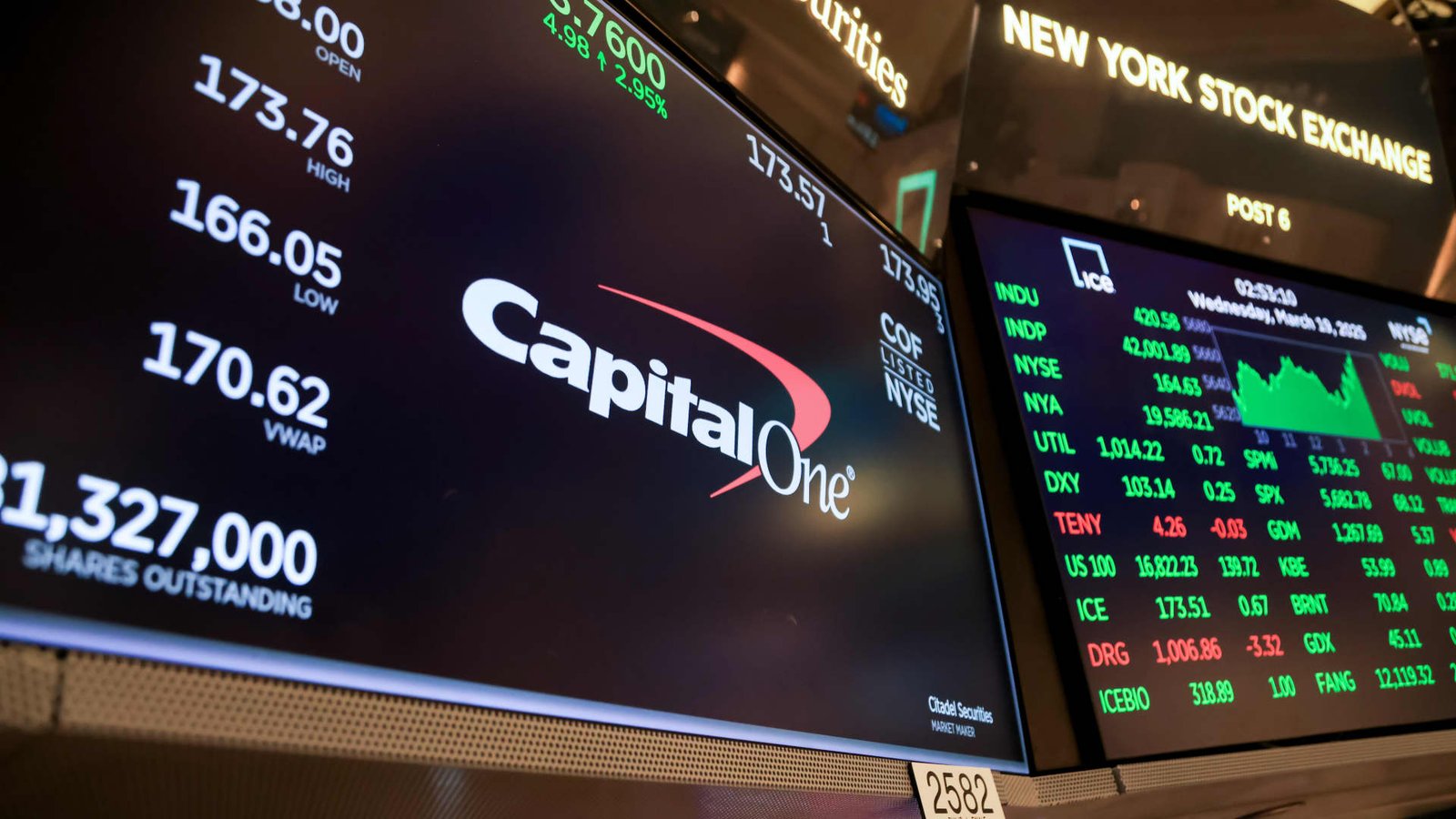
Capital One has invested over $35 billion in its acquisition of rival Discover, a move that has yet to yield significant returns, leading to investor skepticism. CEO Richard Fairbank is under pressure to demonstrate the strategic benefits of this acquisition during the company’s second-quarter results report. The previous two quarters showed profits falling short of expectations due to higher expenses, resulting in a stock price slump.
In the first quarter after the acquisition, Capital One disclosed $1.8 billion in integration-related expenses. To regain investor confidence, management needs to provide a clear connection between these costs and future benefits, particularly the goal of over 15% earnings per share (EPS) accretion and $2.7 billion in annual synergies by 2027. Analysts predict Capital One will report earnings per share of $4.75 on revenues of $15.77 billion for the second quarter, indicating potential improvements from the first quarter.
The integration of Discover’s extensive credit card base and payment network is anticipated to enhance Capital One’s operational efficiency, reducing dependency on major card networks such as Mastercard and Visa. This strategic shift aims to position Capital One similarly to American Express, catering to diverse income levels.
Despite a 20% stock price rally since June 11, investors remain cautious due to broader economic uncertainties, including inflation and potential interest rate hikes, which may affect consumer spending and default rates. Analysts noted a growing concern regarding Capital One’s exposure to subprime borrowers, emphasizing the need for transparency around credit quality and reserves allocated for potential losses.
Why this story matters
- Capital One’s performance post-acquisition could redefine its market position and influence investor confidence in future banking sector strategies.
Key takeaway
- The upcoming quarterly results are crucial for Capital One to validate its $35 billion investment in Discover, with a focus on demonstrating cost efficiencies and revenue potential.
Opposing viewpoint
- Analysts caution that the economic landscape and Capital One’s reliance on subprime borrowers may create additional risks that could undermine its growth prospects despite integration efforts.