



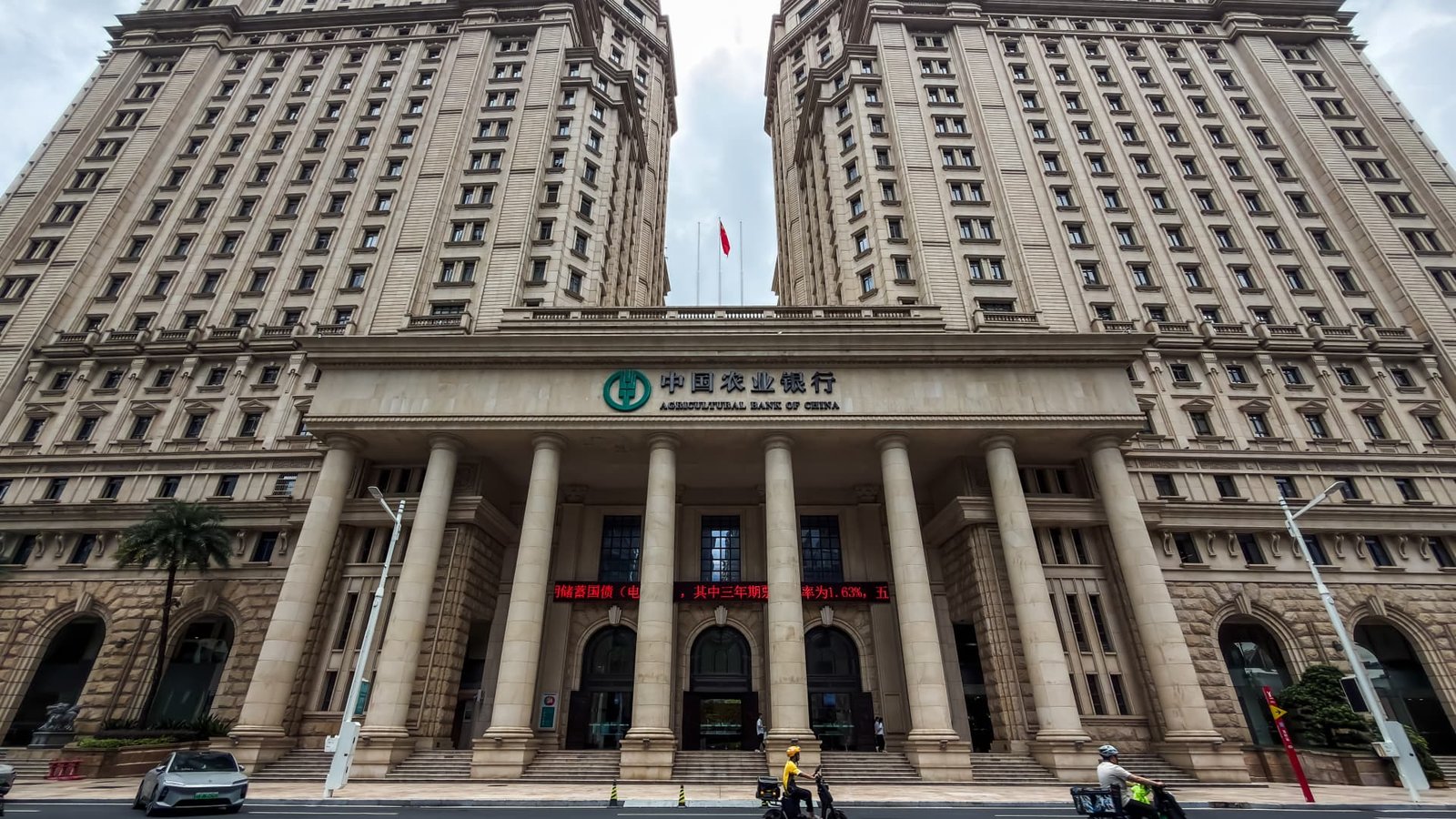
In a significant move aimed at boosting financial stability, China’s Ministry of Finance is orchestrating a $54 billion capital injection into state-owned banks and insurers, a measure that falls short of market expectations. The initiative will provide a combined 360 billion yuan (approximately $53.6 billion) to three major state lenders and five insurance companies, marking the first time such support has been extended to insurers amid escalating stress in the financial sector.
The larger-than-anticipated scale of capital injection indicates a more restrained approach to economic stimulus. Analysts note that while the recapitalization is smaller than previous interventions, it signals the healthier capital positions of insurers and reflects a lower urgency for drastic measures. Despite this, shares of the banks and insurers fell in Hong Kong trading, with notable declines in Agricultural Bank of China and Industrial and Commercial Bank of China.
This latest measure follows a prior injection of 500 billion yuan last year and a pledge to issue 300 billion yuan in special treasury bonds to enhance the capital of state lenders. As diminishing net interest margins impact profitability, the current capital infusion aims to prime these financial institutions for a forthcoming cycle of strategic investments, particularly in emerging technologies such as artificial intelligence.
Despite the government’s efforts, some economists caution that the capital injections may have limited short-term effects on economic growth, largely due to weak credit demand rather than lack of capital. Recent data has shown a decline in the solvency ratios of insurers, highlighting the ongoing financial challenges within the sector.
– Why this story matters: The capital injection aims to stabilize China’s financial system amid economic uncertainty, impacting future investments.
– Key takeaway: The current financial support reflects a cautious approach by the government, with a focus on stabilizing the banking and insurance sectors.
– Opposing viewpoint: Some experts believe that weak credit demand, not capital shortages, remains the primary constraint on bank lending and economic recovery.