



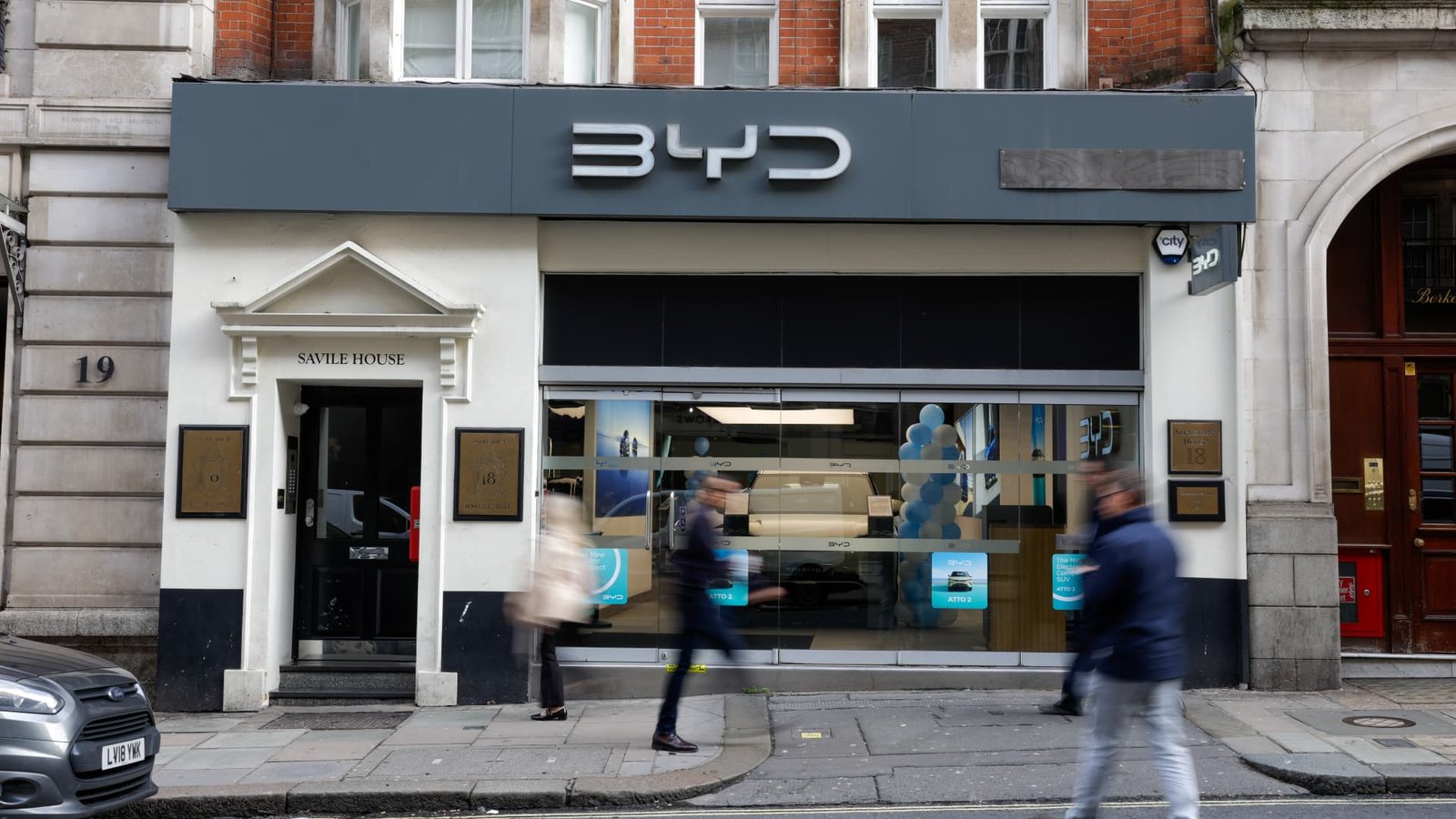
MAIDSTONE, England — Izzy Woodrow recently joined a growing trend of British consumers purchasing Chinese-made vehicles, expressing satisfaction with his new car’s comfort, quietness, and advanced technology. He made this purchase at Lipscomb Cars, a Geely dealership that opened southeast of London within the past year.
Sales of Chinese automobiles in the U.K. have increased significantly. In 2015, only 384 Chinese vehicles were sold, but by 2020, this figure rose to 25,302, and sales surged past 285,000 last year, according to Mobility Global. The dealership has attracted a diverse clientele, including Chris and Tracy Smith, who highlighted the value for money and better-equipped features of Chinese models compared to more expensive mainstream brands.
Analyst Will Roberts from Benchmark noted that Chinese vehicles, particularly from brands like BYD, are becoming a common presence on British roads. He pointed out that this change was marked by the visibility of a BYD vehicle just a few years ago, which has now become routine.
China’s auto exports are thriving, especially as domestic demand has waned. The first half of 2026 saw a 72% increase in auto exports, contrasting with a 26% drop in retail sales at home. Unlike the European Union, the U.K. does not impose extra tariffs on plug-in hybrid electric vehicles, further promoting sales of these cars.
Chinese models tend to be priced several thousand pounds lower than comparable vehicles from legacy automakers, making them appealing to consumers. Although executives from major automotive firms have raised concerns about competitive pricing linked to Chinese government subsidies, the popularity of Chinese vehicles continues to grow.
Lipscomb Cars’ dealer, John Panda-Noah, emphasized that while competitive pricing initially draws customers, the overall quality and technology ultimately win them over.
Why this story matters:
- Highlights the rising influence of Chinese automakers in the U.K. market.
Key takeaway:
- Competitive pricing and advanced technology of Chinese vehicles attract British consumers.
Opposing viewpoint:
- Legacy automakers argue that Chinese subsidies enable unfair pricing practices.