


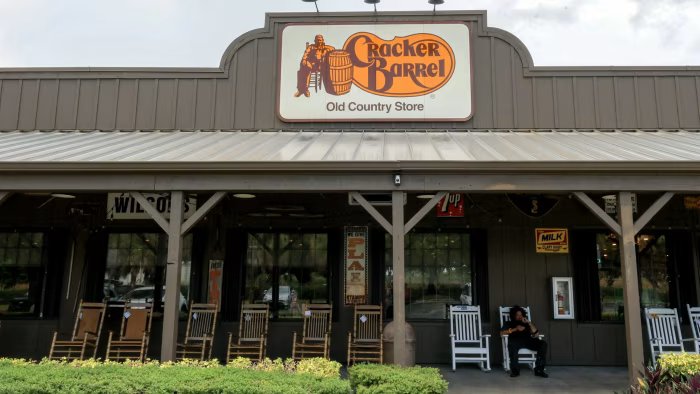
Cracker Barrel has revised its sales outlook for the fiscal year in response to lower-than-anticipated earnings. The chain, renowned for its Southern-style comfort food, reported a revenue decline in its most recent quarter, leading to a 10% drop in shares during after-hours trading. CEO Julie Masino acknowledged that first-quarter results fell short of expectations due to “unique and ongoing headwinds,” and indicated that the company is adapting its operational strategies, menu, and marketing.
In August, Cracker Barrel attempted to modernize by changing its “Old Timer” logo, which sparked considerable backlash on social media. Accusations of “woke” rebranding compounded the controversy, attracting public criticism, including from former President Donald Trump, who urged a return to the original logo. Though management reverted to the classic design, the damage lingered, resulting in a significant drop in both sales and share price over the year.
Additionally, activist investor Sardar Biglari initiated a proxy campaign against Masino, citing numerous management missteps; however, she managed to retain her position following a shareholder vote.
While Cracker Barrel’s situation contrasts sharply with the success of American Eagle Outfitters, which saw an improvement after a marketing campaign featuring Sydney Sweeney, it remains vulnerable to broader economic pressures. Increasingly cash-strapped consumers are cutting back on dining out, contributing to challenges faced by other American restaurant chains as well.
The company has now lowered its full-year revenue expectations to between $3.2 billion and $3.3 billion, down from previous estimates of $3.35 billion to $3.45 billion.
Why this story matters
- The evolving consumer landscape and its impact on traditional dining establishments like Cracker Barrel are worth noting.
Key takeaway
- Brand controversies can have lasting ramifications on company performance and public perception.
Opposing viewpoint
- Some might argue that modernizing branding is essential for attracting younger consumers, despite backlash.