


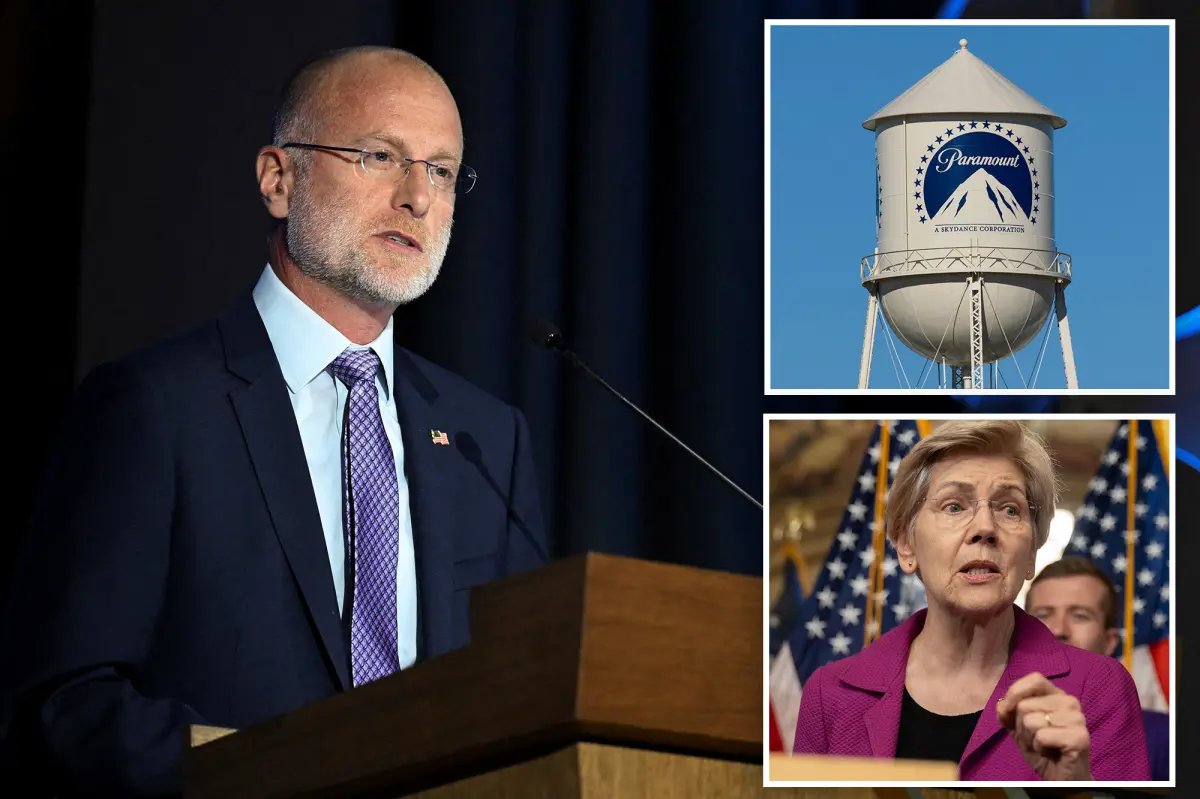
Three Democratic senators have called on the Federal Communications Commission (FCC) to halt the merger between Paramount and Warner Bros. Discovery, expressing concerns regarding significant foreign investment in what would become one of the largest media companies in the United States. Senators Cory Booker (D-N.J.), Adam Schiff (D-Calif.), and Elizabeth Warren (D-Mass.) issued a letter to FCC Chairman Brendan Carr, emphasizing the need for a thorough review of foreign ownership and its potential national security implications.
The senators highlighted that the merger, valued at $110 billion, could consolidate further media control, bringing entities such as CNN and CBS News under a single corporate umbrella. Paramount’s CEO, David Ellison, indicated that approximately 49.5 percent of the new corporation would be owned by foreign investors, including Saudi Arabia’s public investment fund and several organizations from the UAE and Qatar. He assured that control over voting rights would remain with the Ellison family through U.S. entities.
The lawmakers insisted on a rigorous assessment of the foreign ownership risks before allowing the deal to proceed, cautioning Carr against accepting Ellison’s assurances uncritically. They referenced the 1934 Communications Act, which restricts foreign ownership in companies with FCC licenses to no more than 25%.
The FCC remains a crucial regulatory gatekeeper for the merger, while the Department of Justice recently indicated it would not challenge the acquisition. However, Senator Warren expressed dissatisfaction with this decision and urged local attorneys general to contest the merger. Additionally, over 5,000 industry professionals have signed a petition opposing the merger, citing concerns about its impact on competition and job opportunities in Hollywood.
Bold Points:
- Why this story matters: The merger could significantly reshape the media landscape and spark debates over national security and foreign influence.
- Key takeaway: Legislative scrutiny highlights concerns surrounding foreign investment in U.S. media companies.
- Opposing viewpoint: Some argue the merger may not harm competition and could positively impact consumers.