

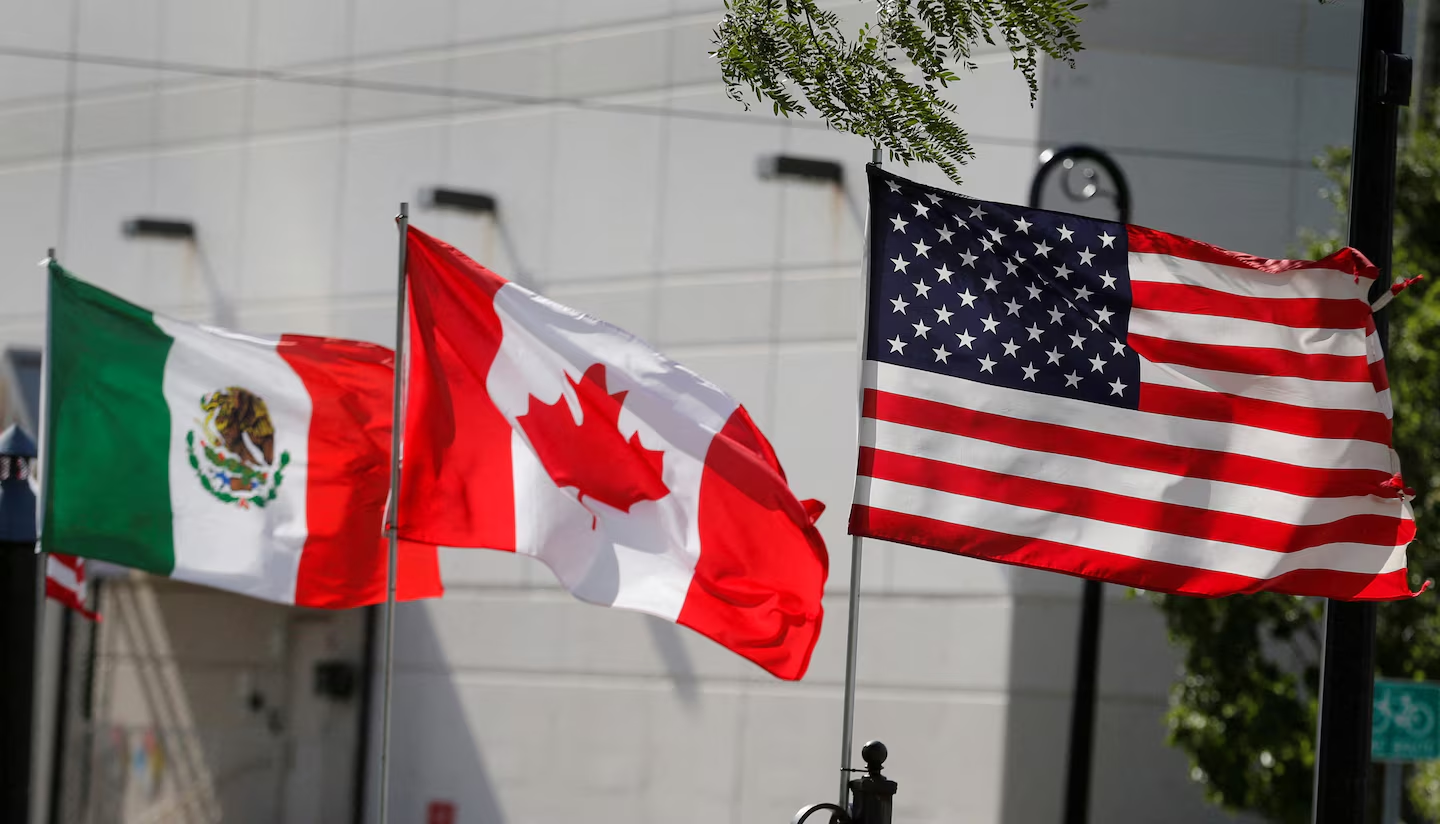
The Trump administration has announced that it will not extend the United States-Mexico-Canada Agreement (USMCA) but will engage in ongoing discussions to seek enhancements to the trade deal. Officials have indicated that the focus will shift toward negotiating specific improvements rather than extending the current framework.
The administration’s decision reflects a strategic approach aimed at refining the agreement to better meet the needs of the U.S. economy and its trade partners. Key areas of discussion may include agricultural trade, labor standards, and environmental protections. There is optimism that these conversations could lead to a more robust agreement that benefits all involved nations.
The USMCA, which replaced the North American Free Trade Agreement (NAFTA), was implemented to modernize trade relations and address contemporary economic challenges. By opting for negotiations, the administration signals a commitment to adapting the agreement rather than allowing it to remain static.
As these discussions unfold, stakeholders from various sectors will closely monitor developments, hoping for favorable outcomes that support trade and economic growth in North America.
- Why this story matters: It highlights the administration’s approach to trade negotiations and its focus on improving existing agreements for economic benefit.
- Key takeaway: The U.S. is prioritizing negotiations for enhancements to the USMCA instead of extending the current terms.
- Opposing viewpoint: Critics may argue that not extending the agreement could lead to uncertainty in trade relations and impact businesses reliant on established terms.